
Bulk Merge in BROSH CRM: Clean Duplicate Contacts and Accounts
Bulk merge helps B2B teams clean duplicate contacts, leads, accounts, and related CRM records without losing the sales and service context that teams need for follow-up.
Duplicate records are more than a data problem. They split customer history, confuse ownership, weaken reports, and make follow-up harder. BROSH CRM bulk merge gives teams a practical way to choose a master record, merge selected duplicate rows, and re-associate related records such as activities, opportunities, tickets, and files.
Last modified by BROSH CRM, on Tue Aug 11 2026 Israel Time
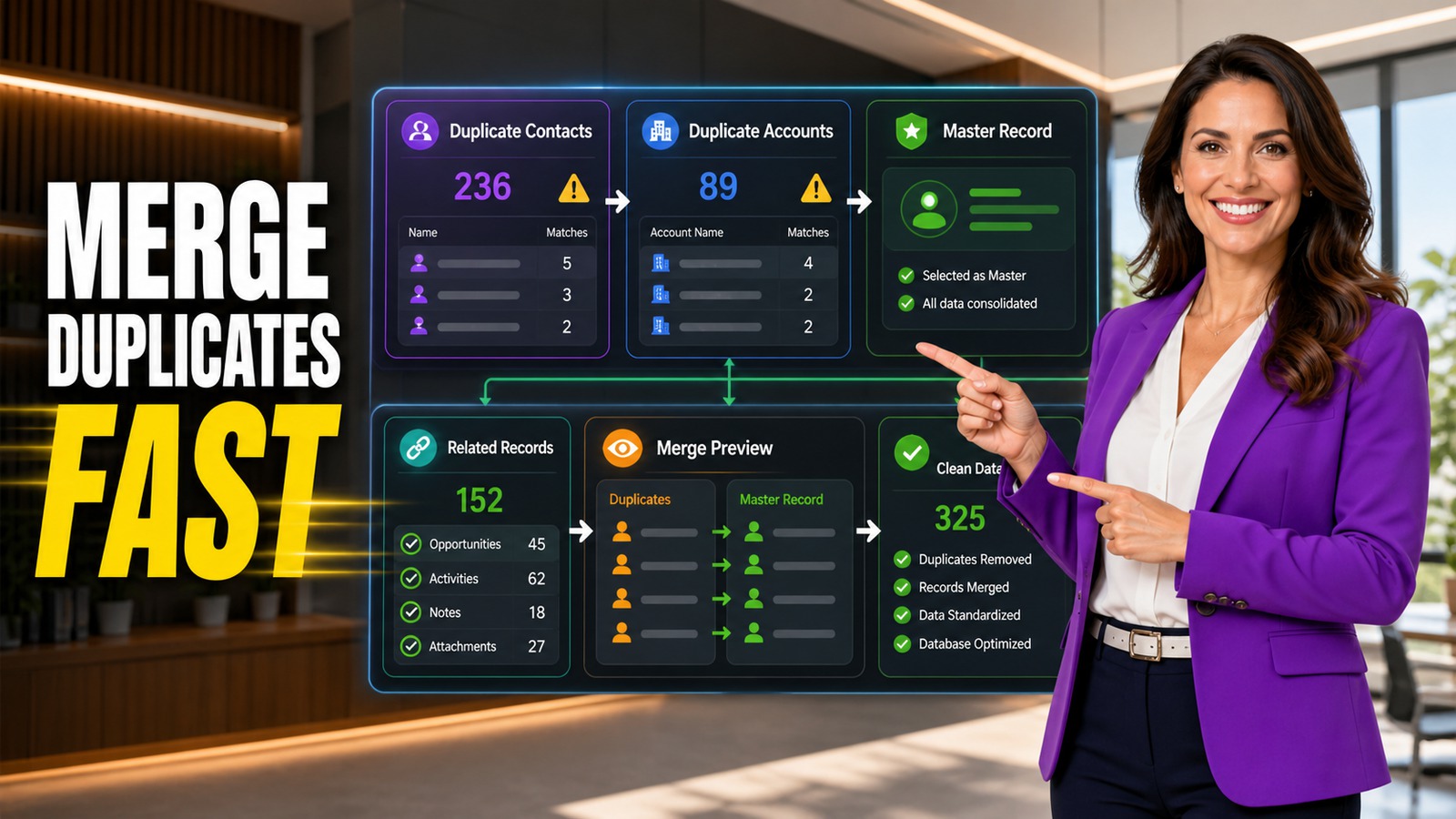
Bulk merge keeps customer cleanup connected to the records, related lists, and follow-up work that matter.
Why Duplicate CRM Records Hurt B2B Teams
When the same person or company exists more than once, the team may call from the wrong record, send a quote from the wrong context, miss a support note, or report the same opportunity twice. The damage is subtle: people start trusting side notes and personal memory instead of the CRM.
Duplicates also create customer experience problems. One buyer can receive repeated follow-up from different owners, a service team can miss the latest promise, finance can see the wrong billing contact, and management can overcount pipeline because the same account appears in more than one place.
For a B2B company, duplicate cleanup improves four practical areas: cleaner follow-up, better reporting, safer data handling, and more reliable automation. If a workflow depends on customer records, quote status, tasks, or documents, duplicate rows weaken the signal that the team depends on.
The FTC business guidance on privacy and security is a useful reminder that customer information should be handled carefully. Cleaner CRM records help teams reduce unnecessary duplication and keep customer information easier to govern.
The NIST Privacy Framework also points toward managing data in ways that support trustworthy operations. In CRM practice, fewer duplicate records means clearer ownership, cleaner reporting, and better control over customer data.
Find Duplicate Contacts Before They Confuse Follow-Up
BROSH CRM can help users review grouped duplicate rows, such as contacts that share the same email address. The screenshot beside this section shows a duplicate-person view where the user can compare rows, choose the master record, and prepare selected rows for mass merge.
For B2B teams, this is especially useful when leads come from forms, imports, events, phone calls, or campaigns. A single person may enter the CRM more than once, and each duplicate may have a different phone number, account, task, or sales activity.
Connect duplicate cleanup to lead follow-up workflows and the BROSH guide to CRM basics so customer records stay useful after the first contact.
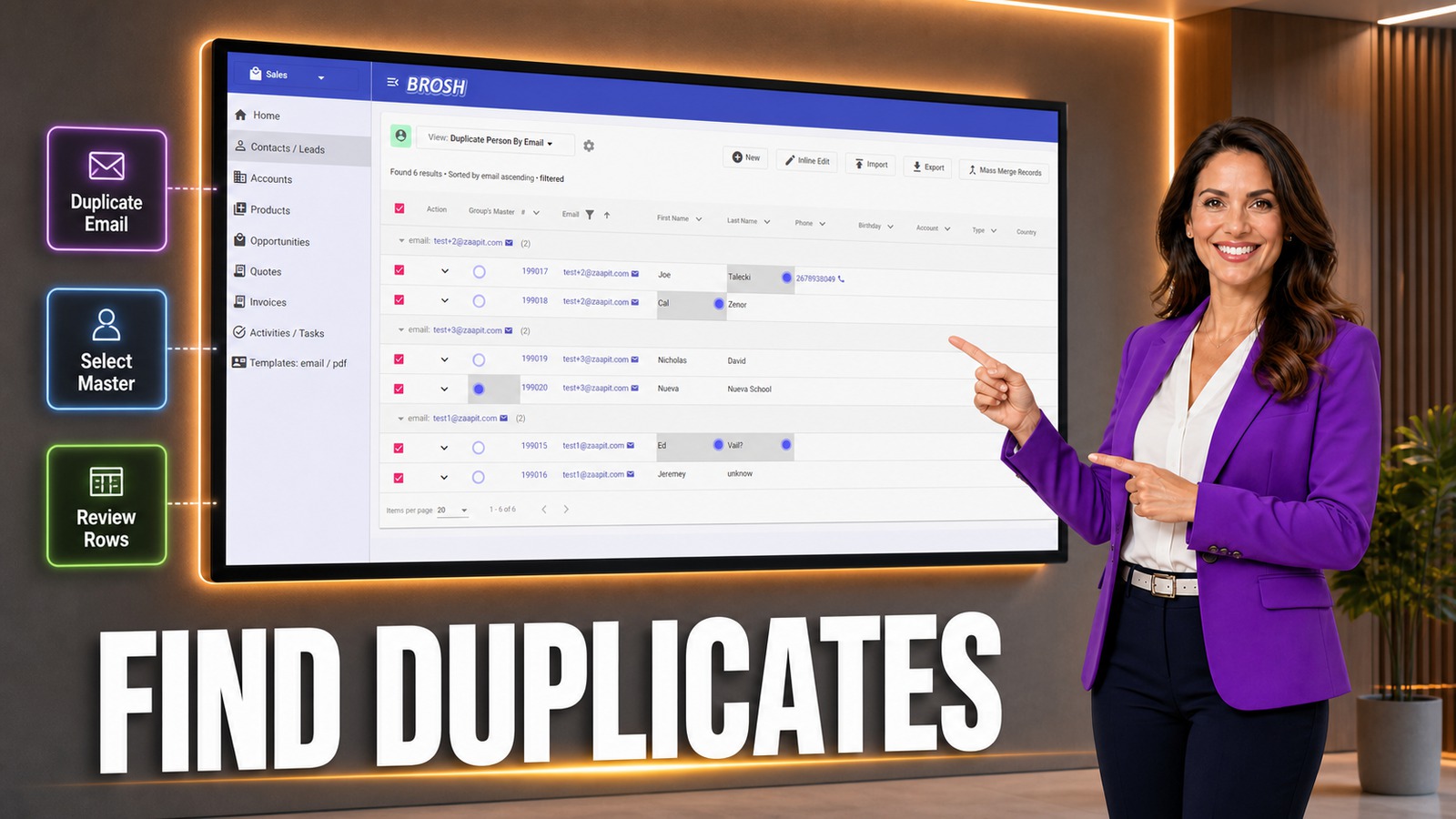
The duplicate-person view helps users compare grouped rows and select the master record before merging.
What to Check Before You Merge
A clean merge depends on the right review steps. Do not only look at the contact name. Check the record owner, email, phone, account, open opportunities, recent activities, quote status, tickets, files, and any fields your team uses for service or reporting.
The reason is simple: one duplicate may hold the correct phone number, another may hold the open opportunity, and a third may hold the latest support activity. A good merge process protects the useful information while removing the extra row that confuses the team.
Before a large merge, define which fields are authoritative. For example, the newest verified email may win for contact data, the active account owner may win for ownership, and the record with open opportunities may become the master. This keeps the merge from becoming a blind cleanup action.
Master Record
Choose the row with the most reliable customer identity, ownership, and history.
Related Work
Review activities, opportunities, tickets, files, quotes, and open tasks before confirming.
Reporting Impact
Confirm the merge improves pipeline, follow-up, customer service, and management reports.
Managers can also connect duplicate cleanup to productive CRM KPI workflows, CRM marketing handoff, and AI-ready CRM operations.

The Mass Merge modal helps users decide how related lists should move to the surviving master record.
Reassociate Related Records When You Merge
The most important part of bulk merge is not only removing duplicates. It is keeping the useful history. BROSH CRM lets users review related lists and merge strategy so related records can be re-associated with the master record.
That matters when the duplicate rows contain activities, opportunities, campaign members, tickets, files, or service history. If those records remain split, the team may clean the name but still lose the customer story.
Related records are often where revenue work lives. Activities show what was promised. Opportunities show buying intent. Tickets show service risk. Files and documents show approvals, contracts, or implementation material. If those records are not reassociated properly, the merged customer record may look clean but still be operationally incomplete.
Use this workflow with documents and e-signatures, Kanban pipeline visibility, and smart scheduling so customer cleanup improves daily work instead of becoming a one-time admin task.
How to Make Bulk Merge Safe and Useful
1. Review grouped duplicates. Start with reliable match logic such as email, account, phone, or another identifier your team trusts.
2. Pick the master record deliberately. The surviving record should hold the best customer identity and ownership context.
3. Review related lists. Activities, tickets, opportunities, documents, campaign links, and service records can be more important than the duplicate row itself.
4. Check reports after cleanup. Confirm customer counts, follow-up tasks, open opportunities, and quote reports look cleaner after merge.
5. Prevent duplicates at the source. Improve imports, forms, lead capture, and team habits so cleanup does not become a recurring fire drill.
6. Document the merge standard. Give users simple rules for master selection, field priority, related-list reassociation, and post-merge review so cleanup is repeatable.
Questions and Answers
What does bulk merge do in BROSH CRM?
Bulk merge helps users combine duplicate contact, lead, account, or other CRM rows into a surviving master record while preserving useful related records where possible.
How should a team choose the master record before merging?
Choose the row with the most reliable customer information, strongest ownership, newest verified details, or the record already connected to the most important sales and service history.
What happens to activities and related records during mass merge?
BROSH CRM lets the user review related lists and merge strategy so activities, opportunities, tickets, and other related records can be re-associated with the master record.
Why should duplicate cleanup be part of CRM operations?
Duplicate cleanup improves follow-up, reporting, quote visibility, customer service, and automation readiness because the team works from one trusted customer view.
Clean Duplicate Records Without Losing Customer Context
BROSH CRM helps B2B teams merge duplicate rows, preserve related records, improve follow-up, clean reporting, and give users one reliable customer view.