
Manage, Train, and Compensate Salespeople With CRM
Sales management works best when coaching, training, targets, call recording, post-call review, compensation, quotes, follow-up, and customer records are connected in one practical CRM workflow.
BROSH CRM helps B2B sales leaders coach behavior while deals are still active. Managers can review customer files, recorded-call notes, buyer objections, quote status, next follow-up, and training tasks before the same issue repeats across the pipeline.
Last modified by BROSH CRM, on Tue Aug 11 2026 Israel Time

Coaching, targets, training, commission signals, and next actions belong in the same sales operating view.
Manage Salespeople Around the Work That Creates Revenue
Salespeople need clear expectations: which customers to contact, which opportunities need attention, which quotes are aging, which documents are missing, what was promised on the last call, and what good follow-up looks like. Managers need the same view so coaching is specific and timely.
The Bureau of Labor Statistics sales managers profile describes sales managers as people who direct sales teams and analyze sales statistics. In CRM practice, that means the manager needs reliable activity, pipeline, customer, call, and quote data.
The O*NET Sales Managers summary lists work activities such as planning, directing, and coordinating sales. BROSH CRM supports that operating layer with customer records, tasks, call-review notes, quote status, and reporting.
When calls are recorded and reviewed responsibly, sales training becomes more concrete. A manager can hear whether the rep confirmed the buyer problem, handled pricing concerns, explained the next step, and connected the conversation to a quote, document, or follow-up task.
Train Salespeople Around Real Customer Work
Training is stronger when it uses real CRM examples: a customer file, discovery notes, quote practice, document request, recorded call moment, objection pattern, and next follow-up. This makes training less theoretical and helps new reps understand how the business actually sells.
Use BROSH CRM with gap-based sales discovery and buyer enablement workflows so training connects to buyer questions, proof, documents, and follow-up.
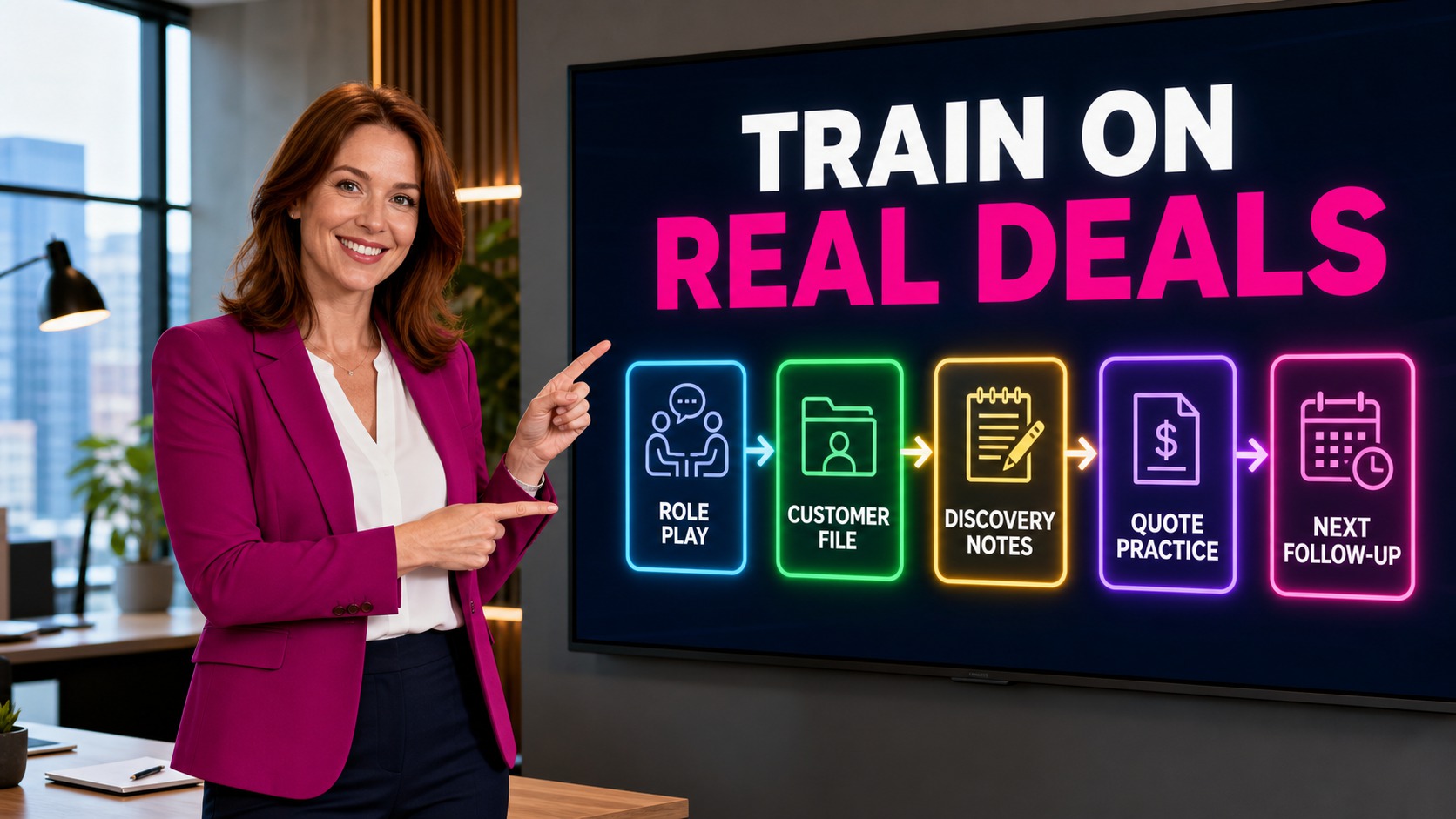
Training works best when it uses real customer files, quote examples, and next-step workflow.
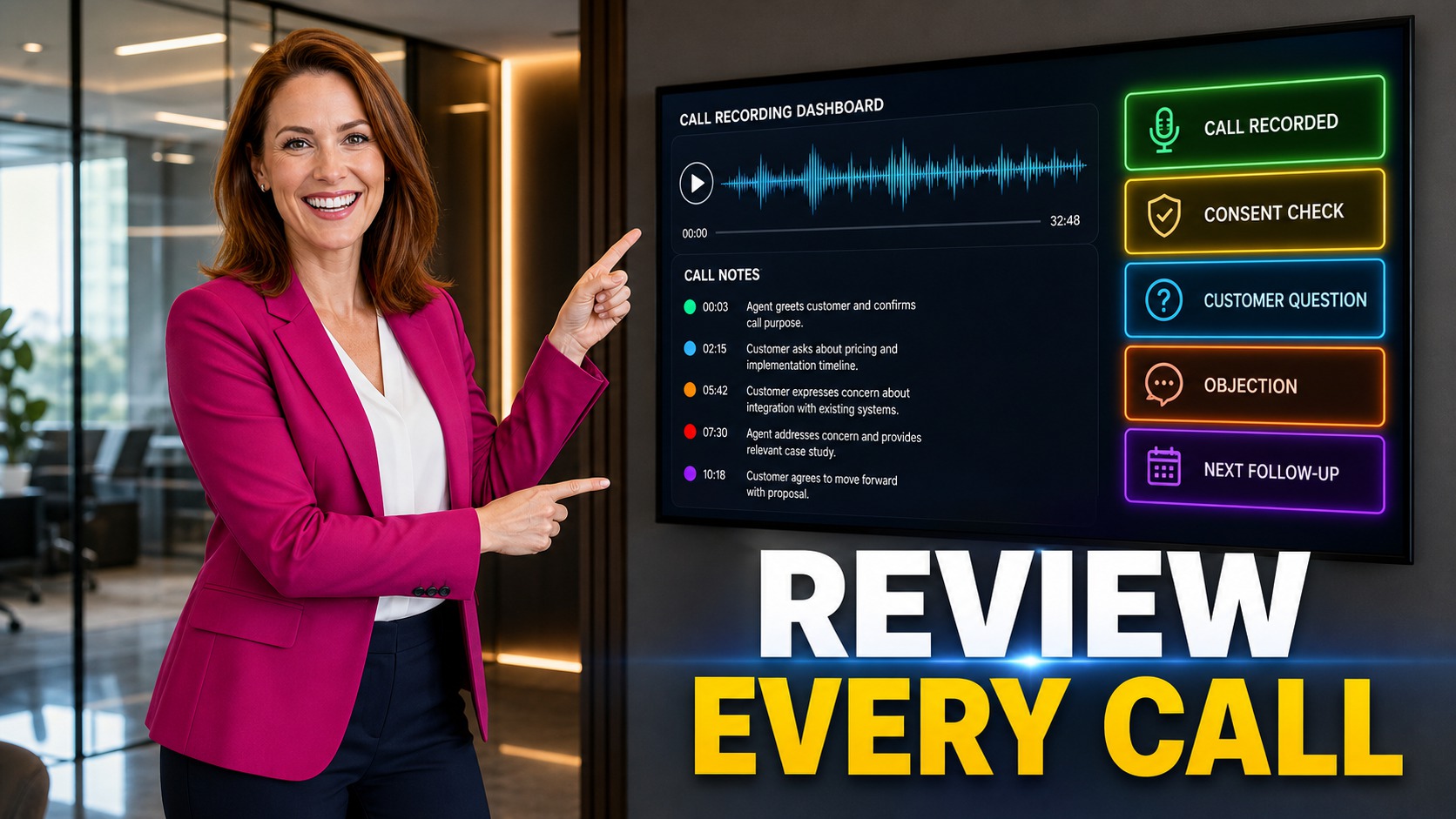
Call recording gives managers a real conversation to review, not only a short activity note.
Add Call Recording to the Coaching Workflow
Call recording can turn a customer conversation into a coaching asset. The manager can review the buyer question, the objection, the promise made by the seller, and whether the next follow-up was clear enough. This helps the team improve messaging without guessing.
In BROSH CRM, a useful call-review workflow connects the recording status, consent check, customer question, objection, next follow-up, quote status, and coaching note to the customer record. That way the review improves the active deal, not only the rep scorecard.
Call recording also needs discipline. The FCC consumer guide on recording telephone conversations is a useful public reference for consent awareness, and the FTC privacy and security business guidance reminds teams to handle customer information carefully. Teams should align recording, retention, access, and review rules with their own policy and applicable law.
Turn Post-Call Review Into Coaching Action
A post-call review should not end with a vague comment like "good call" or "needs improvement." It should create a specific action: update the customer record, schedule follow-up, send the right document, improve a talk track, practice an objection, or assign a training task.
Useful review categories include discovery quality, value communication, objection handling, next-step clarity, quote readiness, document status, and customer sentiment. When those notes live in BROSH CRM, the manager can see whether coaching changes behavior over time.
This workflow fits naturally with sales management basics, productive CRM habits, and Kanban pipeline visibility.
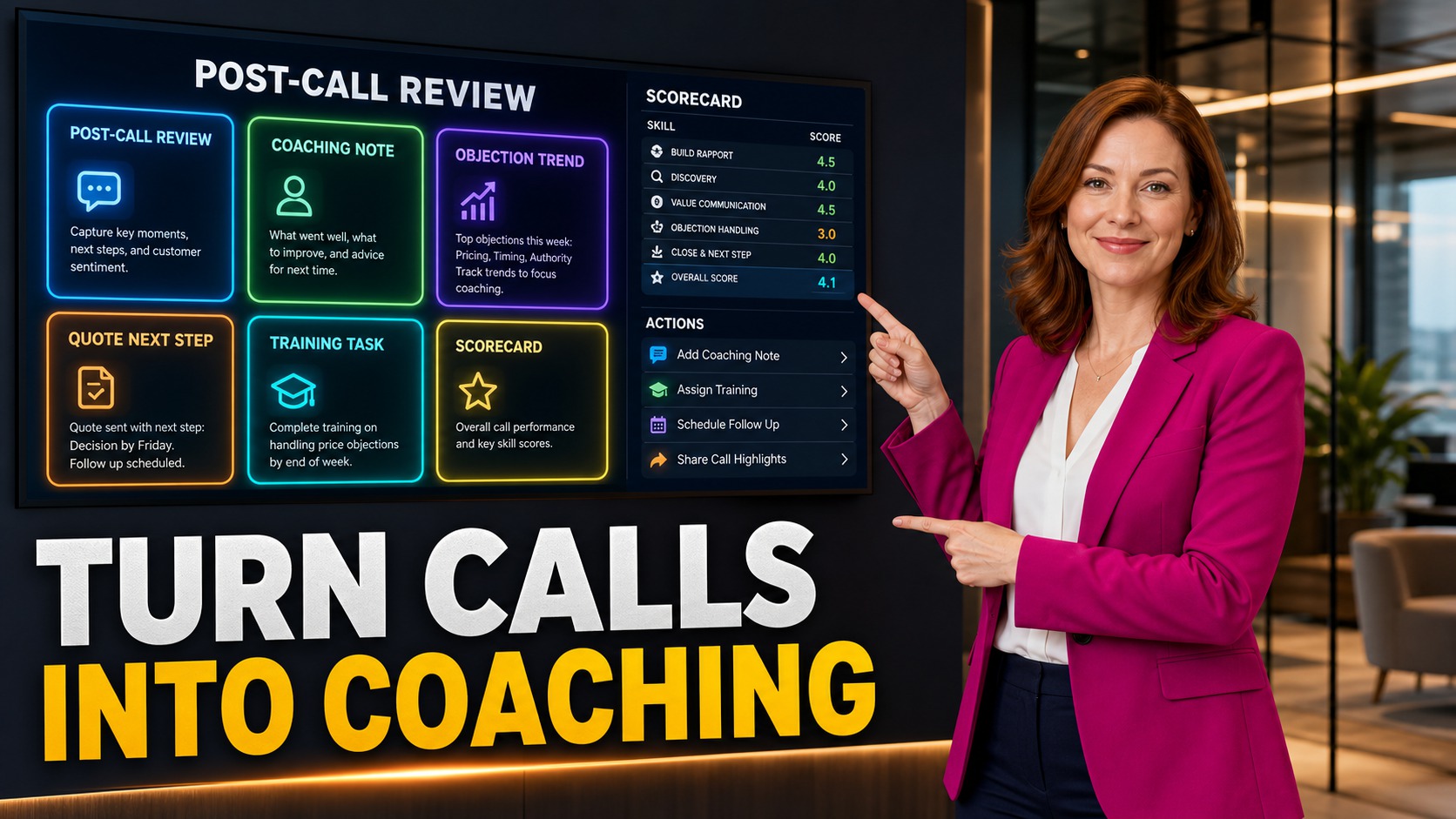
A post-call scorecard should end in a next action, not only a score.
What to Track in BROSH CRM
The best CRM setup makes coaching behavior visible without overwhelming the team. Track the few fields that move sales work forward: owner, next action, stage, quote status, document status, customer question, objection, call review note, training task, and date.
Call Evidence
Record the call status, consent check, buyer question, objection, and promise made.
Coaching Action
Turn the review into a note, practice item, training task, or next follow-up.
Revenue Signal
Connect coaching to quote progress, customer response, won deals, and team targets.
Use this article with related BROSH resources on what CRM manages, smart scheduling, documents and e-signatures, and AI-ready CRM operations.

Compensation conversations become clearer when outcomes and CRM-visible behaviors are connected.
Connect Compensation to CRM Behavior
Compensation should reward outcomes, but managers also need to inspect the behaviors that create those outcomes. Quote sent, follow-up completed, document delivered, call reviewed, training task completed, next meeting scheduled, and deal won are all signals that can make compensation conversations cleaner.
BROSH CRM helps managers separate activity volume from useful progress, so pay discussions can focus on customer work that the team agreed to track.
How to Put This Into Practice
Define the coaching process. Decide which calls should be recorded or reviewed, which fields should be updated, and which coaching actions belong in the CRM.
Use call review selectively. Review calls with useful patterns: discovery gaps, pricing objections, unclear next steps, strong examples, or repeated customer questions.
Close the loop after each review. A review should create a follow-up task, a document action, a quote update, a training task, or a coaching note.
Keep compliance visible. Before recording or reviewing calls, confirm consent, notice, retention, access, and privacy expectations for the team.
Connect coaching to revenue work. Use call evidence with lead follow-up workflows and CRM marketing handoff so sales training improves the customer journey.
Questions and Answers
How can call recording help sales coaching?
Call recording helps managers review real buyer questions, objections, promises, next steps, and talk tracks so coaching is based on actual customer conversations.
Should every recorded call become a coaching task?
No. Teams should review the calls that reveal useful patterns: missed discovery, unclear next steps, quote confusion, repeated objections, or strong examples worth sharing.
What should a post-call review track in BROSH CRM?
A post-call review should track the customer question, objection, next follow-up, quote or document action, coaching note, training task, and owner.
How should teams handle call recording compliance?
Teams should follow applicable consent, notice, privacy, retention, and customer-data rules before recording or reviewing calls, and should align their CRM process with internal policy.
Coach Calls, Follow-Up, Quotes, and Compensation in One Workflow
BROSH CRM helps sales leaders connect customer records, call recording review, coaching notes, training tasks, quote status, and performance signals.