
B2B customer journey mapping
Map Every B2B Customer Moment—and Turn Friction Into Action
A customer journey map becomes valuable only when it changes how work is assigned. Attractive diagrams fail when they describe generic stages but do not show the real buyer question, current record, responsible owner, document, due date, or evidence of improvement.
For B2B teams, the map must reflect multiple stakeholders, long decision cycles, quotes and approvals, implementation commitments, service interactions, and renewal. This guide shows how to build a focused map from CRM evidence and convert each friction point into an owned workflow improvement.
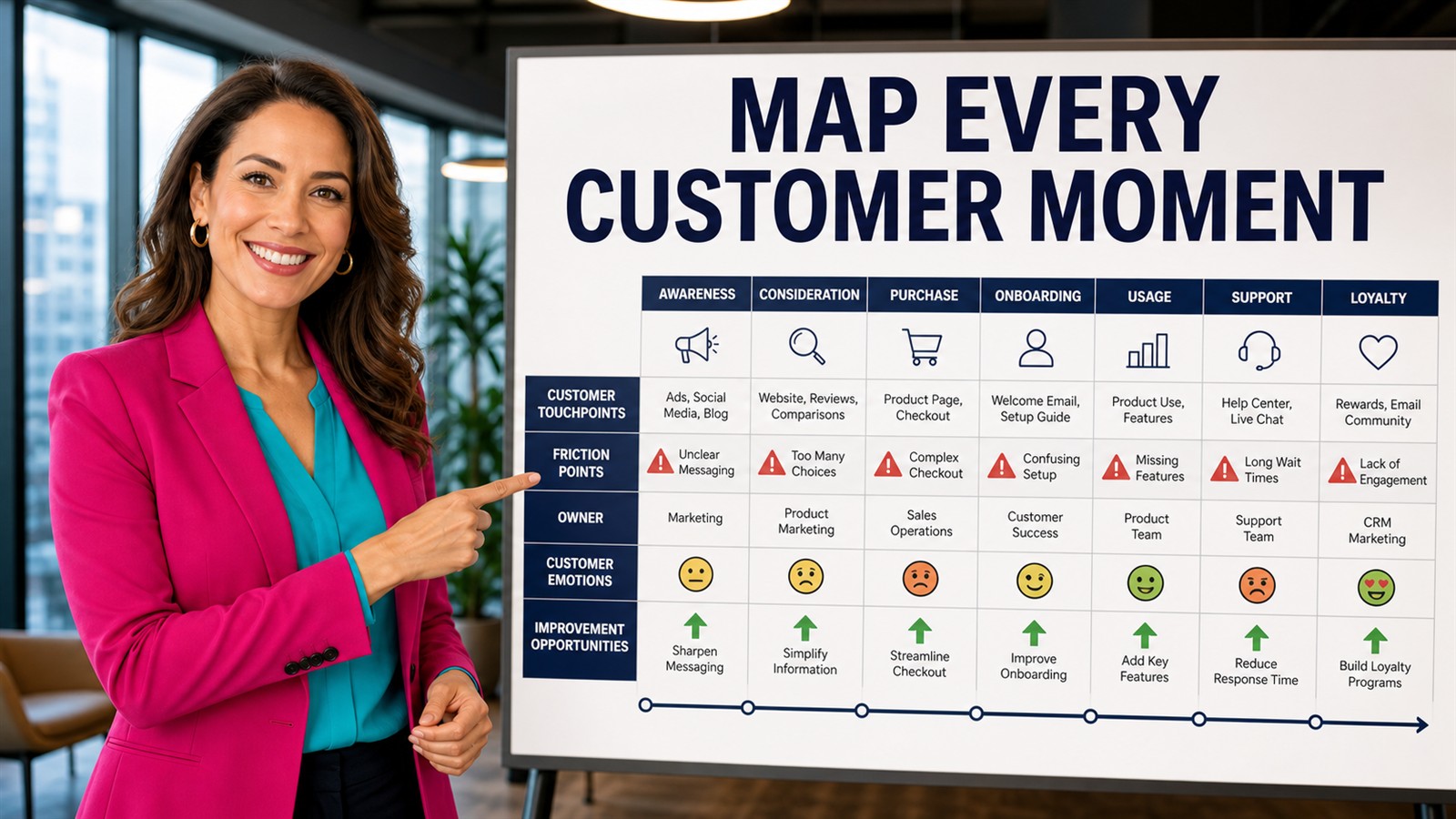
Map the journey the customer actually experiences
B2B journeys do not move neatly from awareness to purchase. Buyers change channels, revisit questions, involve new stakeholders, and continue evaluating the supplier after signature. Current research emphasizes both cross-channel continuity and the interactions between teams inside the buyer and seller organizations.
Begin with a specific journey and segment, not "all customers." Map one path such as a new mid-market customer buying a service, an existing customer requesting a revised quote, or a renewal that requires procurement approval.
- Define the customer type, need, starting event, and desired outcome.
- List the real people involved on both sides, including approvers and delivery owners.
- Use timestamps, tasks, meeting notes, quotes, documents, and service records as evidence.
- Capture the customer's question and expected outcome at each moment.
- Mark delays, repeated explanations, unclear ownership, missing documents, and broken promises.
A journey map is a diagnostic tool. It should make the next improvement decision easier, not merely describe the past.

Build the map from six practical layers
Use columns for journey stages and rows for the layers below. Keep the language concrete enough that a manager can compare the map to an actual CRM record.
- Customer objective: what the buyer is trying to accomplish now.
- Touchpoint: call, meeting, web form, quote, email, service visit, document, or renewal review.
- Customer question or emotion: uncertainty, confidence, urgency, frustration, relief, or trust.
- Evidence: the activity, status, file, task, or response that proves what happened.
- Owner: one teammate responsible for the next outcome.
- Friction and improvement: the observed problem, root cause, and smallest useful workflow change.
Do not guess where customers struggle. Interview recent customers, review lost opportunities and delayed projects, and inspect CRM timestamps. The record will often expose waiting time and ownership gaps that a workshop overlooks.
If contact or account data is fragmented, clean it first with BROSH's duplicate-record workflow. A map built from split customer histories will point to the wrong causes.
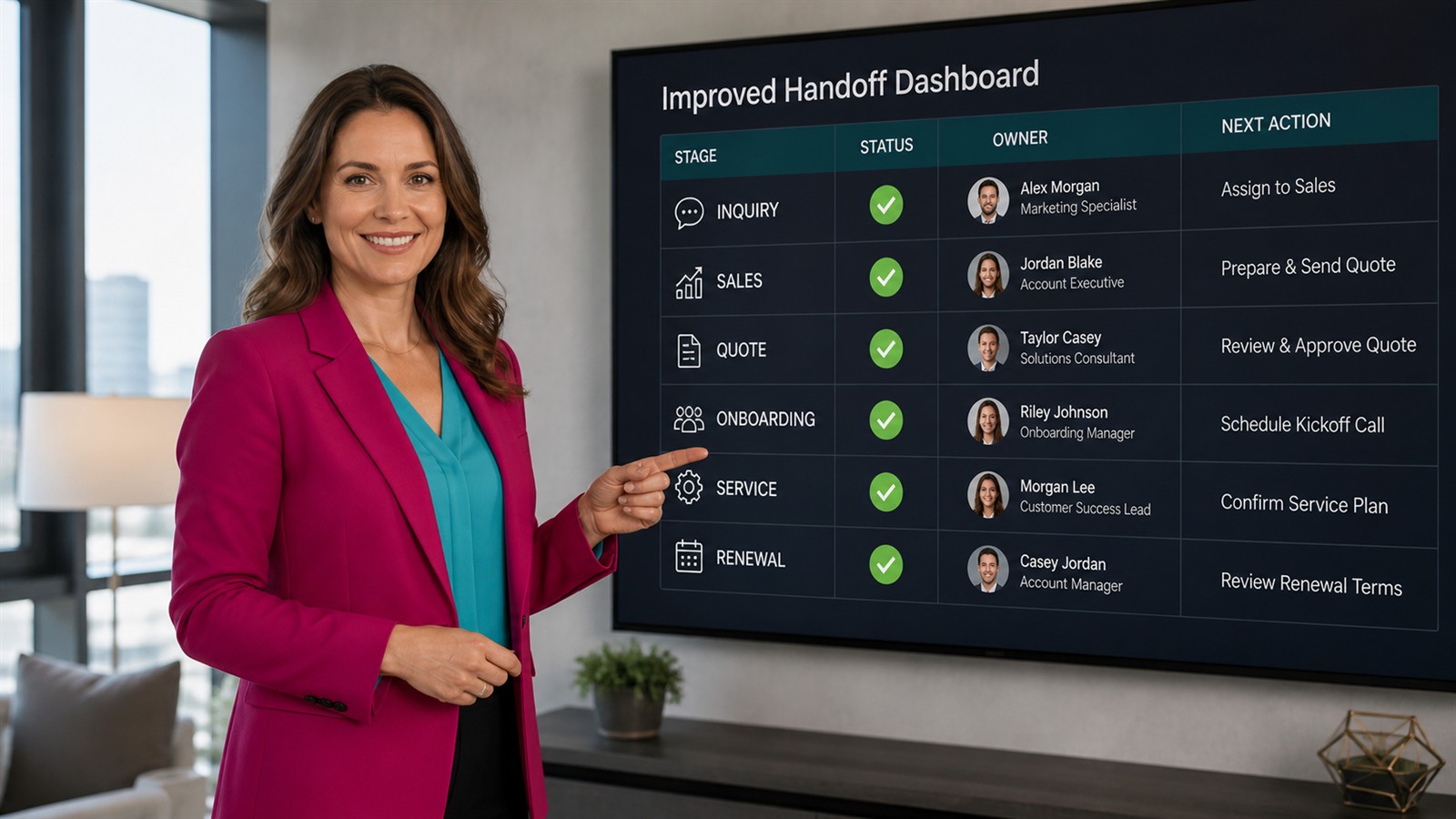
Convert friction into owned CRM improvements
For every high-impact friction point, create an improvement card with a problem statement, affected journey stage, customer evidence, root-cause hypothesis, owner, action, due date, and success measure.
Suppose buyers regularly wait four days for a revised quote. The visible symptom is delay. The causes may include unclear discount authority, missing scope information, scattered documents, or nobody owning the revision. The improvement should target the cause: required quote inputs, approval thresholds, current-version control, and a dated owner task.
- Prioritize friction by customer impact, frequency, revenue risk, and ease of correction.
- Give each improvement one accountable owner, not a committee.
- Define the before-and-after measure before changing the workflow.
- Test the change with a small group of live records.
- Review customer and employee feedback after implementation.
When documents drive the delay, connect the improvement to quote and e-signature workflows. When timing is the problem, use the CRM calendar to expose due dates and commitments.
A journey-map example for a B2B purchase
This compact model shows how a map can translate experience into CRM work.
| Stage | CRM evidence | Owned action | Management signal |
|---|---|---|---|
| Initial inquiry | Source, account, contact, need, response timestamp | Assign owner and confirm response | Response time and qualified next step |
| Discovery | Stakeholders, business problem, criteria, notes | Resolve unanswered requirements | Requirement and stakeholder coverage |
| Evaluation | Meetings, comparisons, questions, documents | Coordinate specialist answers | Open-question age |
| Quote and approval | Version, value, validity, approvers, feedback | Move approval or revise quote | Quote and approval aging |
| Onboarding | Signed scope, kickoff, milestones, customer owner | Confirm expectations and first value | Handoff completeness |
| Service | Issue, severity, history, resolution, communication | Resolve and update customer | Resolution time and repeat issues |
| Renewal | Value evidence, risk, date, terms, stakeholders | Prepare decision and next agreement | Renewal readiness |
Use a Kanban view when visual stage movement helps, but keep evidence and ownership inside the related customer record.
Journey metrics that lead to action
Choose a small group of measures that correspond to the friction you are trying to remove.
- Customer waiting time: elapsed time between a customer request and a meaningful response.
- Internal transfer time: time between one team completing work and the next accepting ownership.
- Repeat-information rate: interactions where the customer must provide information already captured.
- Open-question age: unresolved buyer questions by owner and stage.
- Quote revision cycle: number and duration of revisions before approval.
- Handoff completeness: percentage of transitions with required documents, context, owner, and task.
- Journey recovery: friction cases that return to an agreed next action within the service level.
Pair operational measures with customer feedback. A fast response that does not answer the question is not a better journey. Review examples alongside the numbers.
Run a focused journey-mapping sprint
Days 1–5: choose and evidence the journey
Select one customer segment and outcome. Review five to ten recent records, including successful and problematic cases. Collect timestamps, documents, tasks, and customer comments.
Days 6–10: map moments and ownership
Plot stages, objectives, touchpoints, questions, evidence, owners, emotions, and friction. Mark where data is missing rather than filling gaps with assumptions.
Days 11–20: prioritize and redesign
Choose the highest-impact friction points. Define the corrected record, task, handoff, approval, or communication. Assign owners and success measures.
Days 21–30: test and review
Run the new workflow on live customers. Compare waiting time, completeness, and customer response. Keep what works and simplify what users avoid.
Decision rule: do not call a journey improvement complete until the CRM shows a measurable change in customer waiting, handoff quality, or next-action clarity.
Questions and Answers
What is a B2B customer journey map?
It is an evidence-based view of the stages, touchpoints, customer objectives, questions, emotions, records, owners, and friction involved in a specific business customer outcome.
How is journey mapping different from lifecycle management?
Journey mapping diagnoses what customers experience and where friction occurs. Lifecycle management defines the operating workflow, evidence, and ownership used to run those stages every day.
Which data should be used for journey mapping?
Use CRM activities, task dates, quote versions, approval status, documents, service records, customer feedback, and interviews. Combine observed data with customer explanation instead of relying on internal assumptions.
Who should own a customer journey map?
One business owner should maintain the map, while sales, operations, service, finance, and customer-facing teams own the improvements that fall within their workflows.
How often should a B2B journey map be updated?
Review it after material process, product, channel, or customer changes and whenever metrics show new friction. A quarterly evidence review is a practical starting cadence for many teams.
Turn journey insight into customer action
BROSH CRM helps teams connect touchpoints, customer records, tasks, quotes, documents, approvals, service history, and ownership so journey improvements become visible daily work.
Ready to fix the moments customers feel most?
Map real evidence, assign ownership, and measure the improvement.
Talk to a CRM ExpertSources: McKinsey, B2B buyers reset the bar (2026); Journal of Business Research, Understanding the B2B customer experience and journey (2025).