
Agentic AI CRM Workflows for B2B Sales Growth
Automate lead follow-up, CRM data enrichment, sales pipeline management, and revenue operations while keeping your sales team in control.
Agentic AI CRM workflows help B2B teams move from passive customer records to active revenue workflows. The goal is not to replace sales judgment. The goal is to prepare better work: cleaner records, faster follow-up, clearer quote status, better document context, and next steps that do not disappear between teams.
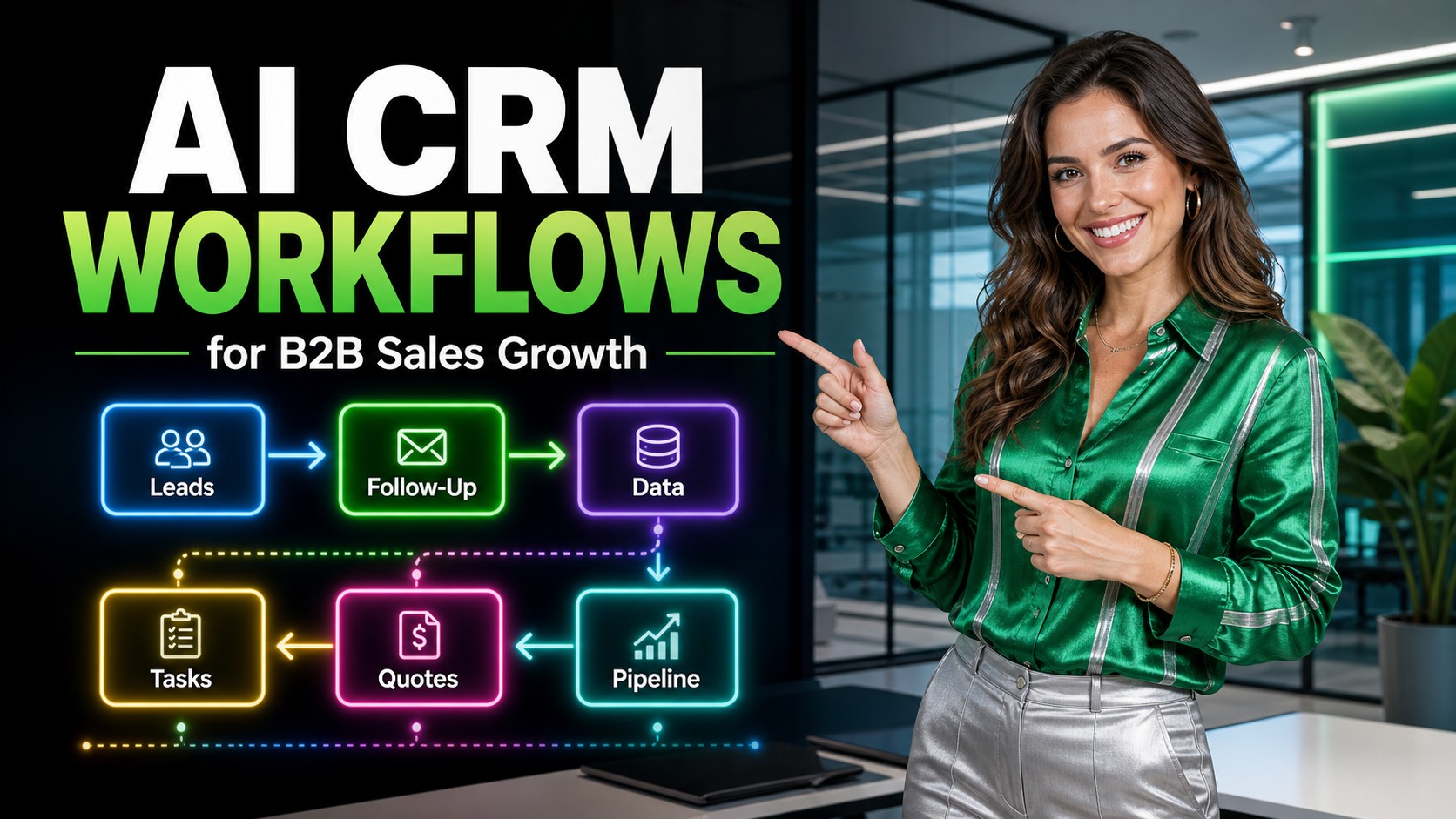
Agentic CRM workflows connect leads, tasks, documents, quotes, and revenue signals into a shared operating view.
Agentic AI CRM Workflows: A Guide for B2B Sales Teams
An agentic AI CRM reviews customer context, recommends actions, prepares routine sales work, and helps execute controlled CRM workflows. Traditional automation follows fixed rules. Agentic workflows can evaluate the customer record before recommending the next useful step.
For BROSH CRM buyers, the strongest use cases are practical: lead follow-up, quote preparation, overdue task detection, CRM data enrichment, customer document readiness, opportunity risk alerts, and pipeline visibility. These are the daily problems that slow sales teams and hide revenue risk.
Teams that want the data foundation first should also read AI-Ready CRM Operations for B2B Sales Teams. Agentic workflows work best after customer records, ownership, documents, and follow-up fields are reliable.
Why B2B Sales Teams Need AI CRM Automation
B2B sales teams lose time to manual CRM updates, repetitive data entry, slow lead response, inconsistent follow-up, missing customer documents, and incomplete pipeline information. These problems reduce sales productivity and make management reporting less reliable.
- Prioritize high-intent leads and opportunities.
- Prepare personalized follow-up for human review.
- Detect stalled deals and overdue sales activities.
- Improve CRM data completeness and duplicate control.
- Connect quote status, documents, approvals, and next steps.
When automation handles repetitive preparation, sales representatives can focus on customer conversations, negotiation, and closing work. The key is to automate the workflow without hiding the reasoning from the user.

A sales workflow becomes easier to automate when owners, next steps, documents, and pipeline signals are visible together.
High-Impact Agentic AI CRM Workflows
Start with workflows that are frequent, measurable, and easy for a manager to review. That keeps the project useful while preventing automation from running ahead of the business process.
Lead Qualification
Review lead source, company profile, role, industry, engagement, and buying signals. Use structured data to prioritize qualified leads and improve response time.
Automated Follow-Up
Find leads and opportunities with no recent activity, prepare a relevant reminder or email draft, and create the next task for review.
CRM Data Enrichment
Identify missing contact, company, role, and ownership information. Cleaner data improves segmentation, personalization, reporting, and pipeline management.
Pipeline Risk Detection
Flag stalled opportunities, missing decision makers, overdue activities, unclear quote status, and unrealistic close dates before they become end-of-month surprises.
For a related workflow view, see workflow Kanban in BROSH CRM and buyer enablement CRM workflows.
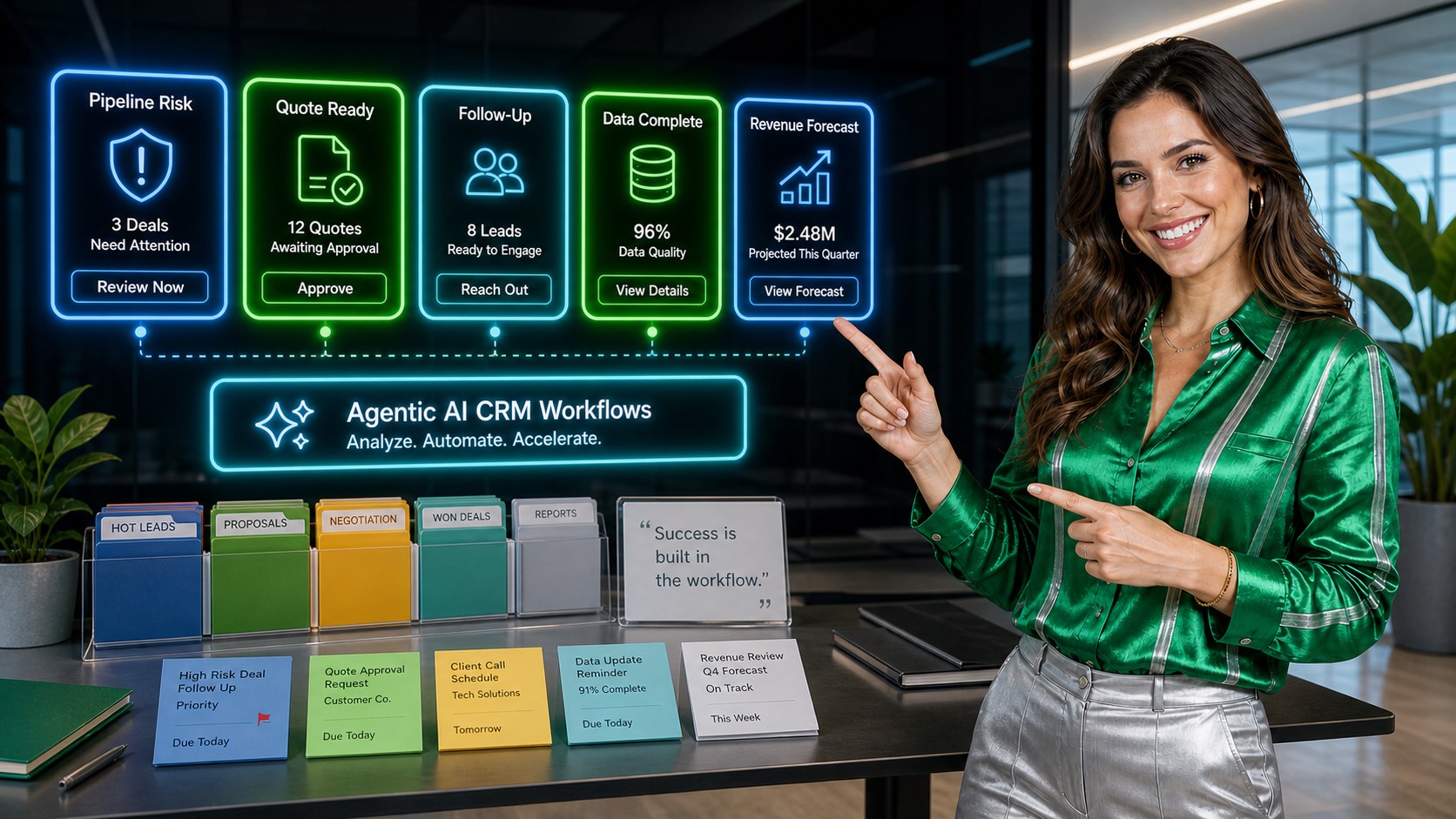
A useful AI CRM assistant prepares the work while the sales team approves the customer-facing action.
AI Lead Management and Personalized Sales Outreach
An AI CRM can organize leads from websites, campaigns, referrals, events, and outbound sales. It can enrich records, score each lead, recommend the next best action, draft a follow-up, and create a task for the owner.
The salesperson should still review and approve customer-facing messages, pricing, contracts, and sensitive commitments. This human approval point matches the practical direction of public AI governance guidance. The NIST AI Risk Management Framework emphasizes trustworthy AI qualities such as validity, reliability, accountability, transparency, privacy, and security. The OECD AI Principles also emphasize human-centered and accountable AI systems.
In a BROSH CRM workflow, those ideas become simple operating rules: make the source data visible, show who owns the next action, keep a record of what was prepared, and let the user approve important customer communication. If lead response is the first automation target, the related BROSH guide on getting leads and follow-up for small businesses gives a practical starting point.
How BROSH AI CRM Supports Revenue Operations
BROSH CRM connects contacts, companies, opportunities, activities, documents, projects, support, and customer communication. Connected customer data gives agentic workflows the business context needed for sales and revenue operations.
Benefits include faster lead response, better CRM data quality, improved sales productivity, clearer pipeline visibility, more consistent customer communication, and scalable B2B sales automation. Document-heavy teams can also connect this workflow to e-signature documents, so proposals, contracts, and approvals stay near the customer record.
Start With One AI CRM Workflow
Begin with automated lead follow-up or quote follow-up. Define the CRM data the assistant can review, the action it can prepare, the human approval point, and the measurement that proves value: response time, data completeness, task completion, conversion rate, or pipeline movement.
Questions and Answers
What are agentic AI CRM workflows?
Agentic AI CRM workflows are guided CRM processes where AI recommends next actions, drafts routine work, prioritizes records, and helps reduce manual administration while people keep control of important sales, pricing, document, and customer decisions.
Which workflow should a B2B sales team automate first?
Start with a measurable workflow such as lead follow-up, quote preparation, overdue task reminders, or CRM data cleanup. These workflows are frequent enough to matter and narrow enough for managers to review safely.
What CRM data should be ready before agentic workflows are used?
Prepare clean account records, contact details, ownership fields, opportunity stages, activity history, quote status, customer documents, approvals, and next follow-up dates. AI recommendations are only useful when the underlying CRM data is trustworthy.
How does BROSH CRM help keep people in control?
BROSH CRM can keep customer records, sales activities, documents, opportunities, and follow-up tasks connected in one workflow, so teams can use automation for preparation and reminders while people approve customer-facing actions.
Build Agentic AI CRM Workflows With BROSH
Automate lead management, personalize sales follow-up, enrich customer records, improve pipeline visibility, and help your B2B sales team spend more time on conversations that create revenue.