
AI-Ready CRM Operations for B2B Sales Teams
A practical guide for B2B companies that need cleaner customer records, faster follow-up, better quote visibility, and CRM workflows ready for useful automation.
AI can make sales work faster, but it cannot repair unclear customer ownership, missing documents, stale quote status, or follow-up tasks that live only in personal inboxes. For BROSH CRM buyers, the real opportunity is to make daily revenue work clean enough that automation has trustworthy context.
Last modified by BROSH CRM, on Mon Aug 10 2026 Israel Time

Clean records, tasks, documents, quotes, and follow-up create the foundation for practical AI-ready CRM operations.
Why B2B Teams Need AI-Ready CRM Operations Before More Automation
Many B2B teams want smarter CRM automation. The problem is rarely ambition. The problem is operational readiness: the lead exists, but no owner is assigned; the quote was sent, but finance questions are not visible; the customer document is attached somewhere, but not beside the account; the next follow-up date is known by one person, but not by the team.
That is why an AI-ready CRM project should begin with revenue workflow hygiene. A sales manager should be able to open a customer record and see who owns the next step, what document was sent, which quote version is active, what approval is pending, and whether the opportunity has a useful next action.
For teams evaluating BROSH CRM, this matters because the system is strongest when it becomes the shared operating layer for customer work: leads, accounts, contacts, tasks, quotes, documents, approvals, reporting, and service continuity in one practical business flow.
The ICP Problem: Good Leads, Slow Follow-Up, Unclear Ownership
A company can generate quality leads and still lose revenue if the follow-up workflow is weak. A lead may arrive from a website form, referral, campaign, or field sales conversation, but the real question is operational: who owns it, what happens next, which document or quote is needed, and when should management be alerted?
AI-ready CRM operations turn those questions into fields and tasks. The lead record should include source, company, contact, priority, owner, next action, expected response date, and any related documents. When that information is structured, automation can help route work, remind owners, and prepare the next step without guessing.
BROSH CRM buyers that are improving lead follow-up can also review the related guide on getting leads and follow-up for small businesses. The principle is the same for larger B2B teams: capture the lead, assign the work, and keep the next step visible.
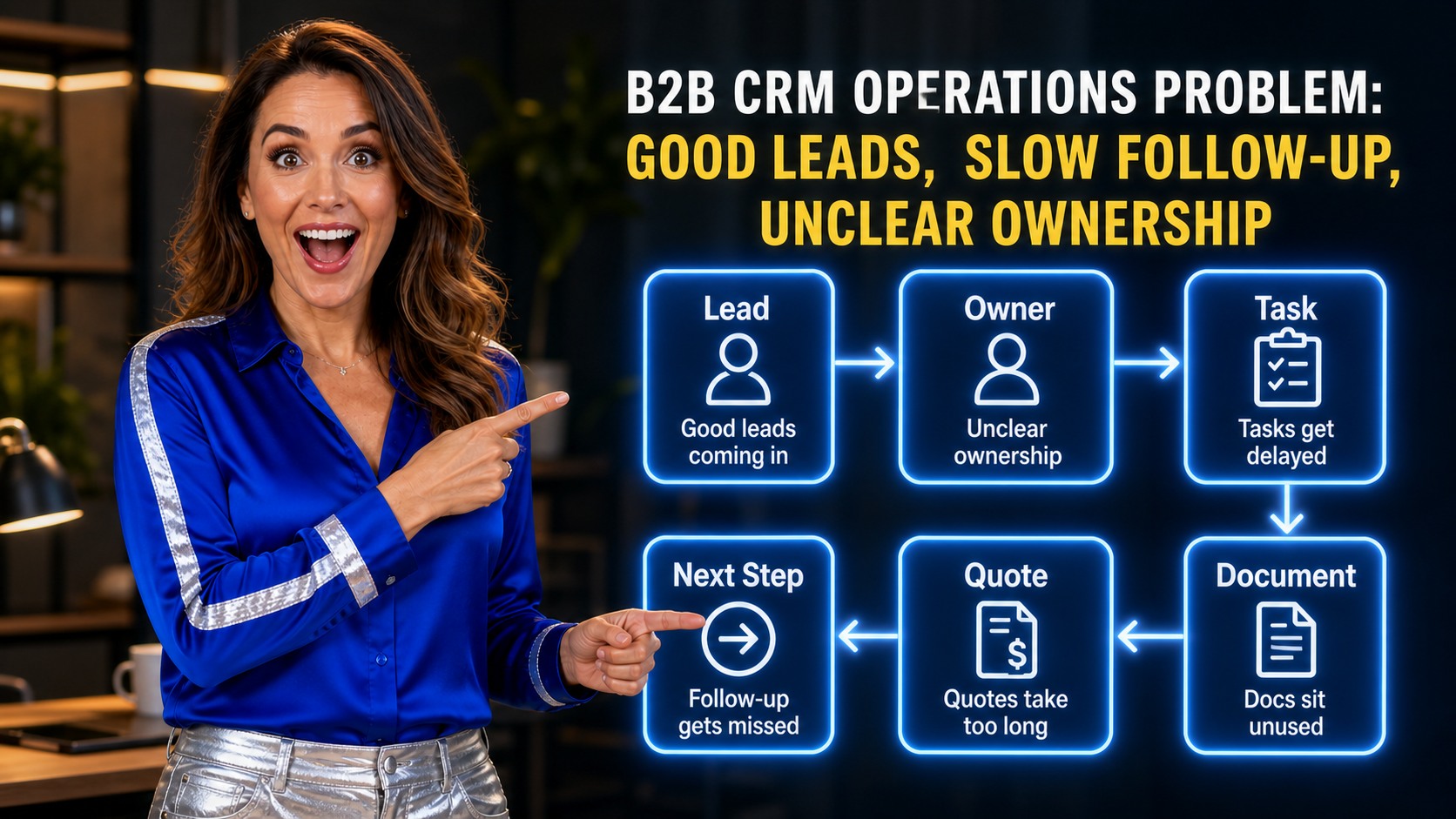
Lead ownership, next action, documents, and quote status should move together instead of becoming separate follow-up problems.
Build the Customer Record Before You Build the Automation
The customer record is the working memory of a B2B sales organization. If it is incomplete, automation becomes noisy. If it is clean, automation can help the team act faster without losing control.
Start with the fields that support actual revenue decisions: company identity, contacts, lead source, owner, last meaningful interaction, open tasks, quote status, document status, approval status, next follow-up date, and risk notes. These are simple fields, but they answer the questions managers ask every week.
Teams that want a broader automation path can connect this readiness work to Intelligent CRM Automation and the operational workflow patterns in Agentic AI CRM Workflows for B2B Sales Growth.
Use Trustworthy AI Principles Without Making the Project Heavy
AI readiness does not require a complicated governance program on day one, but it should borrow useful ideas from trusted public frameworks. The NIST AI Risk Management Framework frames trustworthy AI around qualities such as validity, reliability, accountability, transparency, privacy, and security. For a CRM team, that translates into practical checks: is the data reliable, can a person understand the recommendation, and can the team correct the workflow?
The OECD AI Principles also emphasize human-centered, trustworthy AI, with attention to transparency, robustness, safety, and accountability. In a B2B CRM workflow, this means automation should support sales and service teams rather than hide decisions from them.
The best approach is simple: keep people in control of customer commitments, make the source data visible, record the action taken, and allow a manager to audit what happened. That is especially important for quote follow-up, document approval, and customer service handoff.
Start With the Revenue Workflows That Create the Most Friction
Instead of trying to make every CRM process AI-ready at once, choose the workflows where delays are expensive and the data is easy to standardize. These are usually the workflows closest to revenue and customer trust.
Lead Capture
Require source, owner, company, contact, priority, and next action. A lead without an owner is not ready for automation.
Documents
Keep proposals, agreements, requirements, and approval files near the customer record. For document-heavy sales, review e-signature documents.
Task Ownership
Use clear owners and due dates for every next step. Managers need to see whether the work is moving, blocked, or waiting for customer input.

Quote status, proof sent, approvals, follow-up, and risk signals become easier to manage when they are visible together.
Make Quote and Follow-Up Visibility a Management Habit
Quote follow-up is where many CRM records become stale. A quote can be technically sent, but the team may not know whether the customer opened the conversation, requested a change, asked for approval, or needs proof before deciding.
An AI-ready BROSH CRM workflow should treat quote status as an operating signal. Useful status fields include quote sent, version active, proof requested, approval pending, next follow-up date, decision stakeholder, and risk reason. These fields give management a cleaner view than a pipeline amount alone.
Teams that manage opportunities visually can connect this practice to workflow Kanban in BROSH CRM. If buyer education is part of the deal, the related post on buyer enablement CRM workflows shows how to track questions, proof, stakeholders, and decision confidence.
A 30-Day Plan for a Cleaner BROSH CRM Workflow
Week 1: audit the fields that sales and management actually use. Look for duplicate customers, missing owners, blank next-step dates, unlinked documents, and opportunities where quote status is unclear.
Week 2: standardize the daily workflow. Define required fields for new leads, quote records, customer documents, and follow-up tasks. Keep the required list short enough that the team will actually maintain it.
Week 3: connect workflows across teams. Sales, operations, finance, and service should see the same customer context. Document handoff, approval status, and task ownership should sit near the customer account instead of being scattered across tools.
Week 4: add practical automation. Start with reminders, assignment rules, duplicate checks, quote follow-up alerts, and management reports. Once the workflow is reliable, more advanced AI-assisted actions become easier to trust.
Questions and Answers
What does AI-ready CRM operations mean for a B2B sales team?
It means the CRM has clean customer records, clear ownership, reliable follow-up tasks, quote status, documents, approvals, and activity history before advanced automation is added. For BROSH CRM buyers, that makes AI-assisted work more practical because the system can rely on organized business context.
Should a company automate before cleaning its CRM data?
Usually no. Automating messy records can create faster mistakes. Start by standardizing required fields, duplicate rules, task ownership, quote stages, document status, and next follow-up dates, then add automation to the workflows that are already visible and repeatable.
Which BROSH CRM workflows should be prepared first?
The best starting points are lead capture, follow-up ownership, quote tracking, customer documents, approval steps, and management reporting. These workflows touch revenue every day and give managers quick evidence of whether sales work is moving forward.
How can managers know if CRM operations are ready for AI?
Managers should look for a short list of signals: few duplicate customer records, current next-step dates, assigned task owners, visible quote status, linked documents, recorded approvals, and reports that sales and service teams actually use each week.
Make Your CRM Ready for Cleaner B2B Revenue Work
If your team is losing time to unclear follow-up, scattered customer documents, quote uncertainty, or sales tasks without ownership, BROSH CRM can help you build the operating layer before you add more automation.