
B2B CRM workflow guide
Buying Committee CRM: Keep Every Stakeholder, Approval, and Quote Moving
Replace single-contact risk with a visible, owned path to consensus.

Why the single-contact deal model is failing
Peer-reviewed industrial-buying research treats the buying center as a group whose structure and communication patterns shape the decision. A second academic study shows that complex purchases can involve several departments and specialists. The operating lesson is practical: store the committee, its roles, and its open decisions in one customer record.
See the buying-center structure study and the industrial buying-center assessment.
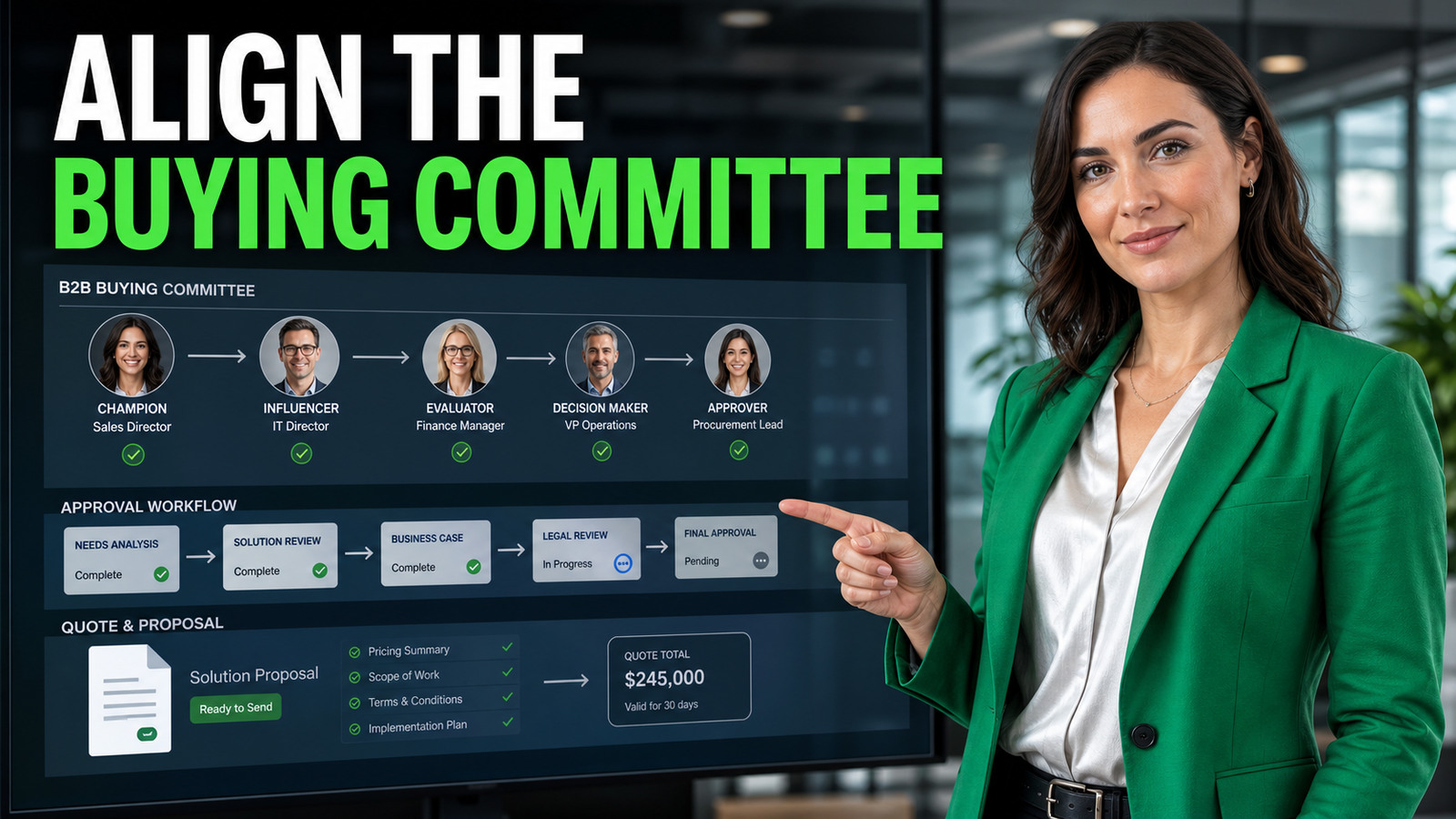
A buying committee workflow is not a decorative org chart. It answers six questions every rep and manager should be able to answer without opening email, chat, and five folders:
- Who is involved, and which company or opportunity record connects them?
- What role does each person play: champion, evaluator, approver, signer, blocker, or user?
- What concern matters to each stakeholder?
- Which document, quote version, or approval is waiting?
- Who on your team owns the next action?
- When must that action happen?
The goal is not to add fields for their own sake. The goal is to make the next revenue action obvious and accountable.
Build a buying-committee record your team will actually maintain
Start with a clean account and contact structure. Duplicate people, inconsistent company names, missing job titles, and contacts stored only in a rep’s phone make committee coverage impossible to trust.
If your database already has duplicate records, fix the foundation before adding automation; BROSH’s guide to merging duplicate CRM contacts and accounts explains why related activity and ownership must remain connected.
1. Connect every stakeholder to the same commercial context
Attach contacts to the customer account and, where your workflow supports it, to the relevant opportunity, quote, project, or task. A procurement contact may matter only for one purchase while an operations sponsor may influence renewals and future projects. Preserve both the durable account relationship and the current deal context.
2. Record influence and responsibility separately
A senior title does not always mean decision authority. Use practical role labels such as champion, economic approver, technical evaluator, procurement reviewer, legal reviewer, signer, end user, and potential blocker. Then record who on your team owns that relationship. This avoids the classic failure where everyone assumes someone else is following up with finance.
3. Capture the concern, not just the persona
Write the stakeholder’s actual decision criterion in plain language: payback period, implementation effort, data quality, security review, delivery dates, service response, or contract flexibility. This gives the next seller useful context and makes follow-up more relevant than a generic “checking in” message.
4. Give every open concern a dated next action
A contact record without a next action is history, not workflow. Create a task with one owner, one due date, and one intended outcome. For calendar-driven follow-up, the smart CRM calendar guide shows how quotes, renewals, and service commitments can share a visible schedule.


Turn approvals, quotes, and documents into one controlled flow
Stakeholder mapping creates visibility; a controlled approval flow creates momentum. Define a small number of observable stages that match how the buyer actually moves, for example: discovery confirmed, solution reviewed, business case accepted, quote sent, commercial review, legal or procurement review, approved, signed, and implementation handoff.
For every stage, specify an exit condition. “Proposal” is ambiguous. “Quote version 3 sent to finance, procurement review due Friday” is actionable. Store the current quote, supporting document, approval status, owner, and next date with the customer record. This reduces version confusion and makes it easier for a manager to help before the deal stalls.
When signatures are part of the process, connect signed documents to the same record rather than treating signing as a separate island. See the practical workflow in built-in CRM e-signature for quotes and documents.
A useful approval-status checklist
- Document: the exact proposal, quote, order, or agreement under review.
- Version: the current version and what changed.
- Buyer owner: the stakeholder expected to act.
- Seller owner: the teammate responsible for follow-up.
- Status: waiting, reviewing, changes requested, approved, or signed.
- Deadline: the date tied to a real business event.
- Blocker: the unanswered concern preventing the next stage.
A practical workflow from first meeting to signed agreement
| Moment | CRM action | Owner | Evidence of completion |
|---|---|---|---|
| First meaningful conversation | Create or clean the account and contacts; record problem, timing, and next step. | Sales owner | Dated task and confirmed buyer objective |
| Committee discovery | Add missing stakeholders, roles, concerns, influence, and relationship owner. | Sales owner with manager | No critical approval role left unknown |
| Solution review | Link meeting notes and customer documents; assign follow-up by concern. | Sales and specialist | Each open question has an owner and due date |
| Quote preparation | Record quote version, value, validity, assumptions, and required internal approval. | Sales owner | Approved quote ready to send |
| Buyer review | Track procurement, finance, legal, and executive feedback separately. | Named relationship owners | Current blocker and next action visible |
| Signature and handoff | Store signed document, close tasks, and create delivery or onboarding ownership. | Sales and customer operations | Signed file plus kickoff task and owner |
Teams that prefer a visual opportunity view can combine this structure with a sales pipeline Kanban workflow. The board should summarize reality; the customer record should contain the evidence behind it.
Management metrics that reveal committee risk
A larger buying group does not require a larger reporting burden. Focus on measures that change decisions:
- Stakeholder coverage: percentage of open qualified deals with champion, economic approver, evaluator, and signer identified.
- Single-thread risk: percentage of deals with only one active buyer contact.
- Next-action coverage: percentage of open deals with a future dated task and clear owner.
- Approval aging: days spent waiting for finance, procurement, legal, or executive approval.
- Quote aging: days since the current quote was sent or last changed.
- Document completeness: percentage of late-stage deals with current quote, supporting documents, and approval evidence linked.
- Overdue follow-up rate: overdue stakeholder actions divided by all open stakeholder actions.
- Stage reversion rate: deals moved backward because a stakeholder or requirement appeared late.
Review these metrics in a weekly pipeline meeting. Do not punish a rep for exposing risk; reward early identification and a credible recovery action. For a broader management approach, connect these measures to the practices in the practical CRM sales management guide.
Automation readiness: what to automate and what to keep human
Automate reminders, overdue-task alerts, document-status notifications, missing-field checks, and handoff tasks. Keep judgment-heavy work human: identifying real influence, interpreting objections, resolving disagreement, and deciding which executive should enter the conversation. Clean records and explicit ownership are prerequisites. Automation applied to unclear data only accelerates confusion.


Implementation plan for the next 30 days
Week 1: define the minimum operating model
Choose the stakeholder roles, approval stages, quote statuses, and required next-action fields. Keep the list short enough for a rep to use during real work. Decide which field is the source of truth for each status.
Week 2: clean active opportunities
Start with the deals most likely to close this quarter. Merge duplicate contacts, connect missing people, upload current documents, and close obsolete tasks. Managers should help with the first review so the standard becomes concrete.
Week 3: add ownership and alerts
Assign a seller-side owner to every critical buyer relationship and approval. Configure reminders for overdue actions, aging quotes, missing signers, and deals with only one active contact.
Week 4: inspect outcomes and simplify
Review coverage, overdue actions, and approval aging. Remove fields nobody uses. Clarify confusing statuses. Turn successful deal patterns into a repeatable checklist for new opportunities.
Decision rule: if a field does not guide a follow-up, approval, document, ownership, or management decision, it probably should not be mandatory.
Questions and Answers
What is a buying committee in B2B sales?
A buying committee is the group of people who influence, approve, review, use, or sign off on a business purchase. It can include a champion, operational users, finance, procurement, legal, technical evaluators, an executive approver, and the final signer.
How should a CRM track multiple stakeholders on one deal?
Connect each contact to the same account and commercial context, record the person’s role and concern, assign an internal relationship owner, and create a dated next action. Keep quote, approval, and document status visible on the same customer history.
Which stakeholder roles should a small B2B team track?
Start with champion, business or economic approver, evaluator, procurement or legal reviewer, signer, end user, and blocker. Use only the roles that change how your team follows up.
How do we prevent quotes and approvals from stalling?
Give every open approval one buyer owner, one seller owner, one current document version, one status, one blocker, and one deadline. Review aging approvals and overdue tasks weekly.
What should be automated in a buying-committee workflow?
Automate reminders, missing-data checks, overdue alerts, document-status notifications, and handoff tasks. Keep relationship strategy, objection handling, influence assessment, and negotiation human-led.
Make every stakeholder and next action visible
BROSH CRM helps B2B teams keep customer records, follow-up, quotes, documents, approvals, tasks, and ownership connected. Build a workflow your team can run every day—and give managers a clear view of where revenue is moving or blocked.
Sources: peer-reviewed research; peer-reviewed research.
Ready to organize your next complex B2B deal?
See how BROSH can turn buying-committee activity into accountable revenue workflow.
Talk to a CRM Expert