
Gap-Based Sales Discovery With BROSH CRM
Turn buyer pain, current-state problems, documents, quote risk, and follow-up ownership into a CRM workflow your B2B sales team can actually manage.
Many sales conversations create useful insight, but the insight disappears into personal notes, email threads, or a single salesperson's memory. A gap-based discovery workflow fixes that by recording the difference between where the buyer is today and where they need to be, then connecting that gap to tasks, documents, quote status, and next steps.
Last modified by BROSH CRM, on Mon Aug 10 2026 Israel Time
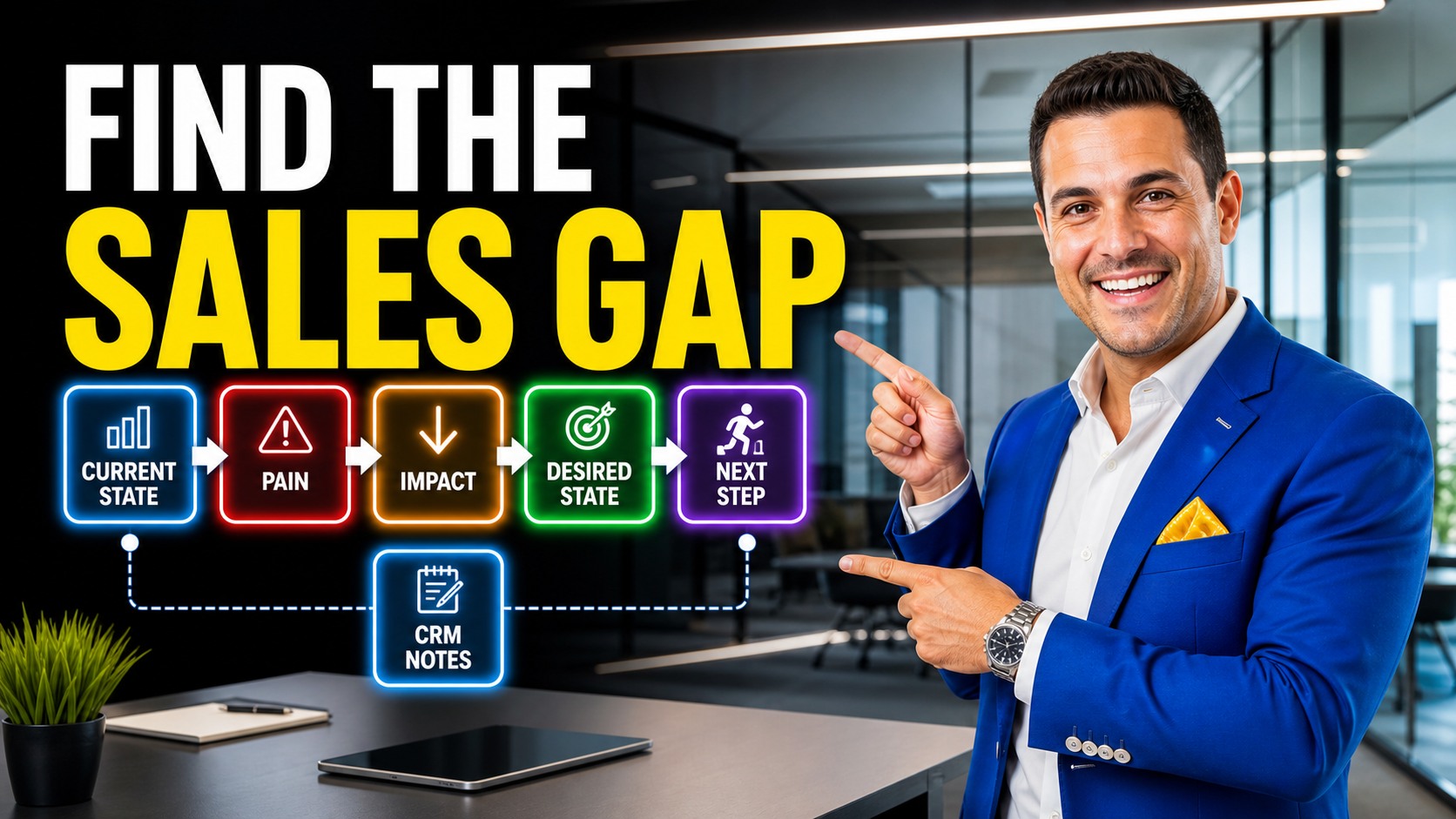
A useful sales discovery workflow connects current state, pain, impact, desired state, next step, and CRM notes.
How Gap-Based Sales Discovery Turns Buyer Pain Into CRM Follow-Up
Gap-based sales discovery is not a script. It is an operating discipline. The salesperson asks better questions, but the CRM must preserve the answers in a way the whole team can use. A good record should show the buyer's current state, desired state, problem impact, affected stakeholders, decision criteria, documents needed, quote stage, and next follow-up date.
For BROSH CRM buyers, this is directly connected to daily B2B work: following up on new leads, preparing quotes, collecting customer documents, assigning tasks, keeping managers informed, and helping service or operations understand what success means after the deal closes.
The U.S. Small Business Administration guide to market research and competitive analysis encourages companies to understand customer needs and market context before acting. In CRM terms, that same habit should appear in each qualified opportunity: do not only record that the buyer is interested; record why the buyer needs to change.
Capture the Buyer Problem Before You Prepare the Quote
A quote is stronger when it is connected to a real business gap. Before preparing the proposal, capture what is happening now, what the buyer wants to improve, what the delay costs, which stakeholders care, and what proof is needed.
For example, a B2B buyer may say that sales follow-up is inconsistent. The CRM record should go deeper: leads are not assigned fast enough, quote status is unclear, documents are scattered, and management cannot see which opportunities are waiting for action. That detail changes the follow-up conversation.
This section of the workflow connects naturally with buyer enablement CRM workflows, because buyer questions, proof, stakeholders, and decision criteria should sit beside the opportunity instead of being lost in separate messages.

Discovery notes should capture buyer problem, cost of delay, stakeholders, documents, quote risk, and the next question.
Turn Discovery Into Structured BROSH CRM Fields
The discovery conversation should become structured CRM data, not just a paragraph note. That does not mean the form must be complicated. It means the important decision fields are easy to scan and report.
Current State
What is happening now? Capture the broken process, missing visibility, manual workaround, customer friction, or operational delay.
Impact
What does the problem cost? Track missed revenue, time wasted, customer risk, approval delay, duplicate work, or service pressure.
Next Step
Who owns the next action? Connect discovery to task owner, follow-up date, document, quote update, or manager review.
Teams that are preparing automation later should connect this work to AI-ready CRM operations and agentic AI CRM workflows. Clean discovery fields are exactly the kind of business context automation needs.
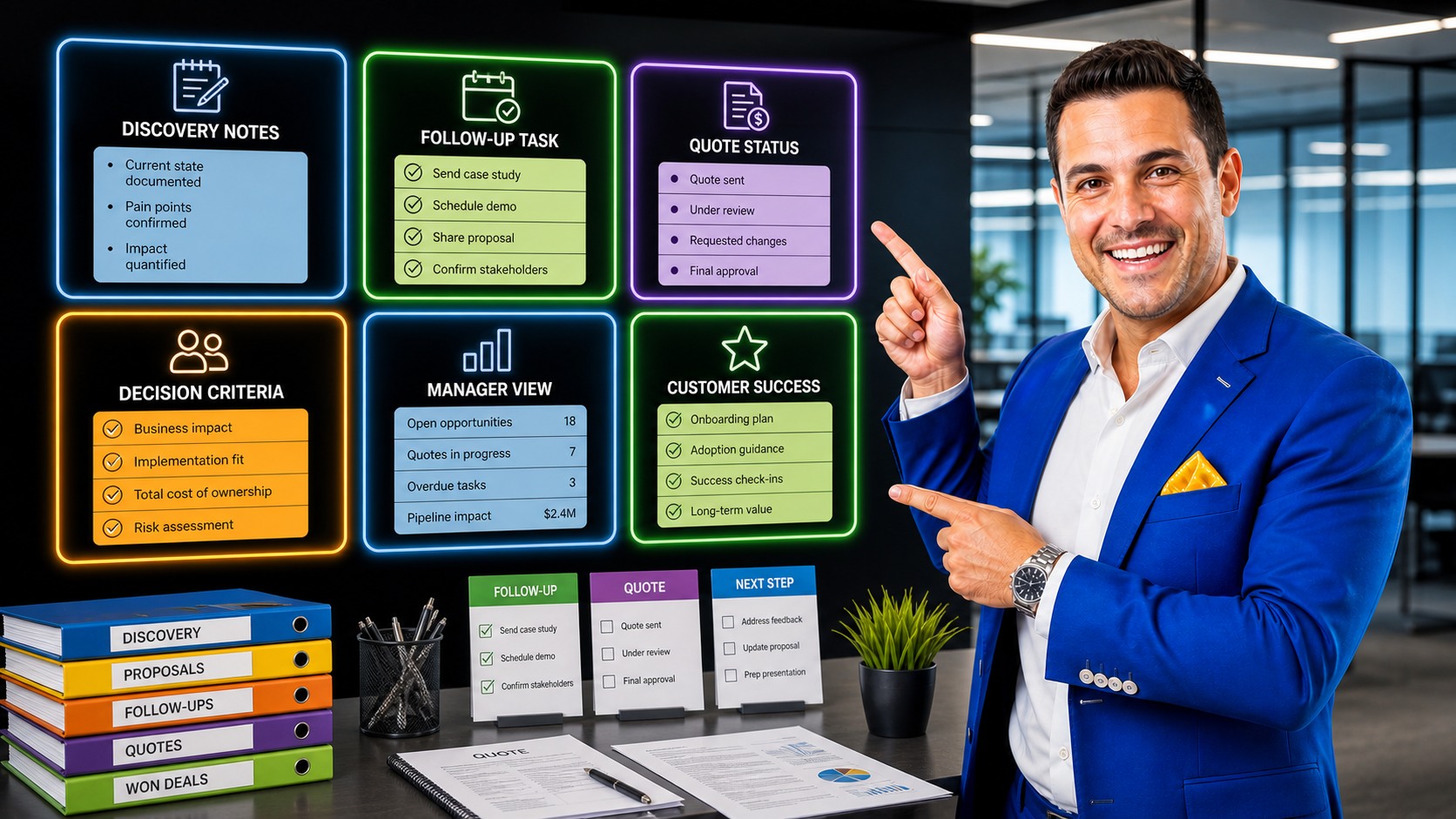
Discovery becomes operational when it creates follow-up tasks, quote status, decision criteria, manager visibility, and customer success context.
Make Discovery Actionable for Managers
Sales managers do not need every sentence from the conversation. They need to know whether the opportunity is real, what business problem it solves, what proof is missing, who owns the next step, and whether the quote or document workflow is blocked.
That is why discovery should connect to manager dashboards, task lists, quote status, document status, and follow-up ownership. If the buyer needs a case study, assign it. If the quote is waiting for approval, show it. If the decision criteria are unclear, create the next question as a task.
The NIST AI Risk Management Framework is useful when teams later automate parts of this workflow because it emphasizes trustworthy system behavior, transparency, and accountability. In practice, keep the source discovery fields visible and require people to approve important customer-facing actions.
For visual management, connect this article with workflow Kanban in BROSH CRM. For proposals, contracts, and approvals, connect discovery to e-signature documents so proof and paperwork stay near the customer record.
A 5-Step BROSH CRM Workflow for Gap-Based Discovery
1. Qualify the customer record. Confirm company, contact, role, source, owner, and next meeting or follow-up date.
2. Capture the gap. Record current state, desired state, problem, impact, stakeholders, and decision criteria.
3. Attach the proof. Add customer documents, requirements, quote files, proposal versions, or approval notes to the related account or opportunity.
4. Assign the next action. Create tasks for the owner, document sender, quote reviewer, manager, or service handoff owner.
5. Review the management signals. Track overdue follow-up, quote status, missing stakeholders, open questions, and customer success criteria.
If the buyer journey is still unclear, the BROSH guide on building an optimal customer journey can help teams map what happens before and after the sales conversation.
Questions and Answers
What is gap-based sales discovery in CRM?
Gap-based sales discovery is a practical way to record the difference between a buyer's current state and desired state inside the CRM. The team captures the problem, impact, stakeholders, decision criteria, documents, quote status, and next step so follow-up is based on business value rather than generic reminders.
Which BROSH CRM fields should a team track during discovery?
Useful fields include current state, desired state, buyer problem, cost of delay, decision stakeholder, required document, quote status, next question, next follow-up date, task owner, and success criteria. These fields help sales, operations, and management see why the deal matters.
How does this help B2B teams improve follow-up?
A discovery note becomes useful only when it turns into action. BROSH CRM can connect the buyer problem to tasks, quote follow-up, documents, approvals, and manager reporting so the team knows who owns the next step and what proof the buyer needs.
Can this workflow support AI-assisted CRM automation later?
Yes. When discovery notes, ownership, documents, and follow-up tasks are structured, automation can prepare reminders, summarize account context, flag risk, and suggest next actions while people keep control of customer-facing decisions.
Turn Sales Discovery Into Follow-Up Your Team Can Manage
BROSH CRM helps B2B teams connect buyer problems, quote status, documents, tasks, and manager visibility so every meaningful sales conversation becomes clear next action.