
B2B CRM workflow guide
Rescue Stalled B2B Deals Before Revenue Slips Away
Use buyer evidence, clear ownership, and a disciplined rescue workflow.

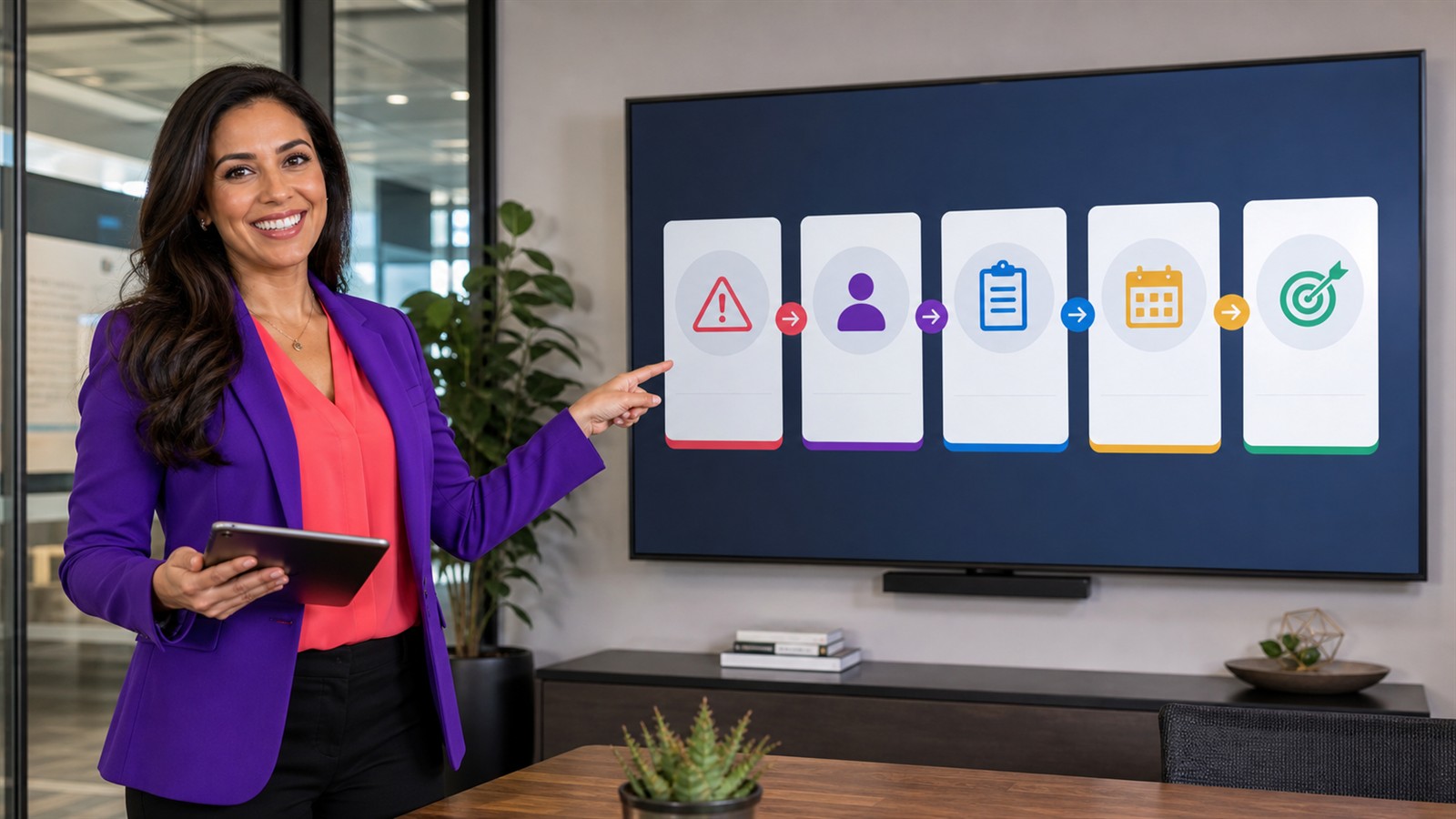
Why stalled deals deserve an operating workflow
Academic research describes opportunity stagnation as disrupted sales-process flow, often connected to buyer readiness rather than simple deal age. Research on industrial project pipelines also emphasizes staged control and continuous status monitoring. That supports a rescue workflow built on evidence, ownership, and a dated buyer action.
See the university study on B2B opportunity stagnation and the industrial pipeline-management study.
The management lesson is concrete: a dashboard cannot rescue a deal unless the underlying record shows who owns the customer, what changed, which quote or document is current, what approval is waiting, and when the next action is due.
A useful stalled-deal workflow answers five questions in less than a minute:
- What signal says momentum has stopped?
- Is the delay caused by the buyer, the seller, an internal approval, or missing information?
- Who owns the recovery action?
- What evidence will prove the deal is moving again?
- When will management reassess or remove it from the active forecast?
A stale close date is not a rescue plan. Replace optimism with a dated action and observable evidence.
Define stalled with evidence, not instinct
Different deal stages naturally move at different speeds. A discovery call may require a next step within two business days, while legal review may legitimately take two weeks. Create a small set of stage-specific service levels so every rep and manager knows when an opportunity needs attention.
Signals that should trigger a rescue review
- No future task: the opportunity has no scheduled customer or internal action.
- Overdue follow-up: a promised call, document, or decision date has passed.
- Quote aging: the current quote has been open longer than the normal review window.
- Stage aging: time in stage exceeds the team's actual median or agreed limit.
- Close-date drift: the expected close date moved more than once without new buyer evidence.
- Silent stakeholder: a champion stopped responding or a required approver never engaged.
- Document mismatch: the team cannot identify which proposal, quote, or agreement version is current.
- Ownership gap: an objection or approval is recorded but no teammate owns the response.
Use the CRM record as the common evidence layer. Clean account and contact data matter because duplicate records can scatter activity, tasks, and documents across different histories. If this is already a problem, start with BROSH's guide to merging duplicate CRM contacts and accounts.
Set service levels by stage
A simple table is enough. For each stage, define the maximum time without meaningful activity, the required next-action field, and who receives the alert. Avoid a single universal rule: a one-day silence after an urgent quote request is different from a one-day silence during a planned procurement review.


Diagnose the blocker before choosing the action
"Buyer went quiet" is a symptom. A useful rescue record separates the likely cause so the team can respond appropriately.
Buyer-side blockers
The business priority may have changed, the champion may lack internal support, budget may be unconfirmed, or procurement may be waiting for a specific document. Record the stakeholder, stated concern, last meaningful interaction, and the buyer event that determines timing.
Seller-side blockers
The team may owe a revised quote, security response, implementation plan, reference, or approval. Assign one owner and one due date. Do not hide internal delay behind a generic customer follow-up task.
Commercial and approval blockers
Discounts, payment terms, legal language, delivery scope, or quote validity can stop progress. Keep the current quote status and approval status visible beside the relevant document. BROSH's built-in e-signature workflow for quotes and documents shows how signing can stay connected to the customer history.
Timing blockers
Some deals are real but not current. Capture the triggering event and move the opportunity into an honest nurture or future-action state. A scheduled date tied to a budget cycle, renewal, project milestone, or executive review is more valuable than repeatedly pushing the close date.
The five-step stalled-deal rescue playbook
| Step | CRM action | Required evidence | Owner |
|---|---|---|---|
| 1. Flag | Mark the risk signal: overdue task, aging stage, aging quote, missing document, or silent stakeholder. | Timestamp and source activity | System rule or sales owner |
| 2. Diagnose | Select the blocker category and write the specific unanswered issue. | Buyer statement, internal dependency, or documented assumption | Sales owner |
| 3. Assign | Create one recovery task with a named owner and due date. | Visible responsibility and deadline | Sales owner or manager |
| 4. Act | Send the missing information, engage the right stakeholder, revise the quote, or resolve approval. | Completed activity, current file, or buyer response | Named rescue owner |
| 5. Decide | Return to active, set a real future trigger, revise forecast confidence, or close lost. | New buyer commitment or explicit management decision | Sales manager |
Run this as a short daily inspection for urgent deals and a deeper weekly pipeline review. A visual board can help managers see stage and aging patterns; connect the workflow to the BROSH sales pipeline Kanban guide so the board summarizes evidence rather than replacing it.
Write a recovery task that can be completed
"Follow up" is too vague. Use a task such as: "Maya to send revised implementation timeline to operations sponsor by Tuesday 14:00; ask for Thursday review confirmation." The owner, object, recipient, deadline, and intended result are all clear.
Build a deal rescue SLA your team can actually follow
A service-level agreement for stalled deals creates consistency without requiring heavy automation. Start with three severity bands:
- Watch: activity is slowing, but the next task and buyer timing are still credible. The sales owner reviews within two business days.
- At risk: a due date passed, a quote is aging, or a stakeholder has gone silent. The sales owner diagnoses and creates a recovery action within one business day.
- Critical: the forecast date is near, the buyer commitment is missing, or a commercial approval is blocked. The manager and owner decide the same day whether to escalate, reforecast, or pause.
Use a smart schedule for the follow-up commitments, quote-expiry dates, renewal triggers, and approval deadlines that support the SLA. The smart CRM calendar workflow explains how to make these dates visible across customer operations.
What managers should review
- Next-action coverage: percentage of active opportunities with a future dated task and owner.
- Overdue rescue tasks: count and value of at-risk deals whose recovery action is late.
- Stage aging: deals beyond the expected time for their current stage.
- Quote aging: days since the latest quote was sent or updated.
- Close-date changes: number of date pushes without new buyer evidence.
- Blocker mix: buyer, seller, approval, document, commercial, or timing causes.
- Recovery rate: stalled deals that regained a confirmed buyer action within the SLA.
- False recovery rate: deals marked active again without a real buyer commitment.
Review both count and value. One large blocked quote may require executive attention, while many small overdue tasks may reveal a process or workload problem. For a broader operating cadence, see the practical CRM sales management guide.


Automation readiness: alert on evidence, keep judgment human
Good automation can detect missing next actions, overdue tasks, stage aging, quote expiry, absent owners, and unsigned documents. It can create reminders and route exceptions. It should not invent buyer intent or automatically keep a weak deal in the forecast.
Before automating, agree on the source of truth for stage, quote version, approval status, next action, and owner. Test each rule against recent won, lost, and delayed opportunities. If the rule flags nearly everything, it is not prioritization. If it misses known failures, the data or threshold needs work.
A 30-day implementation plan
Week 1: inspect ten recent stalled or lost deals. List the earliest observable signal and the blocker that ultimately mattered.
Week 2: define stage service levels, blocker categories, required next-action fields, and escalation owners. Keep the required fields short.
Week 3: clean current opportunities. Add missing contacts, close obsolete tasks, attach current documents, correct quote status, and assign rescue actions.
Week 4: add alerts, measure recovery rate, and simplify rules that produce noise. Coach from real records, not hypothetical scenarios.
Decision rule: an opportunity returns to the active forecast only when the record contains a new buyer commitment, an owned next action, and a believable date.
Questions and Answers
When should a B2B opportunity be considered stalled?
Treat an opportunity as stalled when it exceeds the agreed time without meaningful activity, has no future task, carries an overdue follow-up, has an aging quote or approval, or lacks evidence behind its close date. Use stage-specific limits rather than one rule for every deal.
What fields are essential for a stalled-deal rescue workflow?
Track the risk signal, blocker category, blocker detail, customer stakeholder, internal owner, next action, due date, current quote or document, approval status, and the evidence required to return the deal to active status.
How do we stop salespeople from endlessly moving close dates?
Require a buyer event or commitment for each close-date change. Record the reason, revised milestone, and next action. Managers should reforecast or pause opportunities that have repeated date changes without new evidence.
How should quote and document status support deal recovery?
Keep the current version, sent date, buyer reviewer, seller owner, approval status, requested changes, and next deadline connected to the customer record. This prevents teams from following up on the wrong file or waiting on an approval nobody owns.
Which stalled-deal actions should be automated?
Automate evidence-based alerts for missing next actions, overdue tasks, quote expiry, stage aging, missing owners, and unsigned documents. Keep diagnosis, stakeholder strategy, negotiation, forecast judgment, and escalation decisions human-led.
What is a good stalled-deal recovery metric?
Measure the percentage of flagged deals that gain a confirmed buyer action within the service level. Pair it with false recovery rate so teams do not mark deals healthy based only on an internal task or another unsupported date change.
Turn stalled opportunities into accountable decisions
BROSH CRM helps B2B teams connect customer records, sales follow-up, quotes, documents, approvals, tasks, ownership, and management visibility. Build a rescue workflow that tells your team what is blocked, who acts next, and when a deal should move forward or leave the forecast.
Sources: peer-reviewed research; peer-reviewed research.
Ready to recover momentum in your B2B pipeline?
See how BROSH can turn deal risk into clear, owned revenue actions.
Talk to a CRM Expert