
Contract-to-first-value workflow
Customer Onboarding CRM: Turn Signed B2B Deals Into First Value Faster
Carry every promise, stakeholder, approval, document, owner, and next milestone from the signed deal into a customer onboarding plan that delivers visible value.
Last modified: August 20, 2026
Make the Signed-Deal Handover Complete
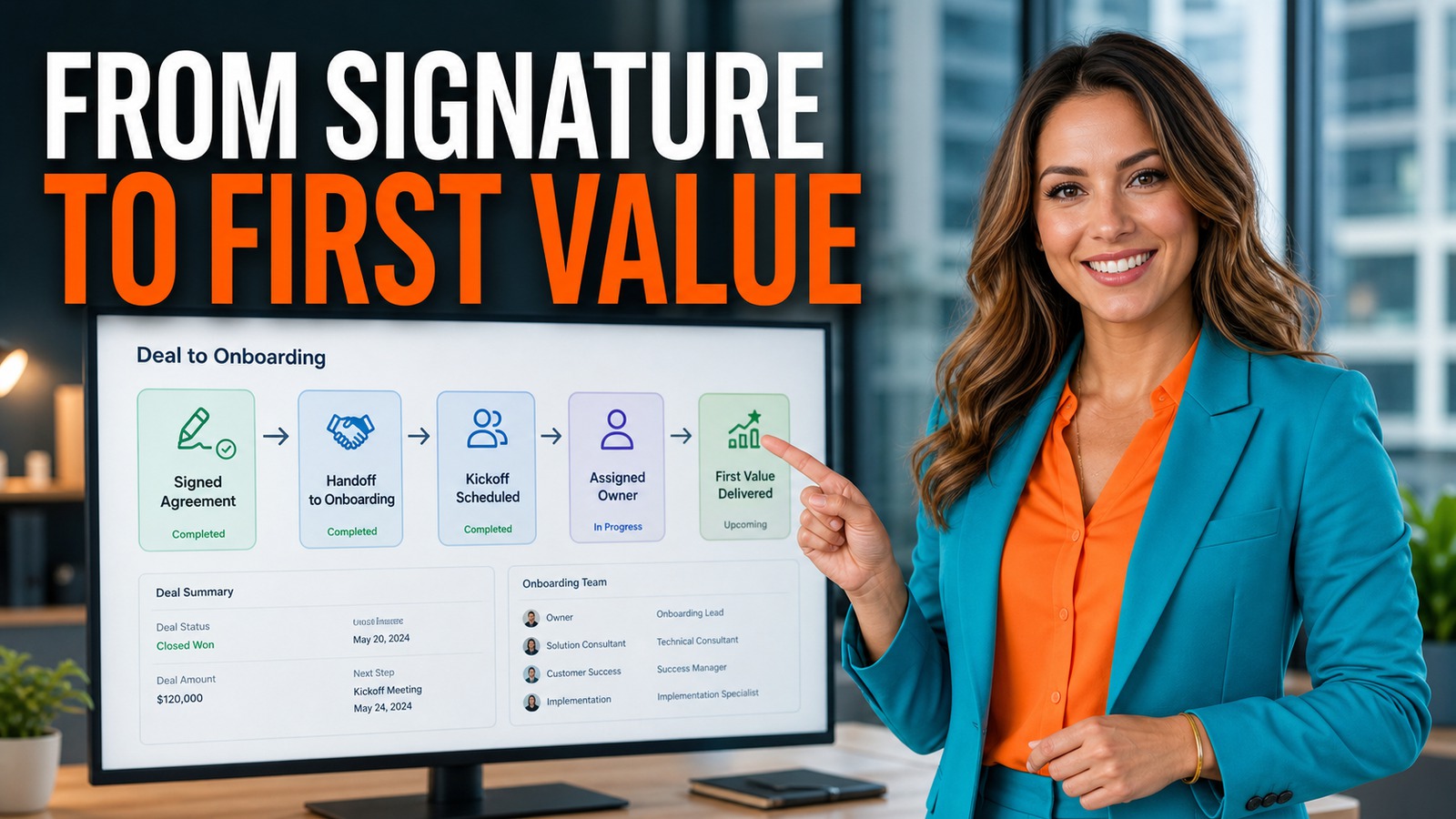
A signed agreement should trigger more than a congratulatory message. It should create a controlled transfer from sales context to customer delivery. Without that transfer, the onboarding owner starts by searching through email, rebuilding scope, and asking the customer to repeat decisions.
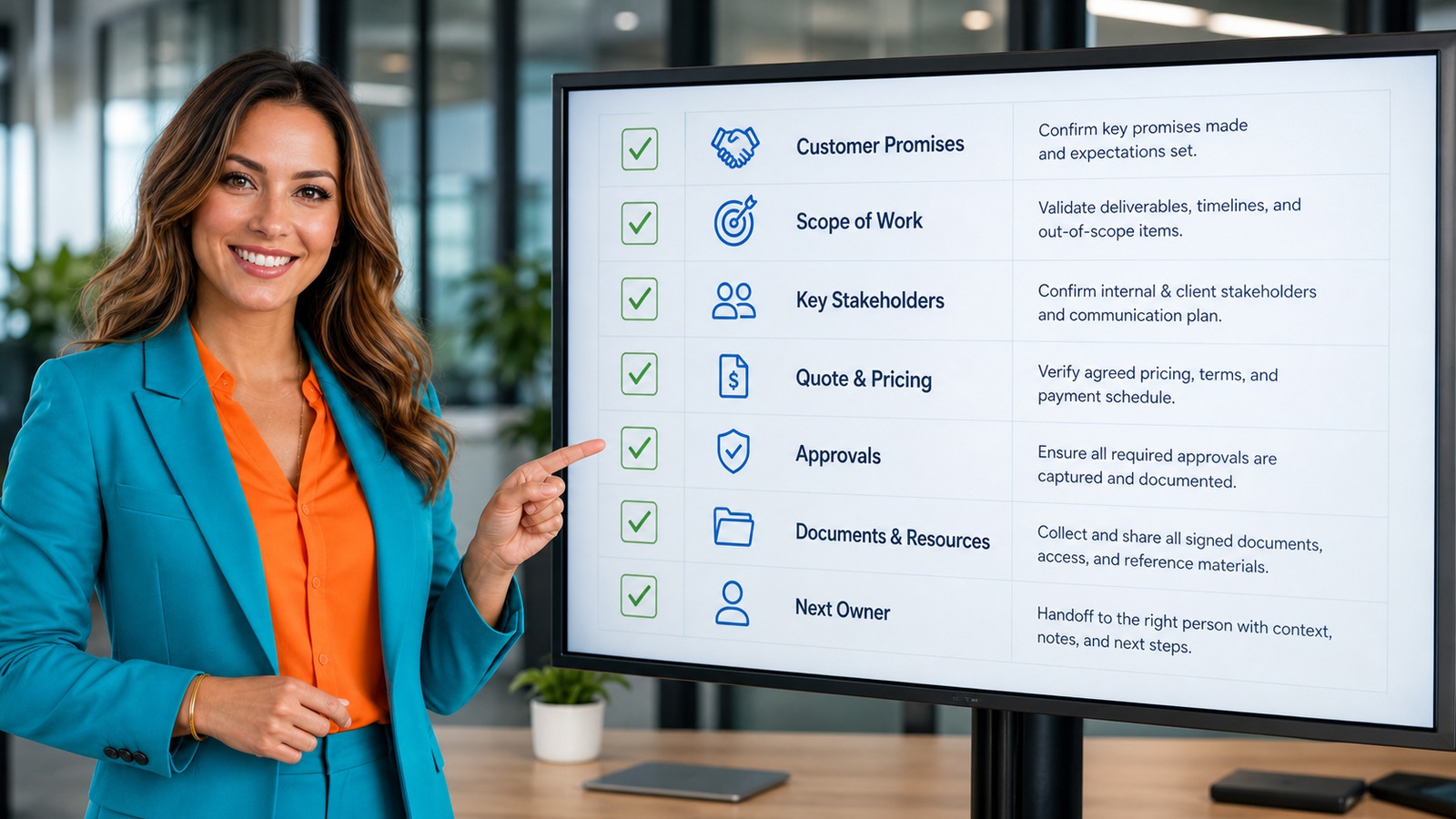
Build one handover record linked to the customer and deal. Capture the commercial promise, agreed scope, excluded work, success outcome, key dates, stakeholder roles, current quote, signed documents, approval conditions, open risks, and the first owner after signature.
Require evidence, not a summary sentence
- Current signed agreement and accepted quote version.
- Customer problem, expected outcome, and how value will be confirmed.
- Decision-maker, operational lead, users, finance contact, and blocker.
- Delivery assumptions, dependencies, dates, and customer obligations.
- Outstanding approval, document, access, data, or security requirement.
- Named onboarding owner, kickoff target, and first customer-facing action.
Keep the complete commercial history attached to one customer record. If duplicate accounts split the evidence, use BROSH bulk merge for customer records before the handover.
Handover gate: do not mark the transfer complete until the receiving owner can explain the promise, risk, next milestone, and customer obligation without reopening the sales thread.
Set a Kickoff Readiness Gate
Scheduling a kickoff is not the same as being ready. A meeting held before the right people, documents, decisions, and prerequisites are available often produces another meeting instead of progress.
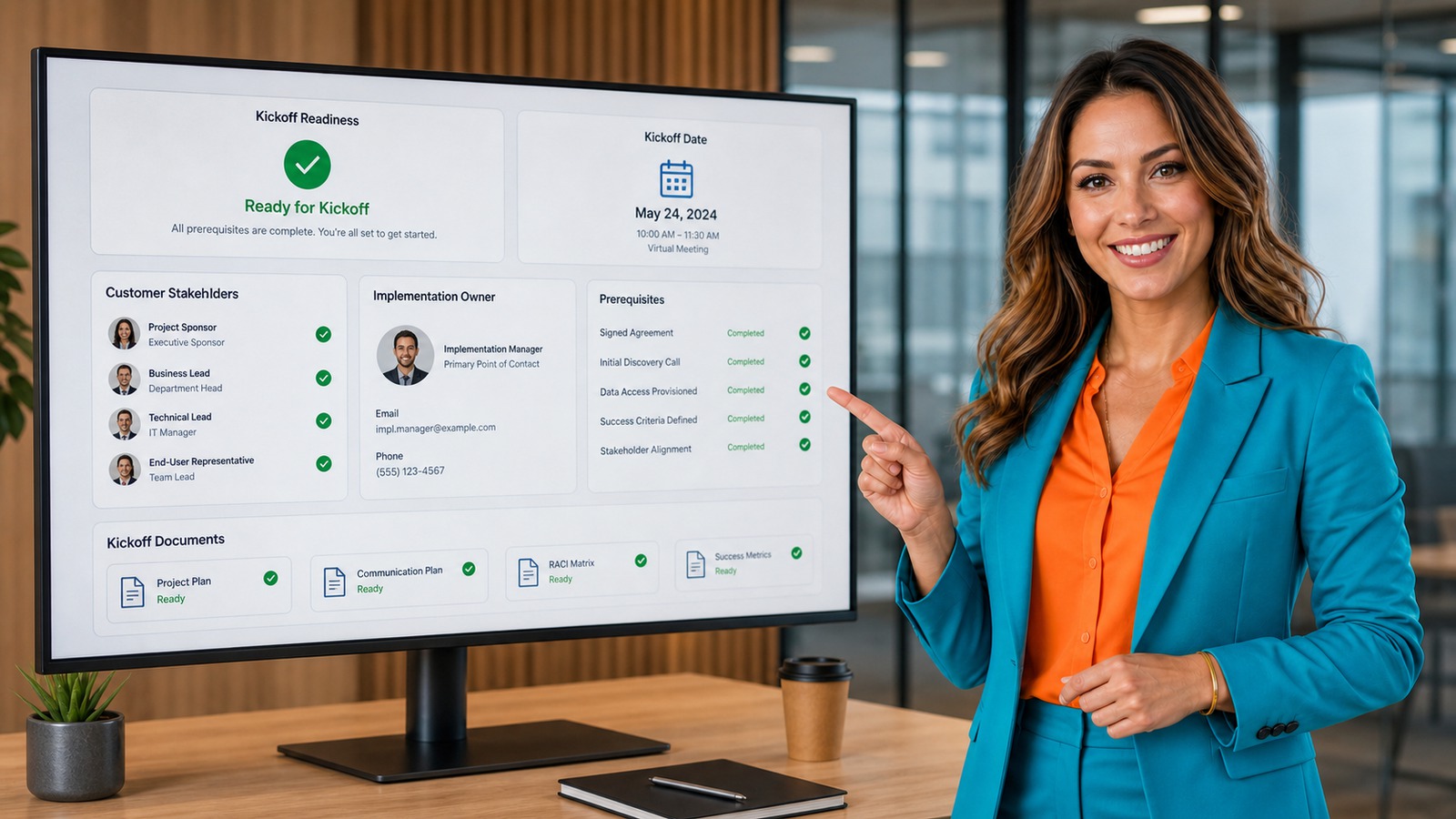
Create a readiness checklist with a clear owner and status for every dependency. Confirm the customer sponsor, day-to-day lead, internal delivery owner, communication channel, scope baseline, timeline, required access, data inputs, approvals, and the decision that should leave the kickoff.
Separate required from useful
Not every field deserves to block work. Mark the small set of conditions that must be complete before kickoff, then label supporting context separately. This keeps governance practical while exposing the exceptions that genuinely threaten delivery.
Use a shared date for the meeting and each prerequisite. BROSH's smart CRM calendar can connect the kickoff, preparation tasks, customer commitments, and reminders to the same record.
If a signed document is missing or outdated, connect the current file and signature status through BROSH e-signature and customer documents.
Readiness rule: a green kickoff means the required people, evidence, access, decisions, and owner are ready—not merely that a calendar invitation exists.

Define First Value Before Work Begins
Onboarding becomes a list of activities when nobody defines the first result the customer should recognize. Training delivered, files imported, and meetings completed may be necessary, but they are not automatically business value.
Record a baseline, a first useful outcome, the evidence that proves it, the customer who can confirm it, and the date by which it should happen. For a service team, first value might be an approved plan. For a distributor, it may be a correct first order. For a project supplier, it could be an accepted milestone.
Write a measurable value statement
Use this structure: “By date, customer role will achieve outcome, proven by evidence.” Keep the measure within the supplier's influence and the customer's agreed responsibilities. Avoid vague promises such as “successful implementation” without an observable result.
- Baseline: what is true before onboarding starts?
- Outcome: what useful change should the customer experience first?
- Evidence: which record, document, approval, or action proves it?
- Confirmation: who on the customer side can accept the result?
- Next value: which milestone follows after the first outcome?
Connect the value milestone to the wider customer history. BROSH's guide to the B2B customer lifecycle shows how sales, delivery, service, and renewal can share one operating view.
Manage Onboarding by Exceptions
A long checklist can hide the few problems that threaten the customer outcome. Managers need an exception view that identifies what changed, why it matters, who owns the response, and when the next decision is due.
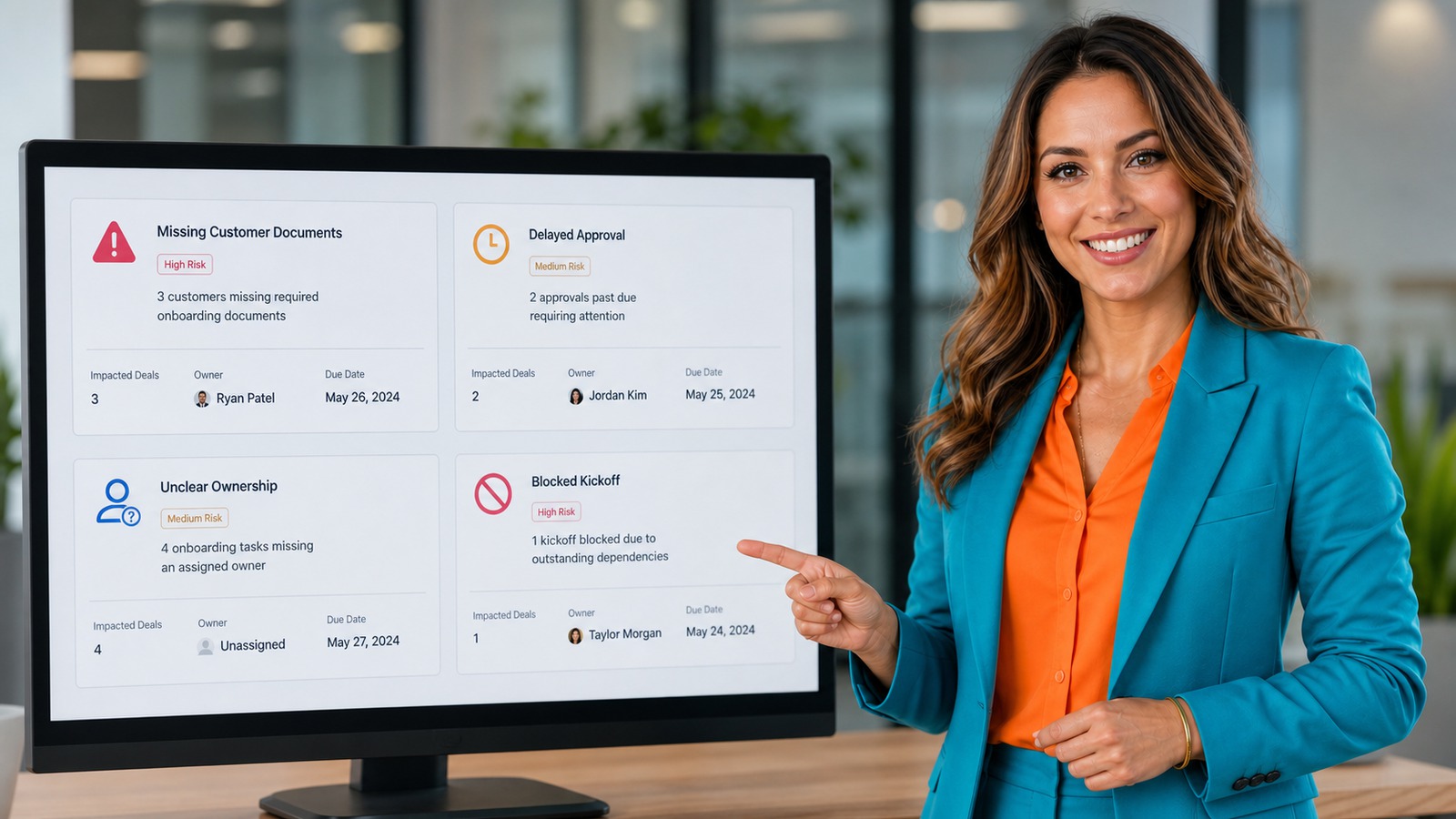
Create explicit states for missing documents, delayed approvals, unavailable stakeholders, disputed scope, blocked access, unconfirmed kickoff, overdue customer inputs, and tasks without owners. Attach each exception to the affected milestone and customer promise.
Escalate with full context
An escalation should include the original commitment, current evidence, business impact, attempted follow-up, decision required, accountable owner, and deadline. That lets leaders remove a blocker without repeating discovery.
Track whether the risk is internal, customer-controlled, shared, or external. This distinction improves coaching and keeps teams from quietly changing dates without explaining the cause.
Visual work states can make ownership easier to inspect. The BROSH customer workflow Kanban provides a practical pattern for moving work while keeping blockers visible.
Exception rule: every material risk needs a customer impact, owner, next decision, and dated resolution evidence. “Waiting” is not a complete status.

Measure the Path to Customer Value
Final satisfaction is important, but it arrives too late to manage an active onboarding portfolio. Use leading measures that show whether customer context is complete and whether work is moving toward a confirmed result.
- Handover completeness: signed deals with every required promise, stakeholder, document, risk, owner, and next action.
- Time to accepted handover: elapsed time from signature to receiving-owner acceptance.
- Kickoff readiness: scheduled kickoffs with all required prerequisites complete.
- Time to kickoff: elapsed time from signature to a productive customer kickoff.
- Dependency aging: open customer and internal prerequisites by age and business impact.
- Unowned work: active tasks, risks, approvals, or documents without one accountable owner.
- Time to first value: elapsed time from signature to customer-confirmed first outcome.
- Value confirmation rate: onboardings with evidence accepted by the named customer role.
- Promise variance: scope, date, outcome, or commercial commitment that differs from the signed record.
Review results by customer segment, deal type, onboarding owner, dependency category, and promised outcome. The purpose is to improve definitions and remove recurring friction, not reward teams for hiding difficult work.
BROSH's guide to practical CRM sales management explains how leaders can connect record quality, ownership, and management action.
Roll Out the Workflow in 30 Days
Start with one repeatable customer type and the smallest control set that protects delivery. Avoid automating a handover that nobody has defined or a milestone that customers do not recognize.
Days 1–7: define
Review recent signed deals. Identify missing context, repeated customer questions, kickoff delays, scope surprises, and the first result customers actually valued.
Days 8–15: clean
Define the handover gate, readiness conditions, value statement, exception states, owners, due dates, documents, and evidence required to close each step.
Days 16–23: pilot
Run the workflow with a small team. Observe where people leave the CRM, which fields create decisions, and which requirements add work without reducing risk.
Days 24–30: review
Measure handover acceptance, kickoff readiness, dependency age, first-value progress, and owner coverage. Simplify the workflow before expanding it.
Only then add reminders for missing evidence, approaching dates, overdue dependencies, and unowned work. The BROSH guide to safer CRM automation shows how triggers can support the process while human judgment remains visible.
Adoption rule: every required field must support a decision, customer promise, risk control, handoff, or next action that someone can name.

Use a Contract-to-Value Control Table
Give every stage an observable entry condition, accountable owner, and closure evidence. This keeps the workflow explainable when sales, delivery, finance, and customer teams share responsibility.
| Control point | Required CRM evidence | Accountable action | Closure evidence |
|---|---|---|---|
| Deal signed | Accepted quote, agreement, scope, promise, customer contacts | Sales owner prepares the handover | Receiving owner can inspect the complete record |
| Handover accepted | Outcome, exclusions, dependencies, risks, dates, owner | Onboarding owner accepts or returns gaps | Acceptance date and next customer action |
| Kickoff ready | People, access, documents, approvals, agenda, decision | Owners complete required prerequisites | Readiness gate passed with exceptions resolved |
| Kickoff complete | Confirmed plan, responsibilities, milestones, communication path | Team records customer decisions and tasks | Customer acknowledges the working plan |
| First value active | Baseline, outcome, evidence, confirmer, target date | Owner drives the next measurable result | Evidence is available for customer review |
| First value confirmed | Result, customer response, variance, next milestone | Owner captures acceptance and follow-up | Named customer role confirms the outcome |
The 2026 UK Contract Management Playbook emphasizes early mobilisation, clear responsibilities, governance, records, performance evidence, and planned transitions. Its operating lesson applies to B2B customer onboarding: continuity depends on structured information and ownership before delivery begins.
Updated 2026 government mobilisation guidance likewise calls for realistic milestones, documented obligations, stakeholder engagement, governance, risk logs, payment processes, and audit trails. OECD's 2026 SME evidence adds that deeper digital integration requires organisational changes across customer service, data management, payments, and daily operations.
Questions and Answers
What should a sales-to-onboarding CRM handover include?
Include the signed agreement, current quote, scope, exclusions, customer problem, promised outcome, stakeholders, approvals, documents, dependencies, risks, key dates, receiving owner, kickoff target, and next customer-facing action.
When is a B2B customer ready for kickoff?
The required sponsor, operational lead, delivery owner, scope, documents, access, approvals, customer inputs, agenda, and decision are ready. A calendar invitation alone does not prove readiness.
How do we define first value in CRM?
Record a baseline, observable first outcome, target date, proof, responsible owner, and named customer role who can confirm the result. Use a milestone the customer recognizes, not an internal activity count.
Who owns the customer after the deal is signed?
Assign one receiving owner for the next outcome while keeping supporting sales, delivery, finance, and specialist responsibilities visible. Ownership should transfer through an accepted handover, not disappear at signature.
Which customer onboarding documents belong in CRM?
Keep the accepted quote, signed agreement, scope, change records, requirements, approval evidence, stakeholder map, delivery plan, customer inputs, meeting decisions, risk log, and first-value confirmation linked to the customer.
Which onboarding metrics should B2B teams track?
Track handover completeness, acceptance time, kickoff readiness, time to kickoff, dependency aging, unowned work, time to first value, customer confirmation, and variance from the signed promise.
Can customer onboarding follow-up be automated?
Automate reminders for missing evidence, approaching milestones, overdue customer inputs, unresolved approvals, absent owners, and aging risks. Keep scope interpretation, customer commitments, value confirmation, and escalation under human review.
Make the First Customer Outcome Part of the Deal
The customer does not experience your internal handoff. They experience continuity or repetition, momentum or silence, and a promise that becomes visible value or an avoidable delay.
BROSH CRM gives B2B teams one practical record for the deal, stakeholders, quote, signed documents, approvals, customer commitments, tasks, dates, risks, and first-value evidence. That shared context helps sales finish responsibly and onboarding start with confidence.
Sources: UK Cabinet Office, The Contract Management Playbook (2026); UK Government, contract mobilisation and management guidance (updated 2026); OECD, supporting SME digital transformation (2026).
Ready to turn signed deals into customer value without losing context?
See how BROSH can connect agreements, quotes, approvals, documents, onboarding tasks, owners, and customer milestones.
Talk to a CRM Expert