
B2B CRM workflow guide
Protect B2B Renewals Before the Deadline Becomes a Crisis
Turn renewal dates, value signals, documents, and ownership into early action.
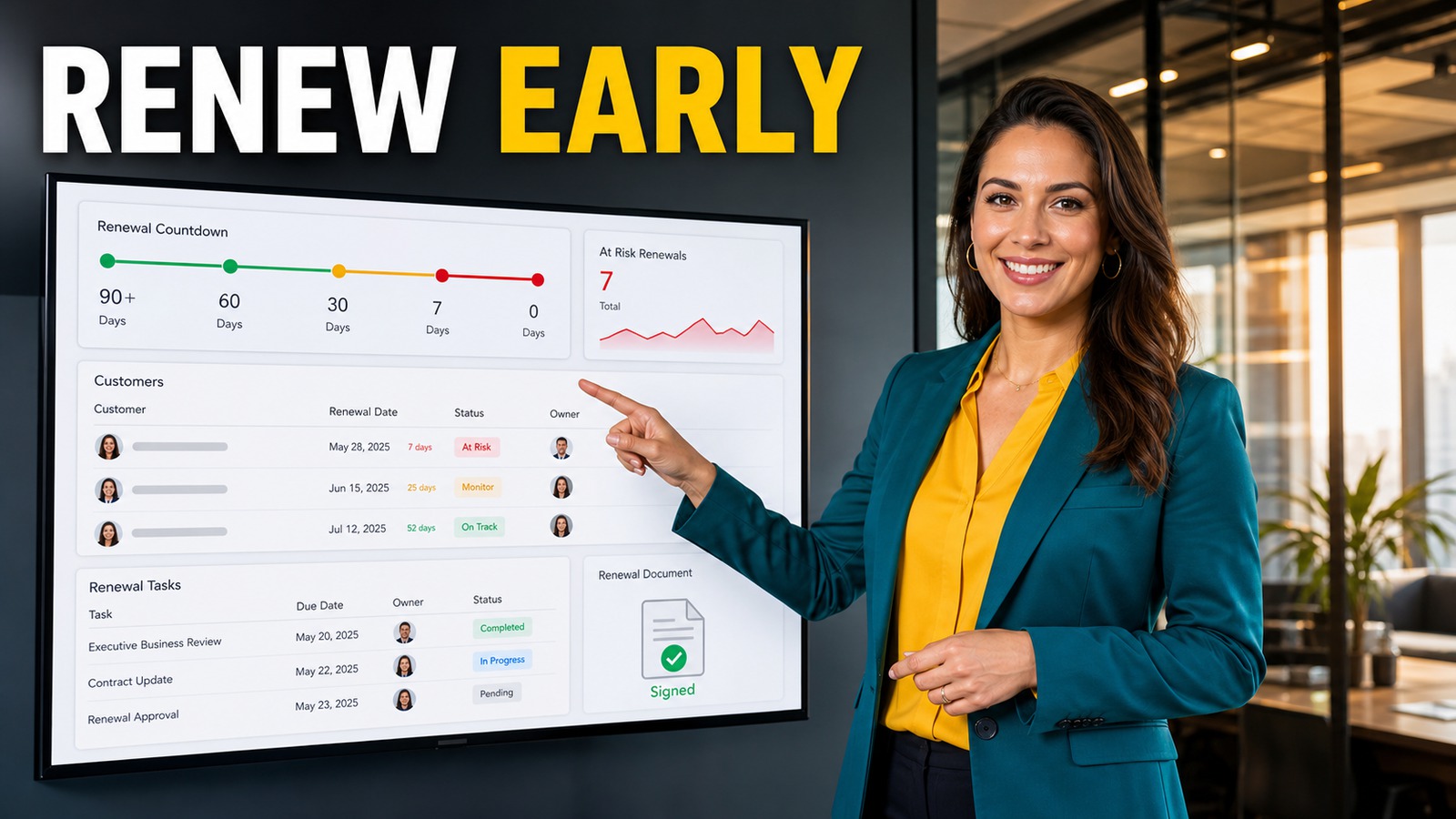

Why renewal management is now a year-round revenue workflow
Longitudinal academic research finds that the drivers of B2B contract renewal can change over time. Related research on service experiences shows that timing and variability matter to retention. A renewal record should therefore capture current value, service signals, stakeholders, dates, and next actions—not only the contract end date.
See the longitudinal contract-renewal study and the university research on service experiences and retention.
The implication applies beyond subscription software. Any B2B company with service agreements, recurring orders, maintenance dates, framework contracts, or repeat purchasing depends on the quality of its post-sale customer record. Renewal readiness begins when the sale closes and the delivery promise becomes operational work.
Teams get exposed when key facts live in disconnected inboxes and spreadsheets:
- The contract date exists, but no renewal task or owner was created.
- The sales promise is not visible to the delivery or service team.
- The buyer's decision-makers and operational users are recorded inconsistently.
- A complaint is known to support but invisible to the commercial owner.
- Value achieved is discussed informally but never captured as evidence.
- The renewal quote is drafted late and internal approval has no deadline.
- The current document version cannot be identified confidently.
Operating principle: renewal risk is not a color on a dashboard. It is a specific missing commitment, unresolved issue, ownership gap, document dependency, or customer outcome that requires action.
Build one renewal-ready customer record
The foundation is not a complex score. It is a complete, current record that a sales manager, account owner, service lead, or executive can understand quickly. Start with the fields and relationships that support real decisions.
Customer and stakeholder context
Record the commercial sponsor, operational contact, finance or procurement contact, daily users, and any executive approver. Note each person's role in renewal, preferred communication channel, and recent level of engagement. If a sponsor leaves, do not simply replace the name; create a task to rebuild coverage with the new stakeholder.
Commercial dates and terms
Capture contract start, contract end, notice period, renewal type, current value, expected renewal value, quote validity, payment terms, and the date by which pricing or scope must be approved internally. The notice deadline can matter more than the contract end date because missing it may remove negotiating options for either party.
Delivered outcomes and open commitments
List the outcomes the customer expected, the evidence available, important milestones delivered, open promises, service issues, and agreed corrective actions. Connect these items to the customer record so the renewal conversation reflects the customer's experience rather than only the seller's forecast.
Ownership and next action
Every renewal should have one accountable commercial owner, named contributors, a future dated customer action, and an internal preparation task. A shared team may contribute, but shared ownership without one accountable person usually means no ownership.
Duplicate customer records undermine this foundation because activities, files, and tasks can be split across different histories. If your data has this problem, use the BROSH guide to merge duplicate CRM contacts and accounts before applying renewal alerts.
Use a simple renewal readiness status
Keep the status explainable: on track when the customer outcome, stakeholders, next action, and timeline are credible; watch when evidence or engagement is incomplete; at risk when an issue, ownership gap, commercial blocker, or missed milestone threatens the renewal; and decision required when management must change scope, pricing, resources, or forecast treatment.


The 120/90/60/30-day B2B renewal cadence
Use timing that fits your buying cycle. A complex agreement may need 180 days; a small recurring service may need 60. The essential point is to start early enough to resolve operational and commercial blockers without manufactured urgency.
120 days: verify the account and surface risk
Confirm contract dates, notice terms, customer stakeholders, owner, current scope, usage or delivery evidence, open service issues, and the next customer milestone. Ask whether the original business outcome still matters. Create tasks for missing contacts, unresolved commitments, and evidence collection.
90 days: hold a value and priorities review
Review what the customer achieved, what changed in their business, what remains incomplete, and what the next period should accomplish. Record the customer's language and decision criteria. Avoid presenting a generic activity report; connect delivered work to business impact the customer recognizes.
60 days: align scope, quote, and approvals
Confirm products or services, quantities, delivery plan, pricing assumptions, terms, and any expansion or reduction. Draft the renewal quote and route discount, finance, legal, security, or delivery approvals with owners and due dates. Attach the current version to the account record.
30 days: remove execution friction
Confirm the buyer's review path, authorized signer, purchase-order steps, document status, signature deadline, and kickoff or continuity task. Escalate unresolved issues with a written decision request rather than sending repetitive reminders.
After signature: close the loop
Store the signed document, update the new term dates and value, close obsolete tasks, create the next success milestone, and schedule the next renewal review. BROSH's CRM e-signature workflow for quotes and documents explains how signature status can remain connected to the customer history.
Turn renewal risk signals into assigned work
| Risk signal | What it may mean | CRM action | Evidence that closes the risk |
|---|---|---|---|
| No future customer meeting | Weak engagement or unclear next step | Assign owner and schedule a purpose-led review | Accepted meeting with agenda and stakeholder |
| Executive sponsor changed | Value story has lost internal support | Map replacement sponsor and request introduction | New sponsor confirms priority and success criteria |
| Open service issue | Customer trust or delivery outcome is at risk | Create corrective action with service owner and due date | Customer acknowledges resolution or recovery plan |
| Missing outcome evidence | Renewal will become a price-only discussion | Collect delivered milestones, results, and customer feedback | Customer validates the outcome summary |
| Quote not approved internally | Commercial delay is seller-created | Assign finance or management approver with deadline | Approved current quote attached to record |
| Document version unclear | Team may send or sign the wrong agreement | Archive obsolete drafts and identify current version | One current document with owner and status |
| Procurement path unknown | Purchase order or legal review may start too late | Capture buyer steps, contacts, and target dates | Buyer confirms process and authorized signer |
| Repeated date changes | Forecast confidence is unsupported | Require a new customer commitment or reforecast | Observable buyer action and credible date |
Each alert should create a precise action, not another dashboard notification. “Check renewal” is weak. “Dana to review open implementation issue with operations sponsor by 20 August and record the agreed recovery date” is actionable.
Use BROSH's smart CRM calendar workflow to make renewal dates, customer reviews, quote expiry, notice periods, and approval deadlines visible alongside other revenue work.
Connect service context to commercial ownership
A customer may be responsive to sales while frustrated with delivery, billing, or support. Create a short cross-functional review for at-risk accounts. The commercial owner should see the issue, responsible service owner, corrective date, customer communication, and whether the problem changes the renewal forecast.
For broader guidance, see how a connected CRM workflow improves B2B customer experience.
Renewal management metrics that support decisions
Measure whether the process creates early, credible action. Avoid rewarding teams for optimistic status labels or simply moving dates.
- Renewal coverage: percentage of renewals in the planning horizon with an owner, next customer action, and verified contract date.
- Readiness by time band: on-track, watch, at-risk, and decision-required value at 120, 90, 60, and 30 days.
- Stakeholder coverage: percentage with current commercial, operational, and buying-process contacts.
- Value evidence coverage: percentage with a customer-relevant outcome summary and supporting evidence.
- Open issue exposure: renewal value connected to unresolved service or delivery issues.
- Quote readiness: percentage of upcoming renewals with a current quote, approval status, owner, and buyer delivery date.
- Document readiness: percentage with a confirmed current agreement version, notice terms, and signer path.
- Forecast movement: value that changed date, scope, or confidence without a new customer commitment.
- Renewal rate: eligible recurring value retained, with losses and reductions classified by reason.
- Time to resolve risk: days from risk flag to customer-validated resolution or management decision.
Segment these metrics by owner, customer type, contract value, product or service, and risk cause. A high renewal rate can conceal late discounts or heavy rescue effort, while a lower rate in one segment may expose a fit or delivery problem. Review the workflow, not only the final percentage.
A weekly manager review in 20 minutes
Start with renewals entering a new time band, then inspect newly at-risk accounts, overdue corrective tasks, unapproved quotes, missing documents, and changed forecast dates. End every discussion with an owner, due date, and required evidence. BROSH's practical CRM sales management guide offers a broader cadence for coaching and pipeline decisions.
Management rule: “on track” requires a current customer signal, not the absence of bad news.


Automation readiness: start with reliable dates and ownership
Automation can create renewal tasks, alert owners when milestones are missing, flag overdue actions, route quote approvals, remind teams about notice periods, and surface accounts with open issues. It should not invent customer sentiment, hide contradictory evidence, or renew a forecast merely because an internal task was completed.
Automate only after the source fields are trustworthy
Test contract dates, owner fields, customer status, quote version, approval status, document status, and next-action dates against real records. If the fields are optional or interpreted differently by each team, automated alerts will produce noise and workarounds.
Use exception-based alerts
Alert when a renewal enters 120 days without an owner, reaches 90 days without a customer review, reaches 60 days without a quote plan, or reaches 30 days without an approved document path. Route exceptions to the person who can act and define when management becomes involved.
Keep human judgment in the value conversation
A rule can detect that no executive contact exists. A person must decide which stakeholder matters, how to rebuild trust, and what evidence is credible. A rule can detect an aging complaint. A manager must decide whether the recovery plan is strong enough to support the forecast.
A practical 30-day rollout
Week 1: audit ten recent renewed, reduced, and lost customers. Identify the earliest useful signal, missing evidence, and last avoidable delay.
Week 2: define required fields, time bands, risk categories, owners, and escalation rules. Keep the list small enough to maintain.
Week 3: clean upcoming renewal records, connect documents, verify dates, assign next actions, and resolve duplicate contacts.
Week 4: activate milestone alerts, run the manager review, measure overdue work and false alerts, and simplify rules that do not drive decisions.
Productive CRM use turns customer information into measurable work. The BROSH guide to productive CRM follow-up and management visibility can help teams build the habits that make renewal automation dependable.
Questions and Answers
When should a B2B renewal workflow begin?
Begin when the customer relationship starts, then use a formal planning window that matches contract complexity. Many teams can start structured checks 120 days before renewal, while complex agreements may need 180 days and simpler recurring services may need 60.
Which CRM fields are essential for renewal management?
Track the accountable owner, contract and notice dates, current value, renewal status, customer stakeholders, expected outcomes, open issues, next customer action, quote and approval status, current document version, authorized signer, and required evidence for the forecast.
Who should own a B2B customer renewal?
Assign one accountable commercial owner even when sales, service, delivery, finance, and management contribute. Each supporting task should also have a named owner and due date so shared work does not become ambiguous ownership.
How should customer service issues affect renewal status?
Connect material service issues to the customer record and renewal. Record the issue, business impact, corrective owner, due date, customer communication, and evidence of resolution. Keep the renewal at watch or at risk until the customer validates progress.
How do quotes and documents fit into renewal readiness?
The CRM should show the current scope, quote version, internal approval status, sent date, buyer reviewer, requested changes, notice terms, signature status, and next deadline. This prevents last-minute confusion and keeps commercial work connected to the customer history.
Which renewal tasks should be automated?
Automate milestone task creation, missing-owner alerts, overdue follow-up reminders, notice-period warnings, quote approval routing, and unsigned-document alerts. Keep customer strategy, value assessment, negotiation, risk judgment, and escalation decisions human-led.
What is the best leading indicator of renewal health?
Use a combination of a current customer commitment, verified stakeholder coverage, credible value evidence, resolved material issues, and a dated next action. No single score should override contradictory facts in the customer record.
Make every renewal an accountable customer workflow
BROSH CRM helps B2B teams connect customer records, sales and service follow-up, tasks, ownership, quotes, approvals, documents, calendar milestones, and management visibility. Build a renewal process that surfaces risk early and gives every customer commitment a clear owner.
Sources: Journal of Business Research, post-sales relationship management in B2B markets (2025); peer-reviewed research.
Ready to protect recurring B2B revenue before renewal day?
See how BROSH can turn customer history into timely, owned renewal action.
Talk to a CRM Expert