
Existing-customer revenue workflow
Customer Expansion CRM: Grow B2B Accounts Without Losing Trust
Turn customer evidence, stakeholder trust, delivery readiness, quote status, approvals, documents, and owned follow-up into responsible account growth.
Last modified: August 21, 2026


Build Expansion From Customer Evidence
Existing customers can look easy to sell to because the relationship already exists. That familiarity creates risk. Teams may propose more before confirming the customer's current priorities, service experience, buying process, capacity, or unresolved commitments.
Create one expansion workspace linked to the customer record. Bring together recent conversations, current products or services, active projects, support concerns, stakeholder changes, signed documents, quote history, business events, open tasks, and promised outcomes.
Start with change, not a product list
Ask what changed in the customer's operation, goals, risk, volume, team, regulation, geography, or process. Record the evidence, its date, the source, and the customer role who confirmed it.
- New requirement or business event with dated evidence.
- Current outcome and any gap the customer recognizes.
- Relationship health, unresolved service issue, and delivery history.
- Relevant stakeholders, authority, influence, and communication preference.
- Current agreement, quote, approval, document, and renewal context.
- One accountable owner and the next customer-centered action.
When account history is split across duplicate records, use BROSH bulk merge for customer records before deciding where growth is real.
Evidence rule: an expansion signal is not “this customer could buy more.” It is a dated customer change connected to a useful outcome and a responsible next step.
Qualify the Opportunity Before You Invest
Not every positive signal deserves a proposal. A disciplined qualification step protects seller time, customer trust, and delivery capacity.
Score three dimensions separately: customer need, relationship readiness, and delivery fit. A strong need with low trust may require service recovery. Strong trust without an important need may justify discovery, not a quote. High demand without delivery capacity can damage the account.
Use observable gates
- Need: the customer confirms a problem, goal, consequence, or deadline.
- Readiness: the relevant sponsor and users will explore a change.
- Value: both sides can explain the expected operational or commercial result.
- Fit: scope, timing, resources, and risk are credible.
- Access: the team can reach the people who approve and use the solution.
- Next step: one customer-facing action has an owner and date.
Keep the qualification decision visible beside the wider opportunity pipeline. BROSH's sales pipeline Kanban gives teams a practical way to show state, ownership, blockers, and movement.
Stop condition: pause when a material service issue is unresolved, the need is inferred rather than confirmed, or the proposed value depends on capacity the business cannot commit.


Coordinate One Reliable Account Voice
Account growth often involves several people from the supplier and customer. Expertise improves when specialists contribute, but reliability suffers when messages, commitments, files, and dates conflict.
A 2026 study in the Journal of Business Research found that different key-account structures influence customer perceptions of salesperson expertise and reliability, and that both perceptions affect cross-selling success. The practical CRM lesson is coordination: specialists need shared context, while the customer still needs a dependable relationship path.
Map roles around the customer decision
- Executive sponsor who connects the proposal to business priorities.
- Operational users who can validate workflow impact and adoption effort.
- Finance or procurement contacts who control commercial requirements.
- Technical or delivery specialists who confirm feasibility and risk.
- One account owner who maintains continuity and customer follow-up.
Store stakeholder concerns, decisions, promises, and communication ownership in the same customer record. The BROSH guide to buying committee CRM shows how to keep multi-person decisions visible without turning the process into a contact list.
Coordination rule: many contributors may add expertise, but one current record must show what the customer heard, who owns the next action, and which commitment is authoritative.
Turn Interest Into a Controlled Commercial Workflow
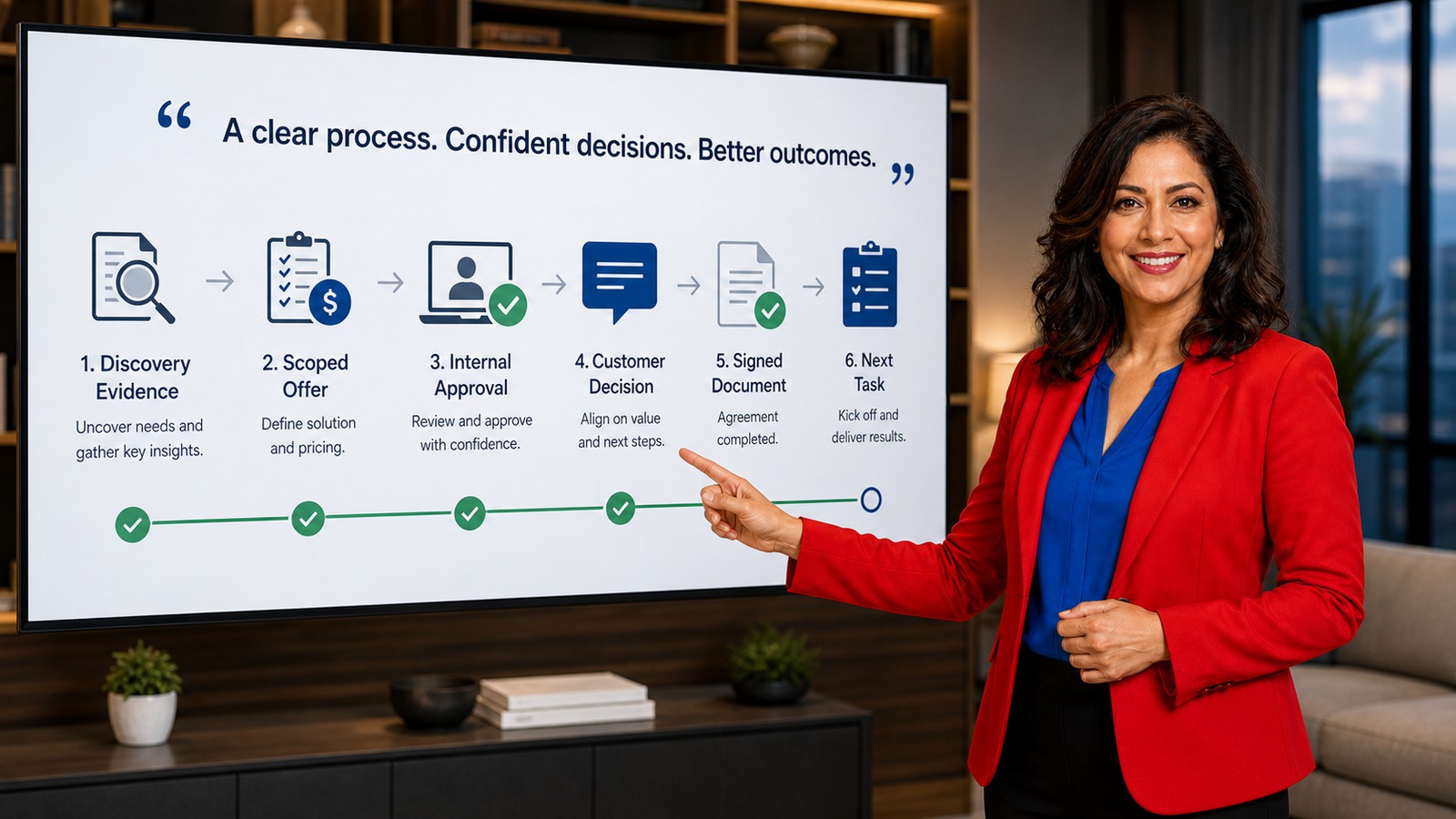
Expansion interest can stall when scope, price, documents, approvals, and customer decisions live in separate tools. A verbal “yes” is not a complete commercial state.
Connect discovery evidence to the scoped offer. Record the current quote version, pricing assumptions, internal approver, approval status, expiry, customer decision date, requested changes, signed document, and the next task after acceptance.
Protect the decision trail
Every material revision should show what changed, who requested it, who approved it, and which version the customer received. This prevents outdated documents from resurfacing and gives managers a clean path from need to commitment.
Use BROSH e-signature and customer documents to keep the accepted file and signature status connected to the account. Use the smart CRM calendar to link approvals, expiry dates, customer meetings, and follow-up.
After acceptance, create the delivery or onboarding action before closing the expansion opportunity. That keeps the customer promise connected to ownership beyond the sale.
Commercial rule: the live status must answer five questions: which offer, which approval, which customer decision, which document, and which next owner.

Manage Expansion Quality, Not Just Value
A large expansion pipeline can hide weak evidence, neglected accounts, old approvals, and proposals that delivery cannot support. Managers need leading controls before they rely on booked revenue.
- Evidence completeness: opportunities with a confirmed change, outcome, source, and date.
- Relationship readiness: opportunities with active sponsor and user engagement.
- Service-risk exposure: expansion value attached to unresolved customer issues.
- Stakeholder coverage: qualified opportunities with the required customer roles mapped.
- Quote freshness: open opportunities using the current approved version.
- Approval aging: time commercial decisions remain with internal reviewers.
- Next-action coverage: active opportunities with one owner and dated customer step.
- Expansion cycle time: elapsed time from confirmed need to customer decision.
- Promise handoff: accepted expansions with delivery ownership and evidence.
Review measures by account owner, customer segment, need type, relationship state, approval route, and delivery team. The goal is not to reward aggressive proposals. It is to reveal where useful customer growth is ready and where trust needs attention first.
The UK government's recent business-data study reports that firms working with digital data commonly use CRM, sales, financial, and customer information. That supports a practical point: productivity depends on connecting operational evidence, not merely collecting more fields.
BROSH's guide to practical CRM sales management explains how managers can connect evidence, ownership, coaching, and action.
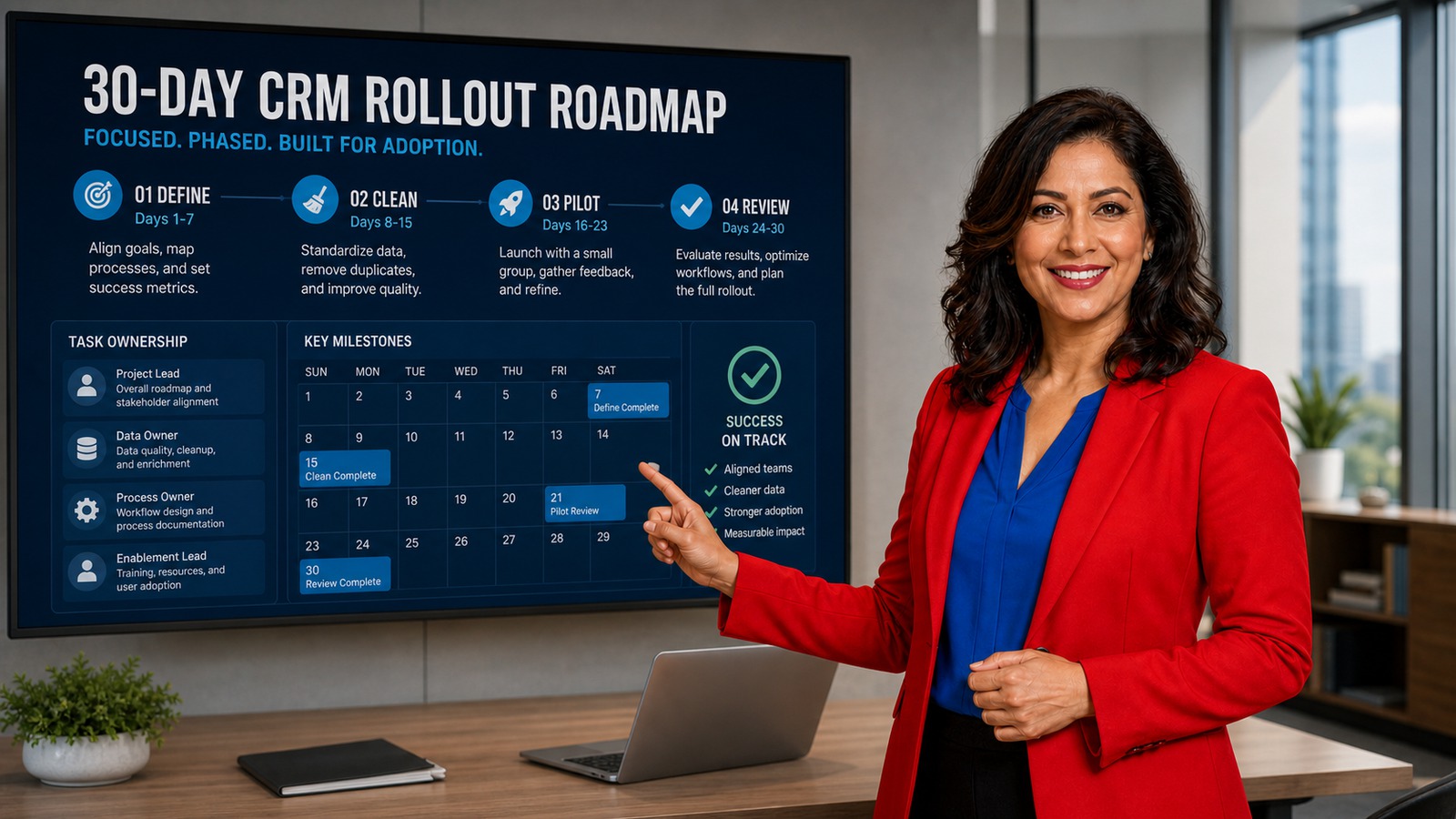
Roll Out the Workflow in 30 Days
Begin with one customer segment and one repeatable expansion motion. Keep required fields limited to decisions, risks, commitments, and ownership.
Days 1–7: define
Review recent wins, losses, customer complaints, and unused proposals. Define a valid expansion signal, qualification gates, service-risk stop conditions, and the customer outcome.
Days 8–15: clean
Merge duplicate accounts, confirm active stakeholders, connect current documents, close obsolete tasks, and define the authoritative quote and approval state.
Days 16–23: pilot
Run the workflow with a small account group. Hold a short review focused on evidence gaps, relationship risk, stalled approvals, unowned actions, and delivery readiness.
Days 24–30: review
Compare cycle time, evidence completeness, customer response, approval age, and handoff quality. Remove fields nobody uses and tighten gates that fail to protect the customer.
Automate reminders only after states and owners are clear. The BROSH guide to safer CRM automation shows how triggers can support human judgment without hiding it.
Adoption rule: if a required field does not support a customer decision, risk, commitment, owner, or next action, reconsider whether it belongs.
Use an Account Expansion Control Table
Give every stage a clear entry condition, owner, and closure evidence. This keeps the workflow understandable across sales, service, finance, delivery, and management.
| Control point | Required CRM evidence | Owner action | Closure evidence |
|---|---|---|---|
| Signal captured | Customer change, source, date, expected impact | Account owner validates the signal | Named customer confirms the need |
| Opportunity qualified | Need, value, readiness, fit, access, next step | Owner advances, nurtures, or stops | Qualification decision and reason |
| Stakeholders aligned | Sponsor, users, approver, specialists, concerns | Team coordinates one account message | Customer decision path is visible |
| Offer approved | Scope, price, version, approver, expiry | Reviewer approves or returns changes | Current approved quote is recorded |
| Customer decides | Decision date, feedback, revisions, document status | Owner follows up with context | Accepted, declined, or deferred reason |
| Promise handed off | Signed file, outcome, dependencies, owner, first task | Receiving team accepts responsibility | Delivery action and customer date exist |
The 2025 SME Digital Adoption Taskforce report identifies CRM among productivity-enhancing technologies and stresses that adoption depends on leadership, capability, trusted guidance, and practical implementation. A controlled expansion workflow translates those ideas into daily account action.
Questions and Answers
What is a customer expansion CRM workflow?
It is a controlled process that turns a verified customer change into qualification, stakeholder alignment, an approved offer, a recorded decision, signed documents, and an owned delivery handoff.
How should B2B teams identify expansion opportunities?
Use dated customer evidence such as a new goal, operating change, unresolved gap, volume shift, stakeholder request, or upcoming event. Confirm the need with a relevant customer role before creating a proposal.
When should we avoid cross-selling to an existing customer?
Pause when service issues remain unresolved, the customer has not confirmed the need, stakeholder trust is weak, delivery capacity is uncertain, or the proposed value depends on unsupported assumptions.
Who owns an account expansion opportunity?
Assign one account owner for continuity and the next customer action. Keep specialist, finance, approval, document, and delivery responsibilities visible as separate supporting roles.
Which documents should be linked to the expansion record?
Link discovery evidence, the current quote, pricing approval, requested revisions, customer correspondence, signed agreement, scope, dependencies, handoff notes, and delivery acceptance.
Which customer expansion metrics should managers track?
Track evidence completeness, relationship readiness, service-risk exposure, stakeholder coverage, quote freshness, approval aging, next-action coverage, decision cycle time, and promise-handoff quality.
Can account expansion follow-up be automated?
Automate reminders for missing evidence, aging approvals, quote expiry, overdue customer decisions, absent owners, and handoff tasks. Keep need interpretation, trust, value, scope, and commitments under human review.
Grow the Account by Protecting the Relationship
Responsible expansion starts with what changed for the customer. It proceeds through evidence, trust, expertise, a current commercial record, and a handoff that keeps every promise visible.
BROSH CRM gives B2B teams one practical place for customer history, stakeholders, opportunities, quotes, approvals, documents, tasks, owners, dates, and delivery follow-up. That shared context helps teams grow existing accounts without treating the relationship like a list of products.
Sources: Journal of Business Research, cross-selling in key accounts (2026); UK Government, Business Data Use and Productivity Study wave 2 (2026); UK Government, SME Digital Adoption Taskforce final report (2025).
Ready to grow existing B2B accounts with cleaner evidence and stronger follow-up?
See how BROSH can connect customer records, stakeholders, quotes, approvals, documents, owners, and next actions.
Talk to a CRM Expert