
Explainable B2B revenue workflow
Lead Qualification CRM: Prioritize B2B Buyers With Clear Evidence
Give sales teams a fast, fair way to separate real buying evidence from incomplete records, then assign the right follow-up before valuable interest goes cold.
Last modified: August 22, 2026
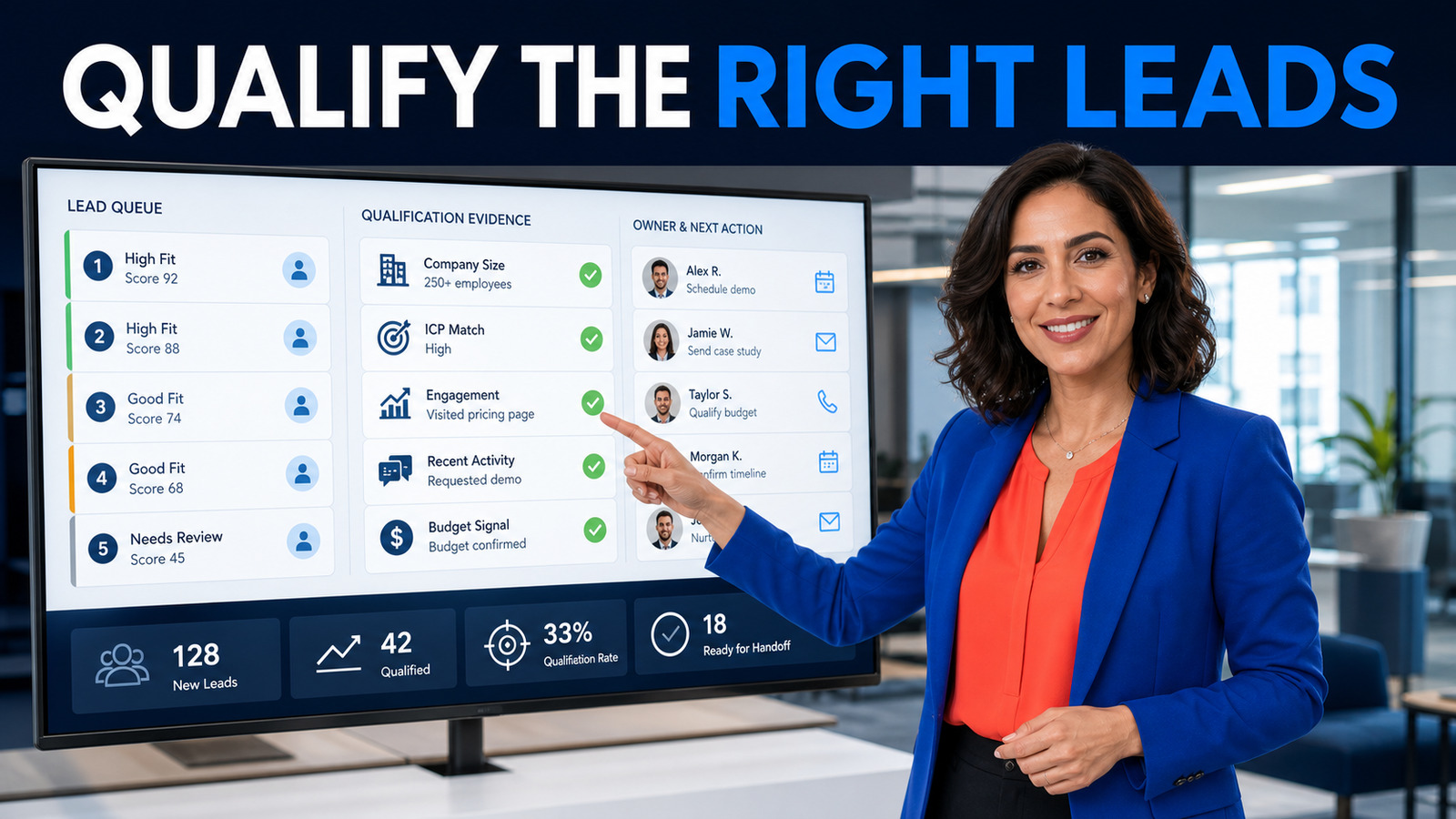
Capture the Evidence Before You Score the Lead
A lead score can look precise while the underlying record is vague. A job title, page visit, or form submission does not prove a business need, a decision path, or readiness to act.
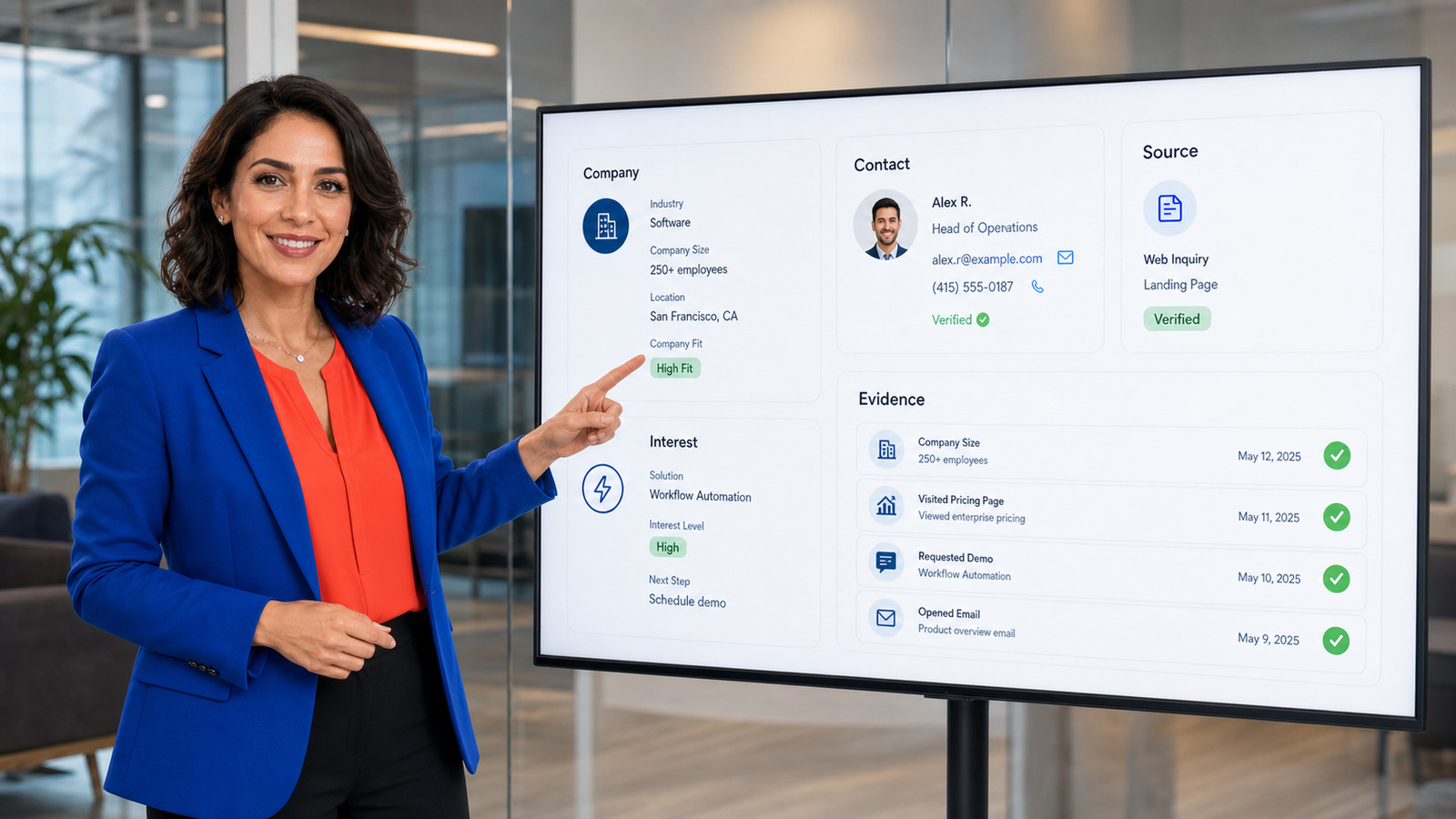
Start with a small evidence set: verified company and contact, lead source, stated problem, expected outcome, timing signal, relevant stakeholder, consent or contactability, latest interaction, and the next fact still missing.
Store the source and date beside each important fact. That lets a salesperson distinguish customer-confirmed evidence from an assumption, imported field, or old activity.
Make unknowns visible
Do not force a false yes or no when information is incomplete. Use explicit states such as confirmed, contradicted, unknown, or needs review. A 2025 open-access study on B2B lead qualification argues for transparent handling of incomplete and conflicting information instead of hiding uncertainty inside opaque automation.
Use clean CRM contact capture to reduce basic record gaps, then connect duplicates with bulk merge before qualification.
Evidence rule: if the team cannot say who supplied a fact and when it was confirmed, treat it as a hypothesis rather than qualification proof.
Use Three Qualification Gates
A useful workflow separates fit, evidence, and readiness. Combining them into one number can push an attractive company forward even when the buyer has no confirmed need or next step.
Gate 1: fit
Confirm whether the account belongs in the target market: business type, customer size, geography, use case, operational complexity, and the problem BROSH can realistically support.
Gate 2: evidence
Record a specific problem, desired business outcome, source, stakeholder, and the cost or consequence of leaving the issue unresolved. Early interest may remain valid while these facts are still unknown.
Gate 3: readiness
Look for a dated event, agreed discovery step, access to the right people, a decision path, and permission to continue. Readiness should control urgency; fit alone should not.
Route each lead to qualify now, nurture, research, return to source, or close with a reason. The related BROSH guide to gap-based sales discovery helps turn a general pain statement into a useful business gap and next action.
Stage rule: a lead advances only when the record contains the required evidence for that gate—not because a score crossed an unexplained threshold.

Keep Human Judgment Where Context Matters
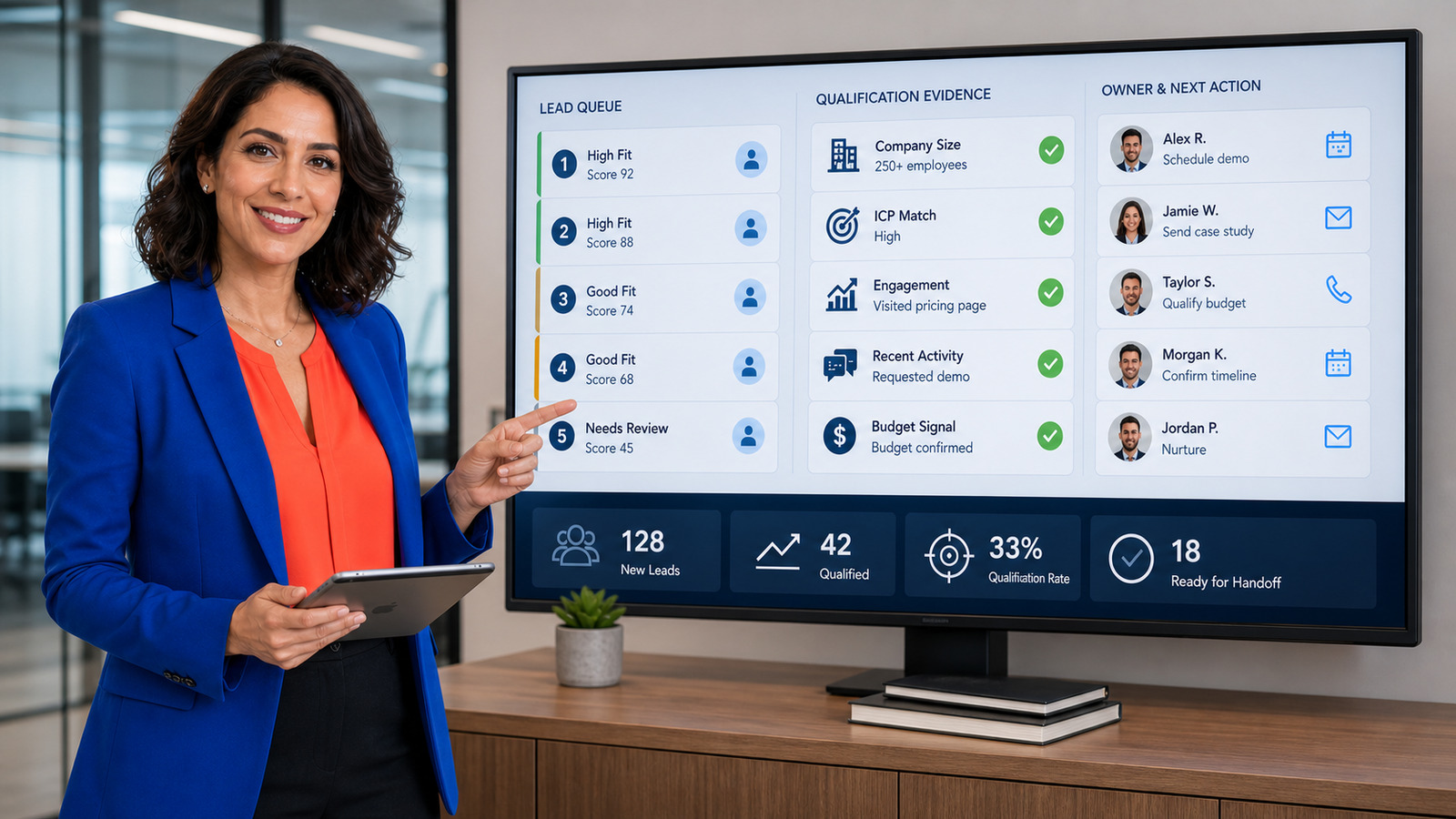
Automation can check completeness, age, duplicates, response history, and routing rules. It should not invent urgency, infer sensitive facts, or silently reject a promising account because the record is sparse.
The UK Business Data Survey 2026 found that only a minority of businesses using artificial intelligence had it integrated into existing business systems. The same survey associates integration with more advanced data practices. For B2B teams, the implication is practical: automation needs controlled CRM evidence, not a detached scoring experiment.
Create a review queue
Send conflicting, high-value, unusual, or low-confidence records to a named reviewer. Show the evidence behind the recommendation, the missing facts, the previous decision, and an expiry date.
Let reviewers approve, change, or defer the disposition with a reason. Capture overrides as learning data. Repeated overrides reveal a weak rule, missing field, biased assumption, or changing target market.
Use the approach in safer CRM automation: trigger, condition, action, human review, and traceable outcome.
Control rule: automate preparation and routing; keep commercial interpretation, exceptions, and customer commitments reviewable by a person.
Turn Qualification Into Owned Follow-Up
A qualified lead without an owner and dated action is only a label. The workflow must convert evidence into responsibility while the customer context is still fresh.
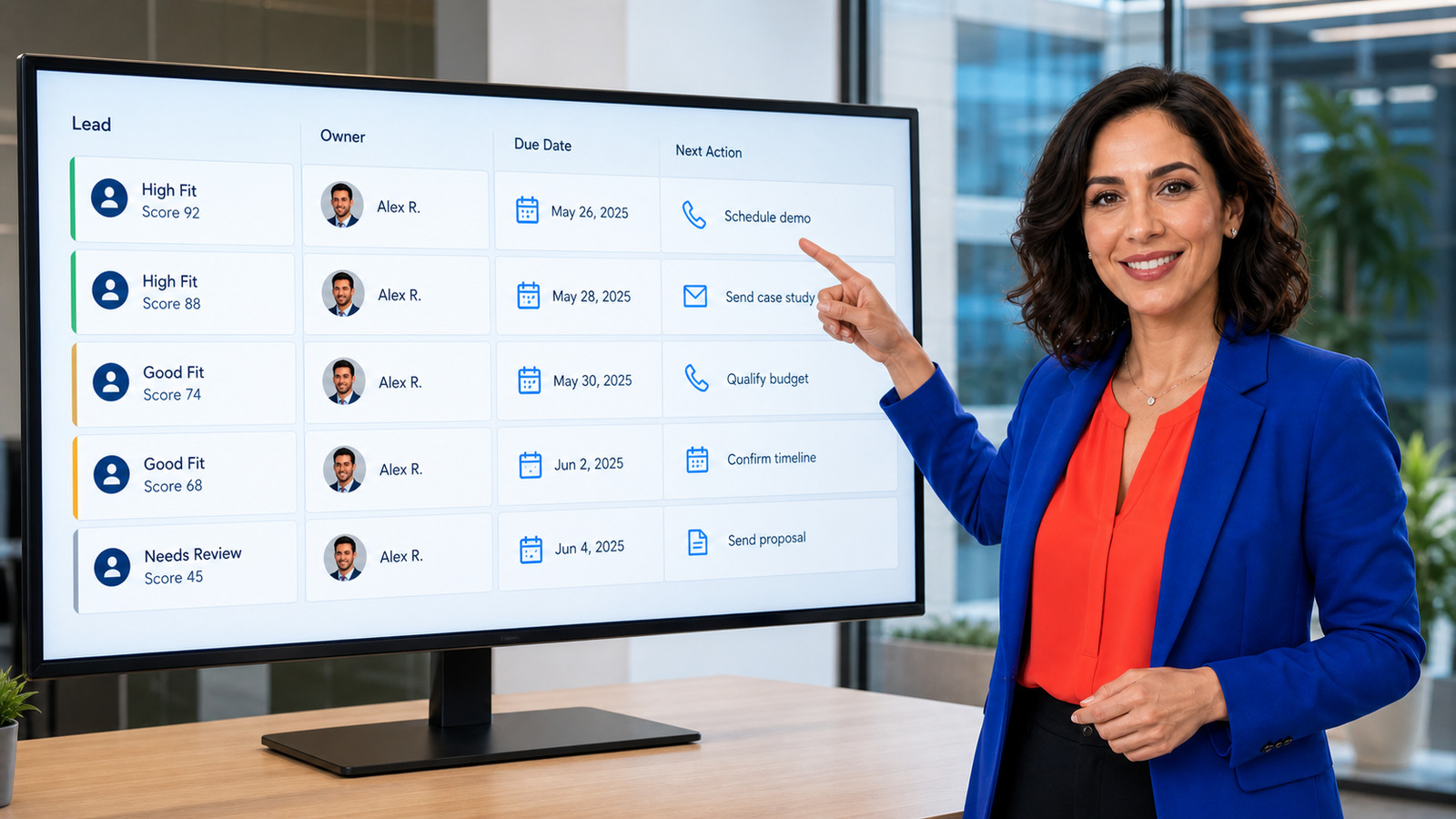
Assign one current owner, one due date, one next action, and one expected result. Include the lead source, qualification decision, missing evidence, promised material, last message, relevant document, and preferred contact method.
Design stop and pause conditions
Pause automated reminders when the buyer replies, declines, asks for a later date, becomes an existing customer contact, or requires a sensitive human conversation. Close or recycle records with a visible reason instead of leaving them in an endless sequence.
Use the smart CRM calendar for due dates and follow-up, and the sales pipeline Kanban for visible movement between qualification states.
When discovery produces a scoped requirement, connect the current quote, approval state, and customer documents to the same record. That preserves the line from initial evidence to commercial action.
Ownership rule: every active lead must answer who acts next, by when, using which context, and what outcome will change the status.

Manage Qualification Quality, Not Score Volume
Managers should see whether the process produces defensible priorities and timely action. A rising qualified-lead count means little if records lack proof or follow-up stalls.
- Evidence completeness: leads with required facts, sources, and confirmation dates.
- Qualification consistency: similar records receiving similar dispositions.
- Unknown-field rate: missing facts by lead source and segment.
- Review age: time exceptions wait for a human decision.
- Owner coverage: active leads with one accountable owner.
- Next-action coverage: active leads with a dated customer step.
- Override rate: automated recommendations changed by reviewers.
- Recycling quality: nurtured leads with a reason and return date.
- Evidence-to-conversation rate: qualified records that become useful discovery.
- False-priority rate: high-priority leads closed for missing fit or need.
Review these measures by source, segment, owner, qualification route, and missing-evidence type. The goal is not to pressure teams into qualifying more leads. It is to invest attention where the record supports a useful buyer conversation.
BROSH's guide to practical sales management connects these controls to coaching, pipeline evidence, and daily action.
Roll Out the Workflow in 30 Days
Start with one lead source and one target segment. Keep the first version transparent enough that salespeople can explain every decision without a technical specialist.
Days 1–7: define
Review recent good leads, poor fits, missed opportunities, and disputed decisions. Define fit, evidence, readiness, disposition choices, required reasons, and responsible owners.
Days 8–14: configure
Clean duplicate records, add confirmation dates and source fields, create the review queue, and connect owners, tasks, documents, and calendar dates.
Days 15–21: test
Run old and new leads through the gates. Compare decisions across reviewers. Inspect disagreements before adjusting thresholds or automating actions.
Days 22–30: launch
Train the team on evidence, unknowns, overrides, stop conditions, and next-action ownership. Review the metrics weekly and remove fields that do not support a decision.
The OECD's 2026 enterprise evidence warns that digital adoption can remain shallow when integrated systems and organisational readiness lag. A narrow, owned workflow creates the operating discipline needed before advanced scoring can add value.
Adoption rule: earn trust with visible evidence and consistent decisions first; add complexity only when it solves a measured qualification problem.

Use a Lead Qualification Control Table
Give every state an entry condition, owner action, and closure evidence. This makes the workflow auditable and keeps marketing, sales, and management aligned on what each label means.
| Control point | Required CRM evidence | Owner action | Closure evidence |
|---|---|---|---|
| Record ready | Verified contact, company, source, duplicate check | Owner confirms record integrity | One authoritative lead record |
| Fit checked | Segment, use case, geography, operating need | Advance, research, or close with reason | Fit decision and evidence |
| Need evidenced | Problem, outcome, stakeholder, source, date | Confirm or mark unknown | Customer-backed need or open question |
| Readiness checked | Timing signal, access, agreed next step | Qualify now or nurture | Disposition and review date |
| Exception reviewed | Conflict, confidence, previous recommendation | Reviewer decides with reason | Approved override or confirmed route |
| Follow-up owned | Owner, due date, action, context, stop condition | Complete customer action | Outcome recorded and status updated |
Use this table as a starting operating agreement. Change the evidence requirements when customer behavior and review data show a real need—not whenever a new scoring idea appears.
Questions and Answers
What is an explainable lead qualification CRM workflow?
It is a process that records fit, need, readiness, source, uncertainty, and next action so a salesperson or manager can understand and review why a lead received its disposition.
Which fields should B2B teams require before qualifying a lead?
Require a verified company and contact, source, target fit, stated problem, expected outcome, stakeholder, timing signal, confirmation date, owner, and next action. Allow unknown when evidence is genuinely unavailable.
Should one lead score decide which prospects sales contacts?
No. Use the score as a prioritisation signal, then show the underlying evidence, missing facts, confidence, and review route. High-value, conflicting, or unusual records should receive human review.
How do we prevent weak leads from clogging the pipeline?
Use clear fit, evidence, and readiness gates. Route records to qualify, nurture, research, return, or close with a reason and review date instead of advancing every interested contact.
Who should own a qualified lead?
Assign one current owner accountable for the next customer action. Supporting reviewers may check fit or exceptions, but the CRM should always show who acts next and when.
Can lead qualification follow-up be automated safely?
Automate completeness checks, duplicate checks, reminders, routing, and review queues. Pause automation on replies, conflicts, sensitive cases, or customer requests, and keep commercial judgments reviewable.
Which lead qualification metrics should managers track?
Track evidence completeness, decision consistency, unknown-field rate, review age, owner and next-action coverage, overrides, recycling quality, useful discovery conversion, and false-priority rate.
Make Every Priority Defensible
Strong qualification does not mean chasing the highest number. It means connecting clean customer records, visible evidence, uncertainty, human review, ownership, and a dated next action.
BROSH CRM gives B2B teams one practical place for contacts, companies, qualification facts, tasks, dates, documents, quotes, approvals, owners, and pipeline status. That shared record helps salespeople spend attention where a useful buyer conversation can move forward.
Sources: Procedia Computer Science, transparent B2B lead qualification under incomplete evidence (2025); UK Government, UK Business Data Survey 2026; OECD, SME digital-tool uptake and organisational readiness (2026).
Ready to qualify B2B leads with clearer evidence and stronger ownership?
See how BROSH can connect lead records, qualification gates, review, documents, tasks, owners, and follow-up.
Talk to a CRM Expert