
Invoice-to-cash CRM workflow
Invoice-to-Cash CRM: Stop Late B2B Payments Before They Start
Turn every quote, purchase-order requirement, invoice, approval, customer commitment, and follow-up task into one visible revenue workflow—before missing details become overdue cash.
Last modified: August 18, 2026
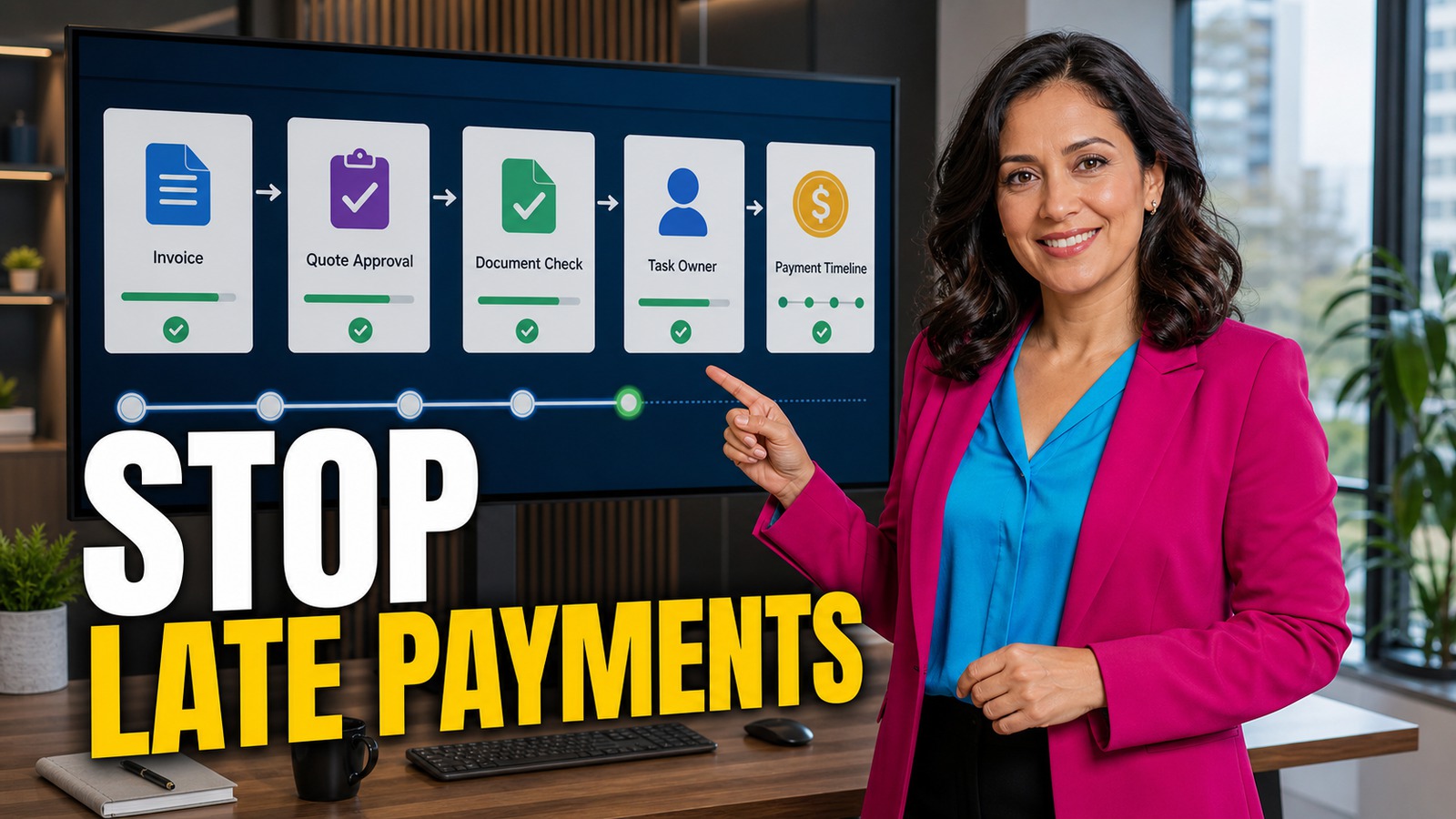

Build a Payment-Ready Customer Record
Late payment often looks like a finance problem. The failure may begin much earlier: the customer record lacks the legal entity, billing contact, purchase-order rule, approved payment terms, or evidence the buyer needs to accept the invoice.
Recent UK Government research found that administrative errors were a common explanation for late payment. Twenty-four percent of surveyed businesses attributed late receipts to administrative errors. Businesses paying suppliers late also cited administrative errors, disputes, and technical failures.
The practical lesson is simple: prepare the payment path while the deal is still active. Keep these facts connected to the account:
- Contracting and billing legal entities, addresses, tax details, and finance contacts.
- Accepted quote, scope, quantities, payment terms, milestones, and approved exceptions.
- Purchase-order number, portal instructions, required attachments, and submission channel.
- Customer approver, invoice reviewer, authorized signer, and escalation contact.
- Commercial owner, finance owner, next action, due date, and proof of completion.
Duplicate records can split contacts, documents, and activities across different histories. Clean that risk with BROSH's guide to merging duplicate CRM contacts and accounts.
Turn the Signed Quote Into an Owned Handoff
A signed quote is not the end of the revenue workflow. It is the handoff point between a commercial promise and the evidence required to bill accurately.
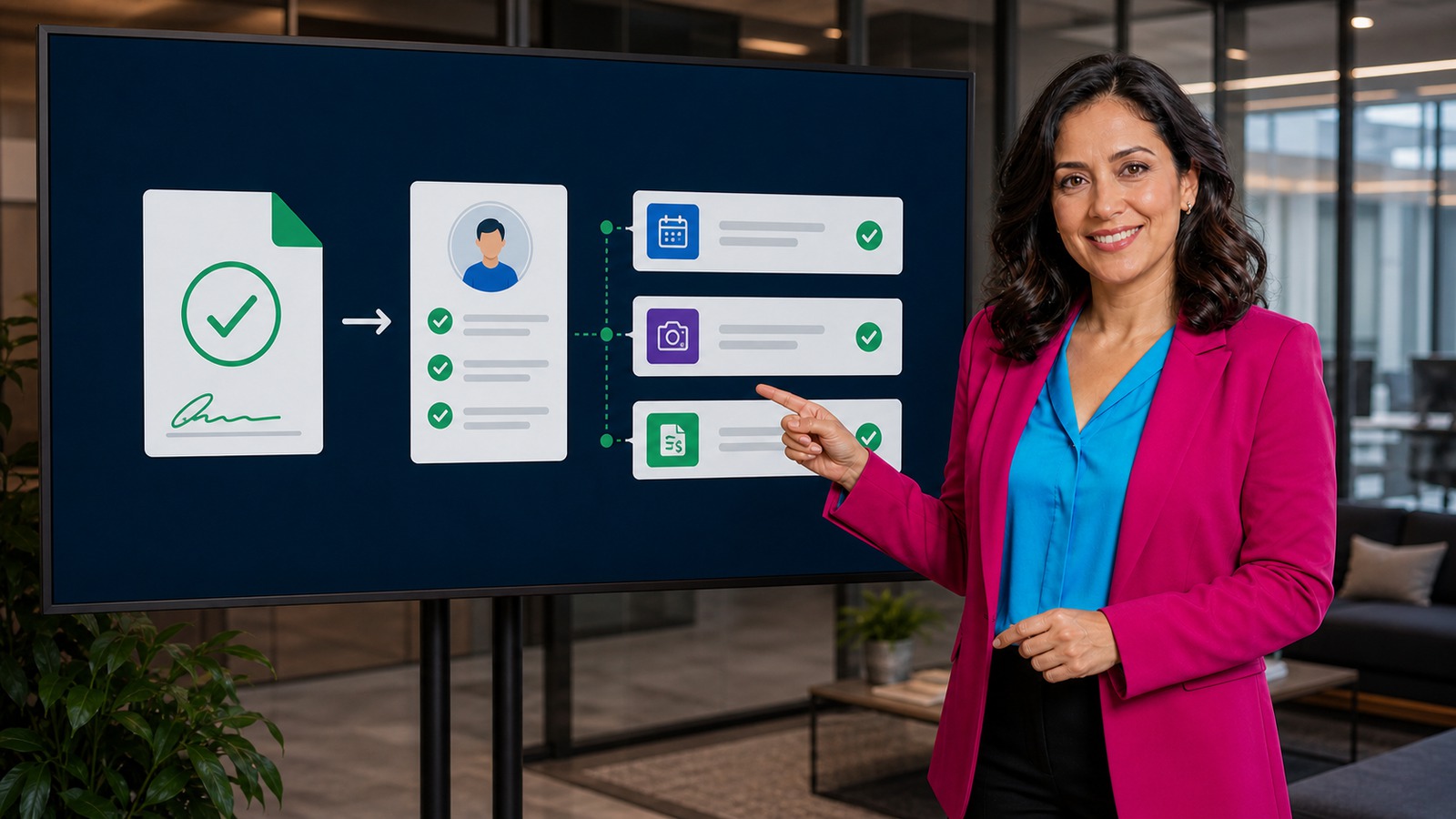
Create a structured handoff as soon as the customer accepts. The sales owner confirms scope, billing schedule, customer entity, purchase-order status, approvers, delivery dependencies, and special commitments. The delivery or finance owner accepts the handoff with a dated next step.
Define evidence before work starts
For services, evidence may be an approved milestone, timesheet, completion note, or customer acceptance email. For goods, it may be a delivery note, quantity confirmation, or receipt. For subscriptions, it may be an activation date and agreed billing period.
If evidence is vague, disputes become subjective. Attach the current agreement and record who can validate completion. BROSH's built-in e-signature workflow keeps signed quotes and document status close to the customer history.
Handoff rule: every promised item needs an owner, due date, acceptance condition, and location for the supporting document.

Prevent Invoice Rejection Before Sending
An invoice can be commercially correct and still fail the customer's process. A missing purchase order, wrong legal entity, mismatched line description, outdated contact, or absent delivery proof may restart the clock.
The Office of the Small Business Commissioner's 2026 casework noted that missing invoice detail created confusion about what invoices related to. That is a workflow signal, not merely a reminder to chase harder.
Use a short preflight checklist
- Does the invoice match the accepted quote, contract, tax treatment, and customer entity?
- Is the purchase-order number present and valid for the amount and scope?
- Are line descriptions recognizable to the customer's reviewer?
- Are required delivery, approval, timesheet, or completion documents attached?
- Is the invoice going to the correct channel, contact, portal, and copy recipients?
- Does the CRM show the sender, sent date, due date, owner, and expected acknowledgement?
Do not mark an invoice complete when it leaves your system. Mark it sent, then require evidence of receipt or successful portal submission. This distinction gives managers a real next action instead of false confidence.
Run a Calm Evidence-Based Follow-Up Cadence
Repeated “just checking” emails add noise without clarifying the blocker. A useful follow-up cadence asks for a specific confirmation and records the result.
At sending
Confirm the invoice number, amount, scope reference, due date, purchase order, attachments, and intended payment route. Ask the reviewer to acknowledge receipt or identify missing information.
Before the due date
For material invoices, verify approval progress while there is time to fix an exception. Record the customer's answer, the named approver, and any promised decision date.
On and after the due date
Ask whether the invoice is approved, scheduled, disputed, or blocked. Convert the answer into a task with an owner and evidence. If the customer promises payment, capture the promised date and expected reference.
Use the BROSH smart CRM calendar to connect invoice dates and follow-up commitments with quotes, customer meetings, approvals, and service work.
Relationship rule: be precise, courteous, and consistent. Good records reduce unnecessary pressure because the team does not ask the customer to repeat the same explanation.


Escalate Payment Blockers With Clear Ownership
“Overdue” is an outcome, not a diagnosis. Managers need to see why payment stopped and which person can remove the obstacle.
Use a small set of blocker categories: missing purchase order, invoice rejected, disputed scope, missing evidence, wrong entity, approval pending, payment scheduled, contact unresponsive, or internal correction required.
Route each blocker to the right owner
Sales may resolve a scope dispute. Delivery may provide acceptance evidence. Finance may correct tax or entity details. A manager may address a repeated broken commitment. Assign one owner and a due date even when several people contribute.
Escalate with a complete evidence pack
Bring the accepted quote, relevant contract clause, invoice, purchase order, delivery evidence, customer correspondence, prior commitments, and requested decision. An evidence pack lets the next person act without rebuilding the history.
When the issue affects wider customer trust, connect it to the customer experience record. BROSH's B2B customer experience workflow shows how sales and service context can remain visible across teams.
Measure Invoice-to-Cash Workflow Health
Days outstanding matters, but it arrives late. Leading measures reveal whether the team is preventing rejection, identifying blockers, and keeping customer commitments owned.
- Payment-ready record coverage: active billable customers with verified entity, finance contact, terms, purchase-order rule, and submission channel.
- First-pass acceptance: invoices accepted without correction, resubmission, or missing-document requests.
- Acknowledgement time: time from sending to confirmed receipt or portal acceptance.
- Approval-cycle time: time from receipt to customer approval or a defined blocker.
- Unowned overdue value: overdue amount without one accountable internal owner and next action.
- Blocker age: time each dispute or exception remains unresolved.
- Promise reliability: customer payment commitments met on the stated date.
- Correction rate: invoices changed after sending, grouped by root cause.
Review the measures by customer segment, owner, blocker type, and invoice value. A low overdue total can hide a weak process if teams rely on heroic manual chasing.
The BROSH guide to practical sales management with CRM provides a broader framework for turning reports into accountable coaching and decisions.

Use a Blocker-to-Action Control Table
Keep the workflow explainable. Every status should tell a manager what evidence is missing and who acts next.
| Observed blocker | CRM evidence to inspect | Next action | Closure evidence |
|---|---|---|---|
| No purchase order | Quote, customer process, procurement contact | Commercial owner requests the order or approved exception | Valid order number or written exception |
| Invoice rejected | Rejection notice, invoice version, required fields | Finance owner corrects and resubmits through the approved channel | Portal or customer acceptance |
| Scope disputed | Signed quote, contract, delivery record, correspondence | Commercial owner leads a documented resolution | Customer accepts amount, credit, or revised scope |
| Approval pending | Named approver, submitted date, decision deadline | Customer contact confirms reviewer and expected decision | Approved status or precise exception |
| Delivery evidence missing | Milestone, timesheet, receipt, acceptance record | Delivery owner produces the agreed proof | Reviewer confirms evidence is sufficient |
| Payment date missed | Prior promise, approval state, payment reference | Owner requests a new dated commitment and reason | Cleared payment or credible scheduled reference |
Automation can create alerts and route tasks, but it should never close a blocker without evidence. Start with reliable fields, clear ownership, and exceptions that lead to a real decision. The BROSH guide to safer CRM automation explains how to keep human review around commercial judgment.
A practical 30-day rollout
Week 1: audit ten recently paid and ten overdue invoices. Identify the earliest preventable failure.
Week 2: define required customer fields, blocker categories, owners, and closure evidence.
Week 3: clean active records, attach current documents, and schedule follow-up for open invoices.
Week 4: run the manager review, measure false alerts, and simplify steps that do not change an outcome.
Questions and Answers
What should an invoice-to-cash CRM record contain?
Connect the customer legal entity, billing contact, accepted quote, payment terms, purchase-order requirement, invoice and supporting documents, sent and due dates, approval status, blocker, accountable owner, next action, and customer payment commitment.
Who owns a late B2B payment?
Assign one accountable owner for the outcome, then route specific work to sales, finance, delivery, or management according to the blocker. Shared participation should not replace one visible owner and dated next action.
How can a CRM reduce invoice disputes?
Keep the signed scope, purchase order, delivery evidence, invoice version, customer correspondence, and approval status together. Use a preflight check before sending and record the exact reason for every rejection or correction.
Should payment follow-up be automated?
Automate task creation, due-date reminders, missing acknowledgement alerts, and escalation thresholds. Keep disputed scope, relationship risk, negotiation, and management escalation under human judgment.
Which document status should the CRM track?
Track the current quote, signature state, purchase order, invoice version, delivery or acceptance evidence, correction history, customer approval, and payment confirmation. Mark obsolete versions clearly so nobody sends the wrong file.
Which metrics warn about late payment before the due date?
Watch payment-ready record coverage, first-pass invoice acceptance, receipt acknowledgement time, approval-cycle time, unresolved blocker age, missing-owner value, correction rate, and whether customer payment commitments are kept.
How should teams protect the customer relationship while following up?
Use precise evidence, courteous language, and one coordinated owner. Ask for a specific confirmation, record the answer, avoid duplicate chasing by different teams, and escalate only with the complete customer and document history.
Make Payment Readiness Part of the Revenue Workflow
Late payment cannot be prevented in every case. Teams can still remove avoidable friction by connecting the commercial promise, customer requirements, documents, approvals, invoice state, ownership, and follow-up evidence.
BROSH CRM gives B2B teams a practical place to keep customer records, tasks, quotes, signed documents, calendar commitments, approvals, and management visibility connected. The result is not more chasing. It is earlier clarity about what must happen next.
Sources: UK Department for Business and Trade, Large businesses' payment practices and performance statistics (2026); UK Government, research on late-payment performance and practices; Office of the Small Business Commissioner, invoice-detail casework insight (2026).
Ready to turn overdue invoices into an owned customer workflow?
See how BROSH can connect quotes, documents, approvals, tasks, and payment follow-up.
Talk to a CRM Expert