
Next-Best Action CRM Workflows for B2B Sales Teams
Next-best action CRM workflows help B2B teams turn scattered customer signals into a ranked daily queue for follow-up, quotes, document requests, approvals, and owner tasks.
The trend is simple: CRM is moving from a passive place to store records into an operating system that helps teams decide what to do next. BROSH CRM buyers need this because revenue work often stalls in small details: an aging quote, an unanswered buyer question, a missing approval, or a follow-up date with no owner.
Last modified by BROSH CRM, on Tue Aug 11 2026 Israel Time
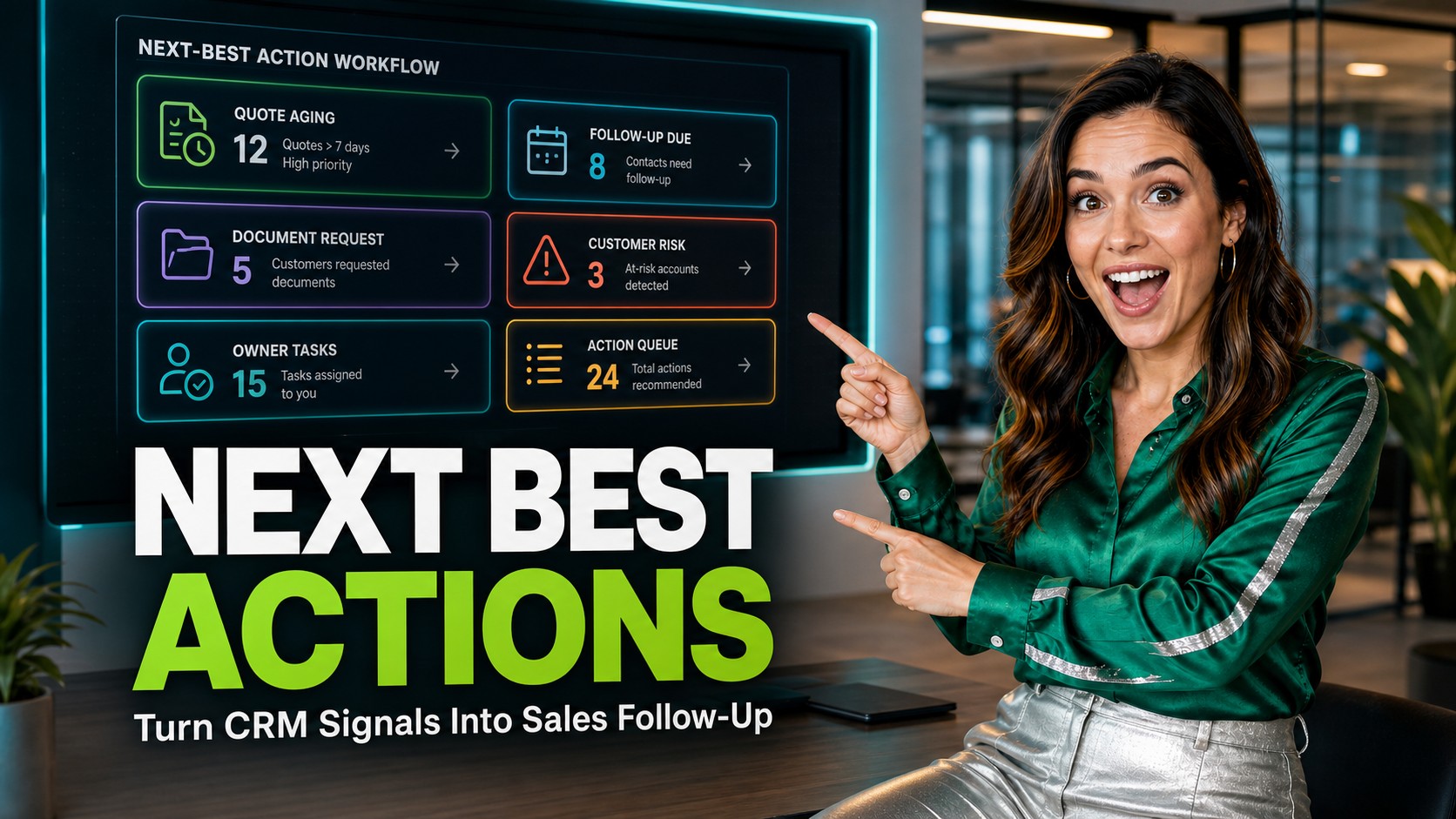
A next-best action view turns CRM data into a practical work queue for sales and customer operations.
Why Next-Best Action Matters Now
B2B sales teams are under pressure to respond faster, use cleaner data, and make better decisions from the same customer record. A next-best action workflow helps by ranking the customer work that deserves attention today.
The NIST AI Risk Management Framework is useful for teams adding recommendations or automation because it emphasizes governable, transparent, and accountable systems. In CRM practice, that means a recommendation should show the reason behind the action and the owner responsible for judgment.
The OECD AI Principles also point toward human-centered and trustworthy AI. For BROSH CRM teams, the practical takeaway is clear: use smart prioritization to support salespeople, not to hide responsibility for customer promises, approvals, or pricing decisions.
The FTC privacy and security business guidance is a helpful reminder that customer data should be handled carefully. A next-best action workflow should use only the signals the team is allowed to use and should keep customer information organized.
Turn Customer Signals Into an Action Queue
A useful next-best action workflow starts with signals that already live in the CRM: new lead, missed follow-up, quote aging, document opened, approval needed, renewal date, customer risk, and unanswered buyer question.
BROSH CRM can turn those signals into a queue that salespeople and managers can trust. For example, a quote older than seven days may become a follow-up task. A document request without an owner may become an approval reminder. A renewal date may become a customer check-in.
This workflow connects naturally to lead follow-up, smart scheduling, and document and e-signature workflows.
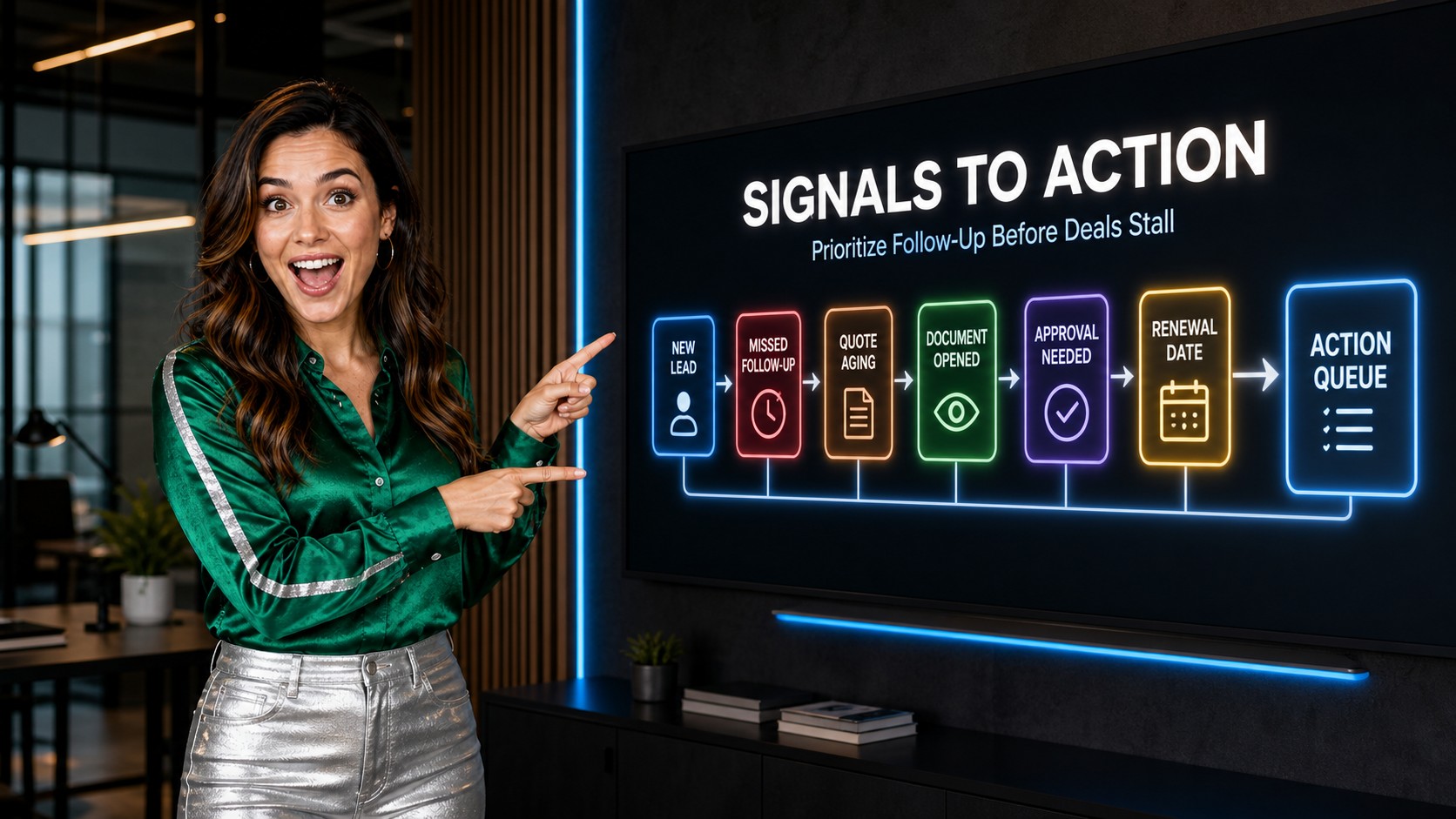
Signals become valuable when they are translated into owner-ready next actions.
What BROSH CRM Should Rank First
Not every action deserves the same urgency. A good action queue should help the team distinguish important work from noise. For B2B teams, the highest priority often belongs to actions that protect an active buyer conversation, open quote, document request, approval, renewal, or customer risk.
Follow-Up Risk
Customers with missed follow-up, no next meeting, or recent questions should surface quickly.
Quote Momentum
Quotes need status, owner, decision timing, and clear next action before they age.
Approval or Document Gap
Open approvals and missing customer documents should not disappear inside messages.
Managers can pair this with AI-ready CRM operations, agentic AI CRM workflows, and productive CRM habits.
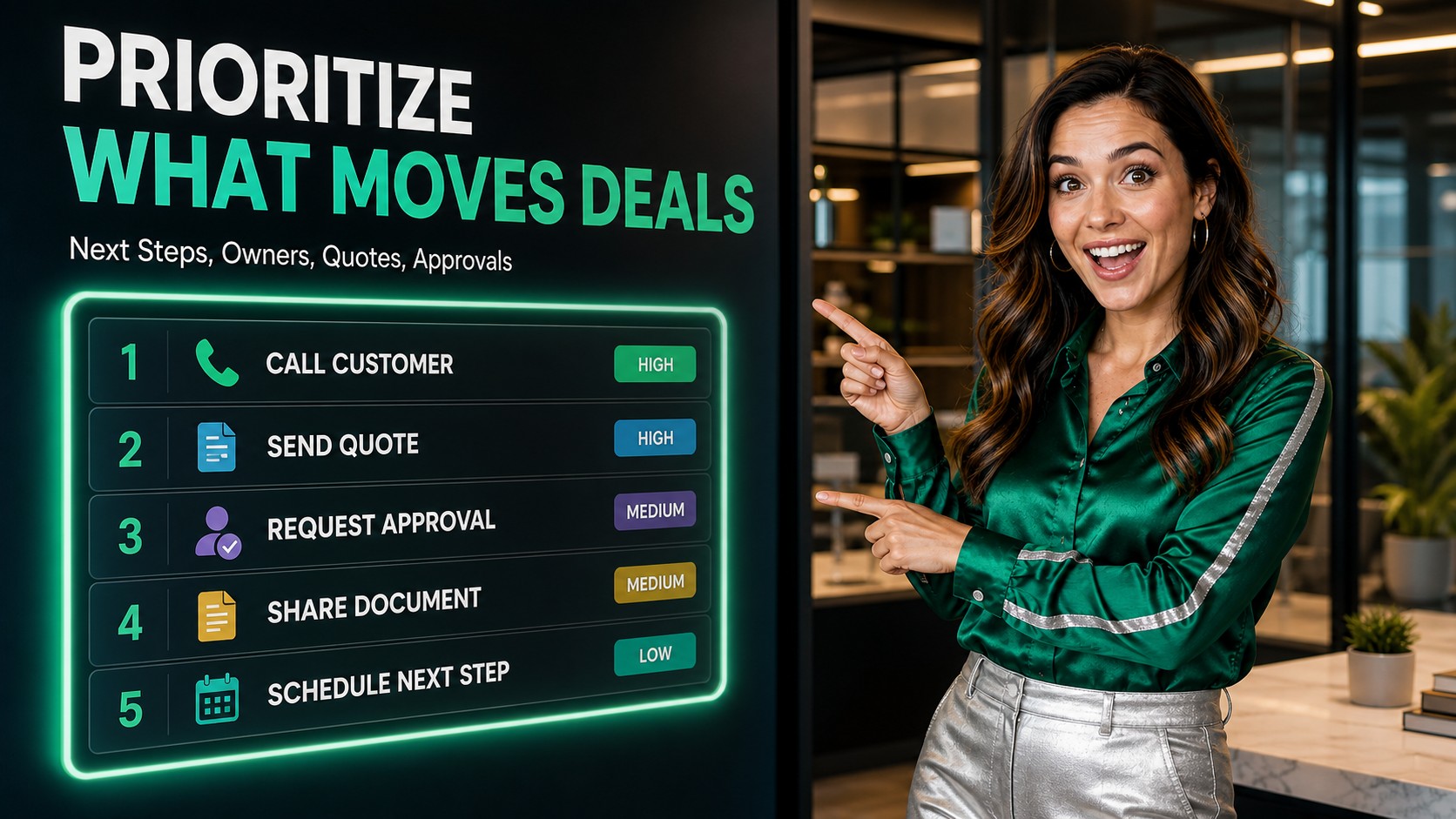
A ranked priority board gives sellers and managers the same view of what moves deals.
Prioritize Follow-Up, Quotes, and Approvals
The best next-best action queue is not a long task list. It is a ranked board that shows the action, customer, owner, due time, and reason. That makes it easier for a seller to act and easier for a manager to coach.
For example, the first action may be to call a customer who opened a quote twice but has no scheduled follow-up. The second may be to request approval for a revised proposal. The third may be to share a missing document before a buying committee meeting.
Use this approach with buyer enablement workflows, Kanban pipeline visibility, and sales management basics.
How to Build the Workflow
1. Define the signals. Start with fields your team already trusts: next follow-up date, quote status, document status, customer request, approval status, and owner.
2. Rank the work. Put buyer-facing and revenue-sensitive actions first. A missed follow-up on an active quote usually matters more than a low-risk administrative update.
3. Show the reason. Each recommended action should explain the signal behind it, such as "quote aging," "approval needed," or "document request open."
4. Keep the owner visible. Automation can recommend the action, but a person should own the customer promise and the judgment around timing, pricing, and documents.
5. Review outcomes. Track whether recommended actions lead to completed follow-up, sent quotes, approved documents, booked meetings, or won deals.
Questions and Answers
What is a next-best action CRM workflow?
A next-best action CRM workflow ranks the most useful customer action for each record, such as call the buyer, send a quote, request approval, share a document, or schedule follow-up.
Which CRM signals should BROSH CRM use for next-best action?
Useful signals include overdue follow-up, quote aging, open document requests, approval status, customer risk, recent activity, owner coverage, renewal date, and buyer questions.
How can next-best action help B2B sales teams?
It helps teams focus on the customer work most likely to move deals forward, reduce missed follow-up, keep quotes active, and give managers a clearer way to coach priorities.
Should next-best action be fully automatic?
Not always. For B2B sales, the system should recommend and prioritize work while keeping a responsible owner visible for judgment, customer context, and approval-sensitive actions.
Turn CRM Signals Into the Next Right Action
BROSH CRM helps B2B teams organize follow-up, quotes, documents, approvals, owner tasks, and customer risk into workflows managers and sellers can act on.